The Frustrating Confusion of Searching for a Home Without Pre-Approval
When I first started searching for my dream home, I found a house I absolutely fell in love with after weeks of touring. But the seller turned down my offer instantly because I did not have a verified pre-approval letter. I was so upset with myself for making such a basic mistake, and I felt completely clueless about how the banking process actually worked. That painful loss forced me to learn the exact mortgage rules inside out so I would never miss out on a property again. I decided right then to master my financial paperwork so I could walk into my next open house with total confidence. Now, I want to show you exactly how to bypass that same frustrating heartbreak.
You spend hours scrolling through real estate apps late at night, saving dream houses and planning weekend open house visits. You finally find a place that feels absolutely perfect for your family, only to watch another buyer snatch it away within hours.
When you ask why your offer got ignored, the seller's agent explains that the winning buyer had an official mortgage pre-approval letter attached to their offer. That sudden realization that you lost your dream house because you lacked proper bank paperwork leaves you feeling crushed and helpless.
Most people confuse a quick online pre-qualification estimate with an actual, underwriter-verified mortgage pre-approval letter. This simple misunderstanding causes thousands of hopeful buyers to miss out on the perfect property every single month.
Unhelpful advice from relatives leads buyers to believe they must have twenty percent cash in hand before speaking to a loan officer. Meanwhile, generic online calculators ignore local property taxes, home insurance costs, and private mortgage insurance requirements.
Constant anxiety that bank underwriters will discover minor credit errors and reject your application completely can be paralyzing. The mental overwhelm from sorting through bank jargon, tax forms, pay stubs, and endless paper requests often ruins the excitement of house hunting.

I know exactly how intimidating it feels to stand at the start of the mortgage process without a clear roadmap. Buying a home is supposed to be a proud milestone, but the endless paper requests can make you want to give up entirely.
When bank officers ask for pay stubs, tax returns, and bank statements from months ago, it feels like sitting through an interrogation. You end up worrying that one minor balance on a credit card will ruin your entire dream of homeownership.
The good news is that mortgage pre-approval is not an unpredictable game designed to keep you out of the market. It is simply a step-by-step checklist that lenders use to calculate how much money you can borrow safely.
Once you learn how the checklist works, you regain total control over your home search. You can finally shop for houses with complete peace of mind, knowing your financing is securely locked in.
Your Complete Step-by-Step Blueprint for Mortgage Pre-Approval
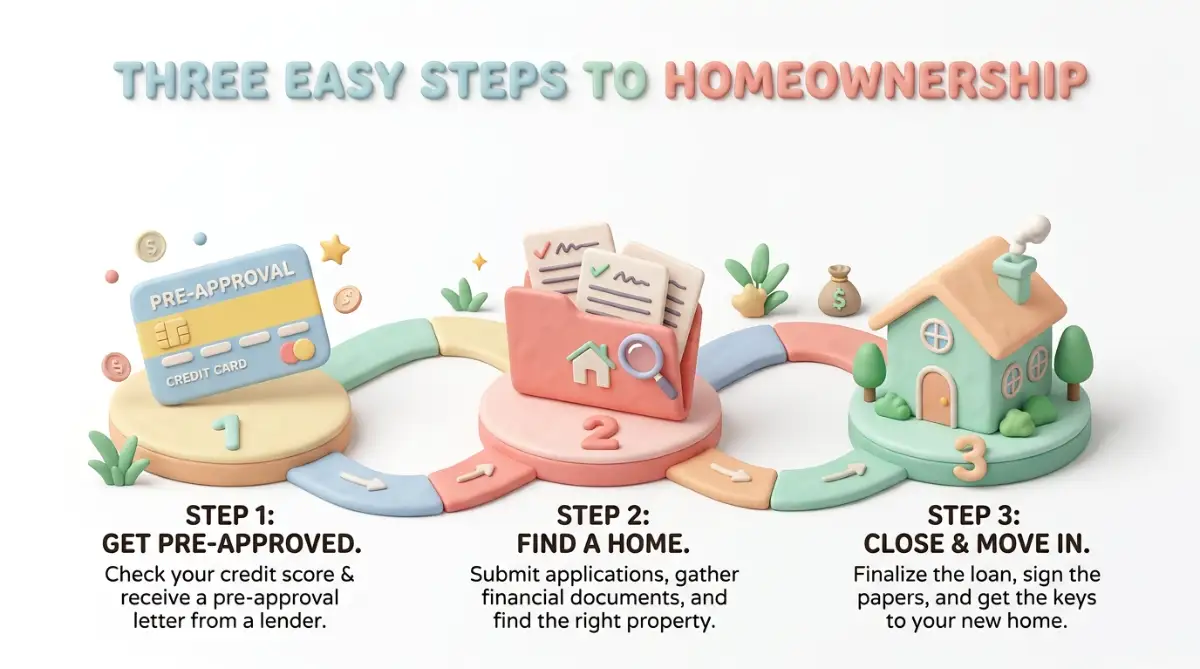
Let us look at how mortgage pre-approval actually works and what steps you can take today to get your letter without stress. Building a solid financial file early gives you a huge advantage when making offers on competitive homes.
Watch this step-by-step video guide to learn exactly how mortgage pre-approval works and why having this letter gives you a massive advantage when making an offer!
Understand the Key Difference Between Pre-Qualification and Pre-Approval
Many first-time buyers make the massive mistake of assuming pre-qualification and pre-approval mean the exact same thing. In reality, they are two completely different steps in the real estate journey.
A pre-qualification is just a quick, informal estimate based on numbers you report verbally to a bank officer. The lender does not verify your tax records or bank accounts, so home sellers rarely take a pre-qualification letter seriously.
A pre-approval is a formal financial review where an underwriter checks your actual credit report, pay stubs, and tax forms. Holding this letter proves to sellers that a bank has formally committed to funding your home loan.
Myth vs Reality
Myth: "Getting pre-approved obligates you to buy a home right away and locks you into using that specific lender forever."
Reality: A pre-approval letter is simply a conditional offer that gives you shopping power for up to ninety days. You carry zero obligation to buy a house or sign a final loan with that specific bank.
My Personal Pro Tip: I almost ruined my own pre-approval by applying for a retail store credit card to get a discount right before my lender finalized my file. My loan officer caught it in time and warned me that even a tiny credit check can pause a loan application for weeks. Since then, I always tell buyers to freeze all credit activity until they have the keys in hand. To ensure your credit standing is fully prepared, review our simple guide on how to improve your credit score before applying for a mortgage.
Advanced Insider Tactics to Maximize Your Pre-Approval Limit
Getting a basic mortgage pre-approval letter is a great start for your housing journey. Smart home buyers, however, use advanced preparation techniques to secure higher loan limits and significantly better interest rates.
Applying strategic financial habits before you approach a lender places you in the strongest borrowing position possible. One essential strategy involves properly seasoning your cash deposits to satisfy bank underwriters.
Bank underwriters require complete transparency regarding where your down payment and closing cash come from. Any large, unexplained cash deposit entering your bank accounts within sixty days of applying triggers immediate red flags.
Lenders call the process of letting money rest in your bank account "seasoning." If family members offer cash gifts toward your purchase, ensure those funds sit in your account for at least two full statement cycles before you request pre-approval.
If gift money arrives right before you apply, obtain a formal signed gift letter from the donor immediately. This letter must confirm the money is a genuine gift with zero expectation of repayment.
If you are trying to balance paying for college and saving for a house simultaneously, managing debt is essential. Reading up on federal vs private student loans can help you structure your monthly payments so they do not ruin your mortgage pre-approval chances.
Freelancers and entrepreneurs face extra scrutiny during the pre-approval phase. Underwriters require self-employed individuals to provide two full years of profit-and-loss statements alongside personal tax returns.
Organizing your business footprint online shows lenders you run a stable, legitimate operation. If you need help professionalizing your business presence quickly, check out this guide on easy AI website builders for small businesses to establish credibility before applying.
Another smart tactic is timing your interest rate lock strategy perfectly. When a lender issues your pre-approval letter, your quoted interest rate remains floating until you specifically ask to lock it.
Floating means your interest rate moves up or down daily alongside national economic trends until you enter a binding contract. Once a seller accepts your purchase offer, ask your lender for a rate lock agreement right away.
A rate lock guarantees that your quoted interest rate will not increase during the sixty-to-ninety-day window before your final loan closing. If you suspect rates might drop, ask your loan officer about a helpful float-down option.
Finally, keep your pre-approval fresh during extended housing searches. Most mortgage pre-approval letters remain valid for only sixty to ninety days before expiring.
Extending an expired letter requires your loan officer to pull updated pay stubs and recent bank statements. Keeping your digital folder organized ensures you can refresh your file in a matter of minutes.

Common Pre-Approval Pitfalls That Destroy Home buyer Deals
Securing a pre-approval letter gives you incredible shopping power, but that letter remains completely conditional. Making careless money choices before final loan underwriting can cause lenders to revoke your pre-approval without warning.
Making sudden job changes or switching income structures is incredibly dangerous. Lenders approve your loan limit based on a stable, predictable history of consistent income over two full years.
Switching from a salaried position to an independent contractor role creates serious red flags for bank underwriters. If you must change jobs, ensure your new compensation structure remains a fixed salary and consult your loan officer first.
Financing new retail purchases or vehicles on credit is another fatal mistake. Excitement about a new home often leads people to open store financing accounts to buy furniture before holding the final keys.
Opening new credit lines inflates your debt-to-income ratio, which can push your debt numbers above maximum lender limits. Save all retail shopping for after your final loan closing is fully recorded.
Draining your savings accounts below lender requirements will also sink your deal. Putting every dollar you own toward your down payment leaves your bank account balance at absolute zero.
Mortgage underwriters require borrowers to maintain liquid cash reserves after closing fees are paid. To ensure your investment is fully protected once you close, you should also research how to choose your first home insurance policy without stress.
Having reserve funds proves to the bank that you can cover several months of mortgage payments during emergencies. Plan for cash reserves to keep your pre-approval valid and protect your household stability.
Final Action Plan to Lock In Your Dream Home
Securing your mortgage pre-approval is the single most effective way to turn your homeownership dreams into reality. Following a structured action plan gives you complete control over your real estate journey.
- Pull your free credit reports and dispute any inaccurate reporting marks right away.
- Pay down revolving credit card balances to keep your debt-to-income ratio below thirty-six percent.
- Gather tax returns, W-2 forms, pay stubs, and bank statements into one organized digital folder.
- Submit your documentation to at least three lenders to compare interest rates and origination fees.
- Keep your financial profile completely frozen and avoid new credit lines until closing day.
Getting my pre-approval letter handed to me was the exact moment I stopped feeling scared and started feeling like a real homeowner. I realized that my early preparation made the entire journey incredibly smooth and deeply rewarding.
You have all the exact steps you need right in front of you, so gather your financial papers today. Take that exciting first step toward getting your front door keys, because I know you can achieve this amazing milestone too!
Internal Links Integration Check
- How to Improve Your Credit Score Before Applying for a Mortgage
- Federal vs Private Student Loans Guide
- Easy AI Website Builders for Small Businesses Simple Setup Guide
- How to Choose Your First Home Insurance Policy Without Stress
Frequently Asked Questions
How long does a mortgage pre-approval letter usually last?
Most mortgage pre-approval letters are valid for sixty to ninety days. If your house hunt takes longer, your lender can easily renew the letter by checking your updated pay stubs and bank statements.
Does getting a mortgage pre-approval hurt my credit score?
A formal pre-approval requires a hard credit pull, which can temporarily lower your score by a few points. However, your score will recover quickly as long as you continue paying your monthly bills on time.
Can I change lenders after getting a pre-approval letter from a specific bank?
Yes, you are never legally obligated to use the bank that issued your initial pre-approval letter. You can shop around and submit your final loan application to any lender offering better rates or lower fees.
What causes a pre-approval to be revoked before closing?
Taking on new debt, changing jobs abruptly, or making large, unexplained cash deposits can cause lenders to cancel your approval. It is essential to keep your financial profile completely stable until your loan closes.
Should I drain my savings account to pay a larger down payment?
No, you should never completely empty your savings just to increase your down payment size. Lenders prefer to see two to three months of reserve cash sitting safely in your account after closing.
Disclaimer
The information provided in this article is for educational and informational purposes only and should not be considered formal financial, legal, or real estate advice. Mortgage pre-approval criteria, interest rates, underwriting rules, and loan limits vary widely based on individual credit profiles, lender guidelines, and market conditions. Always consult with a licensed mortgage professional or certified financial planner before signing binding real estate contracts or making major financial decisions.