The Hidden Struggle of Getting Approved Without a Paystub
When I first went full-time with my freelance work, I thought having steady client income was all I needed to get a simple loan. But the moment I sat down with a loan officer and could not show a traditional W-2 paystub, I was instantly rejected. That embarrassing experience showed me how unfair the system feels for self-employed people, and it pushed me to learn exactly how to present my income so banks would actually take me seriously.
I felt completely defeated, wondering if leaving my stable job was a massive mistake. However, I soon discovered that getting funding as a freelancer is entirely possible. You just need to know how to play the lender's game and present your numbers perfectly.
Imagine working hard day and night to build your own business from the ground up. You have a steady income, happy clients, and a clear vision for your financial future. But the moment you try to apply for a simple personal loan, you hit a massive brick wall.
Lenders look at your lack of a traditional payslip and automatically treat you like a huge financial risk. This rejection hurts deeply, especially when you know your personal finances are actually very strong. You feel sidelined just because you chose to follow your dreams instead of a standard 9-to-5 job.
Finding the right path is incredibly hard because standard banking advice is not made for business owners. It feels totally unfair that your daily success is completely ignored by traditional banks and credit unions.
Most online guides assume you have a standard W-2 form or a monthly paystub from an employer. Many blogs even suggest quick payday loans that carry dangerously high interest rates and fees. This bad information leads to multiple rejected applications, which ultimately damages your credit report even more.
 Demystifying Self-Employed Loans
Let us break down the walls that keep you from getting approved today. You do not need a traditional job to prove you are a safe, reliable borrower. You just need to show your financial story in a specific language that lenders understand easily.
Myth vs. Reality for Self-Employed Borrowers
Before we look at the specific steps, let us clear up some common lies about these loans. Many people believe they are entirely locked out of the financial system. That is simply not true at all.
This table shows that your funding dream is very much within your reach. It all comes down to careful preparation and presenting your numbers clearly to the underwriter.
My Personal Pro Tip: Whenever I prepare my loan applications, I always print out my last 12 months of bank statements and highlight my consistent client deposits with a bright yellow marker. This simple visual trick forces the loan officer to see my steady income pattern instead of just focusing on the lack of a W-2 form. It completely changed my approval odds and gave me back my confidence!
The Ultimate Strategy to Verify Your Self-Employed Income
Getting a personal loan without a traditional W-2 paystub might seem impossible, but it all comes down to how clearly you present your cash flow. Lenders need to see absolute consistency, which means your bank statements, tax returns, and Profit & Loss (P&L) reports must tell a strong story of financial stability. Watch this comprehensive video guide below to learn the exact step-by-step process of verifying your freelance earnings, organizing your documents correctly, and making lenders take your loan application seriously.
Advanced Tips for Loan Approval
Our first major step is to draw a clear, undeniable line between your personal life and your business. Many freelancers make the massive mistake of using one single bank account for absolutely everything. When a loan officer looks at that account, it looks like a messy tangle of numbers.
For example, imagine a freelance web designer who paid for weekly groceries and received client payments using the same debit card. To the bank, her spending patterns looked chaotic, unpredictable, and highly risky. If you are setting up new tech tools, reviewing an easy AI website builders for small businesses simple setup guide is smart, but tracking those expenses cleanly is even smarter.
To fix this problem, you must open a dedicated business checking account today. Keep all business income and professional expenses safely inside that specific account. Then, pay yourself a steady monthly transfer directly to your personal checking account.
This simple habit creates a clean paper trail that lenders absolutely love to see. It proves you have a stable salary, even if you are generating the money yourself. Consistency is the secret key to making underwriters comfortable.
Gather Your Tax Returns and Income Records
Lenders want absolute proof that your business is stable and makes consistent money month after month. Since you do not have a standard paystub, your tax returns become your strongest financial weapon. Most traditional lenders will want to see your official tax filings from the past two full years.
Specifically, they will look at your Schedule C form if you operate as a sole proprietor. This form shows your actual net profit after all your business expenses are deducted. Keep in mind that heavy tax write-offs can sometimes work against your approval odds here.
If you write off too many daily expenses, your net income looks much lower than it actually is. Lenders use this official net income to decide exactly how much you can afford to borrow. Talk to your certified accountant to find a healthy balance between saving on taxes and showing a strong, borrowable income.
Build and Protect a Strong Credit Score
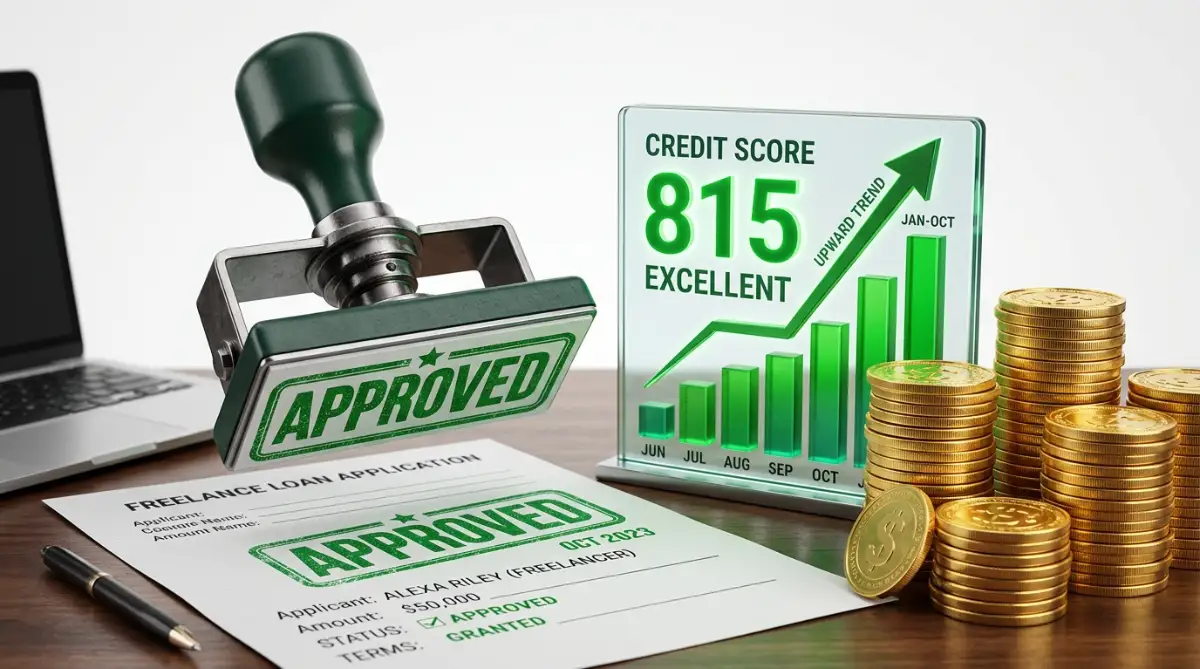
Your credit score is the ultimate proof of your financial responsibility when you lack standard employment verification. Since you do not have a W-2 to lean on, your credit history needs to be as flawless as possible. A high score shows banks that you always honor your debts, regardless of how your income fluctuates.
If you are planning to apply for funding soon, you should learn exactly how to improve your credit score before applying for a mortgage or personal loan. Pay down your high credit card balances to lower your overall credit utilization ratio. Always make every single payment on time, as even one late fee can destroy your chances.
Additionally, generating a professional Profit and Loss (P&L) statement can heavily boost your application. A simple P&L shows lenders exactly how much money is currently flowing through your business year-to-date. Combining a clean P&L with a high credit score makes you look like a top-tier, low-risk applicant.
 Common Mistakes & Pitfalls
One of the biggest mistakes self-employed borrowers make is drastically underreporting their income to save money during tax season. While writing off every lunch and mileage mile saves you tax cash today, it severely hurts your borrowing power tomorrow. Lenders can only lend money based on the final net income you report to the government.
Another major pitfall is applying for loans during a slow season when your bank deposits look incredibly weak. Timing is essential; you should apply right after a strong quarter when your cash flow looks highly impressive. Applying with erratic, unpredictable bank deposits makes underwriters extremely nervous.
Finally, many freelancers make the error of applying with large banks that simply do not understand gig economy workers. Instead, look for local credit unions or online lenders that actively specialize in self-employed funding. Finding the right lending partner prevents unnecessary rejections and protects your credit score from hard inquiries.
A Message of Financial Empowerment
Looking back, getting rejected for my first self-employed loan was actually a blessing in disguise because it forced me to organize my finances like a true CEO. Today, I feel completely empowered knowing that my business income is documented properly and ready for any bank to review. Taking the time to separate your accounts and prepare your tax documents changes the entire game in your favor.
You no longer have to feel like a second-class citizen just because you work for yourself. By following these clear steps, you can prove your financial stability to any underwriter on the market. I hope these strategies give you the exact same confidence to walk into a lender's office and secure the funding you have rightfully earned.
Stay disciplined, keep your paperwork incredibly neat, and protect your credit score at all costs. Your business dreams deserve the right funding, and now you have the exact blueprint to make it happen smoothly.
Frequently Asked Questions (FAQ)
Can I get a personal loan with just bank statements?
Yes, many specialized lenders and credit unions offer bank statement loans for self-employed individuals. They will review your last 12 to 24 months of deposits to verify your consistent cash flow instead of asking for a W-2.
Why do banks reject self-employed loan applications?
Banks often reject self-employed applicants because their income appears inconsistent or heavily reduced by tax write-offs. Without a standard paystub, underwriters view fluctuating freelance income as a higher default risk.
Does my credit score matter more if I am self-employed?
Absolutely. Because you cannot provide traditional proof of steady employment, your credit score becomes the primary indicator of your financial reliability. A high credit score significantly offsets the perceived risk of being self-employed.
Should I use a business or personal bank account to show income?
You should always use a dedicated business bank account to receive client payments and track expenses. Transferring a fixed "salary" from your business account to your personal account makes your income look clean and predictable to lenders.
How many years of tax returns do lenders usually require?
Most traditional lenders require at least two full years of tax returns to approve a self-employed loan. This helps them average out your yearly earnings and ensure your business is historically stable.
Disclaimer
Disclaimer: The information provided in this article is for educational and informational purposes only. It should not be considered professional financial advice. Please consult with a certified financial planner or a professional advisor before making any major borrowing or investment decisions.