
Introduction: The Complex Landscape of Motorcycle Accident Litigation
For millions of riders across America, riding a motorcycle represents freedom, connection with the open road, and a passionate way of life. But when a distracted or negligent driver cuts into your lane, that freedom can turn into a horrifying nightmare in a split second. Unlike occupants in passenger cars protected by steel frames and airbags, a motorcyclist absorbs the full physical impact of a collision. When I look back at the aftermath of my own accident recovery years ago, I remember the overwhelming panic of waking up in a hospital room facing severe injuries and mounting bills. What made that physical suffering exponentially worse was realizing that insurance adjusters immediately jumped to unfair conclusions, assuming I was speeding or being reckless simply because I was on a bike. Proving I was not at fault became a fierce battle not just for financial compensation, but for my personal dignity and future security.
Motorcycle crashes are among the most catastrophic traffic incidents on US roadways. According to data from the National Highway Traffic Safety Administration (NHTSA), motorcyclists are significantly more likely to suffer fatal or severe injuries in a crash compared to passenger vehicle occupants per mile traveled. Despite these sobering statistics, injured riders frequently face an uphill battle when seeking justice through personal injury claims or civil litigation.
In the United States legal system, securing compensation after a crash requires establishing legal liability (fault). Unlike no-fault state car insurance systems that automatically pay limited medical benefits regardless of who caused a minor fender-bender, serious motorcycle accident claims almost always depend on proving that another party's negligence caused the wreck. Because insurance companies aggressively fight high-value injury claims, understanding the legal mechanics of proving fault is essential for every rider and their family.
Legal Standards of Negligence, Scene Evidence, and Police Reports
To successfully establish fault in a US court or during insurance negotiations, an injured motorcyclist must satisfy the foundational elements of tort law. This section breaks down the core legal principles and early evidentiary steps required to build an unassailable claim:
- The Four Pillars of Negligence in US Personal Injury Law: In personal injury litigation, negligence refers to a failure to exercise reasonable care to prevent harm to others on the road. Your legal team must establish duty of care, breach of duty, causation, and measurable damages.
- Common Scenarios Where Drivers Violate Right-of-Way: In multi-vehicle motorcycle accidents, passenger vehicle drivers are frequently at fault due to a failure to detect two-wheeled vehicles. Common situations include left-turn collisions, unsafe lane changes, distracted driving, and rear-end crashes.
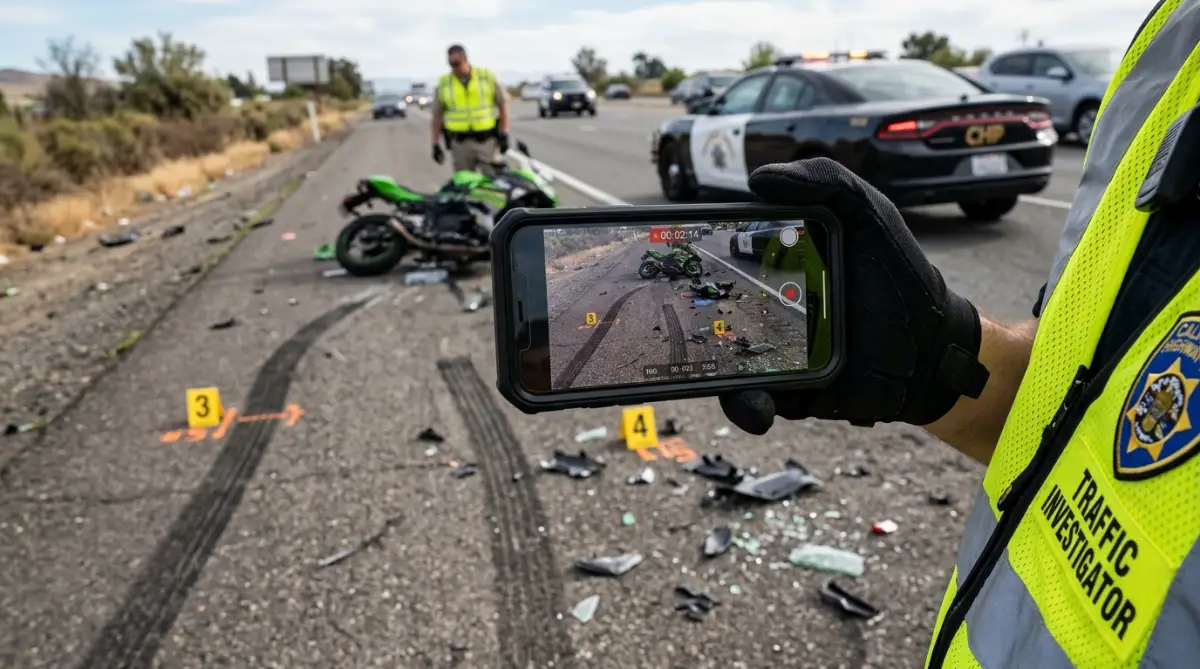
- Preserving Critical Physical Evidence at the Crash Scene: Evidence disappears rapidly after a crash. Gathering high-resolution scene photography, helmet cam footage, eyewitness contacts, and preserving damaged motorcycle equipment is vital.
- The Role of Official Police Reports and Traffic Citations: Law enforcement officers investigate crash scenes and compile official reports documenting statements, physical evidence, and potential traffic citations issued to the at-fault driver.
- Managing Financial Strain and Building Cash Reserves: Severe crashes cause income interruptions while medical bills surge. Establishing financial stability early helps you withstand aggressive insurance stall tactics. If you need financial guidance during recovery, read our guide on improving your credit score before applying for a mortgage or learn about choosing financial loans wisely.
Motorcycle Negligence Framework Comparison Matrix
Myth vs. Reality of Motorcycle Accident Claims
- Myth: If a motorcycle rider was not wearing a helmet, they automatically lose any personal injury lawsuit.
- Reality: Lack of a helmet only affects damages if insurers prove it directly worsened specific head injuries under comparative fault rules.
- Myth: Insurance adjusters always evaluate injury claims fairly based on medical documents.
- Reality: Adjusters utilize calculated strategies to exploit biker bias and minimize payouts wherever possible.
My Personal Pro Tip: When I was dealing with insurance adjusters after my accident, they pressed me for a recorded statement while I was still heavily medicated in the hospital. My advice to you is to never give a recorded statement or sign any insurance documents without having your personal injury attorney present to protect your rights.
Visual Insight: Inside a Motorcycle Accident Case & Proving Fault
Watch this detailed legal insight video where experienced injury attorneys break down real-world motorcycle accident cases. You will learn how lawyers defeat insurance company denial tactics, overcome prejudice against riders, and gather vital evidence to prove driver liability in court.
State Comparative Negligence Laws, Biker Bias, and Trial Tactics
Proving fault in a motorcycle crash is rarely a simple open-and-closed matter. Defense lawyers and insurance adjusters exploit state legal doctrines and societal prejudices to shift blame onto the rider. Understanding how US negligence laws operate helps experienced trial lawyers overcome these hurdles:
Overcoming Biker Bias and Insurance Playbooks:
One of the biggest hurdles injured motorcyclists face is biker bias—the persistent stereotype that all riders are reckless thrill-seekers who speed or split lanes dangerously. Defense attorneys attempt to exploit this prejudice during negotiations or jury trials. Insurance adjusters deploy tactics like the I didn't see the motorcycle excuse, soliciting tricky recorded statements, and arguing over safety gear.
Leveraging Accident Reconstruction Specialists:
When an insurance company denies liability or claims the motorcyclist caused the wreck, top-tier trial lawyers hire specialized accident reconstruction experts. These engineering professionals use advanced physics, mathematical modeling, and 3D computer animation to recreate the collision. By analyzing vehicle crush damage, tire skid marks, friction coefficients, and electronic control module data, reconstructionists definitively establish vehicle speeds, braking distances, and reaction times.
As your legal strategy progresses through formal court litigation, managing your financial recovery and personal credit health remains crucial. If medical bills accumulate or household debts pile up during extended litigation, explore additional educational guides such as how to choose your first home insurance policy without stress or review insights on affordable educational pathways if you need career upskilling after an injury. Furthermore, ensuring your digital assets and small business operations remain protected during medical leave can be managed smoothly via easy AI website builders for small businesses.
Ultimately, taking your claim to court through the discovery phase and formal depositions forces insurance carriers to take your case seriously. Aggressive legal cross-examination exposes inconsistencies in the driver's story, driving up settlement values and securing the financial justice required to rebuild your life following a catastrophic traffic collision.

Red Flags to Avoid When Choosing a Motorcycle Accident Lawyer
Not all personal injury attorneys have the technical knowledge or courtroom grit required to win complex motorcycle crash cases. Watch out for these warning signs:
- Lack of Motorcycle Litigation Experience: Avoid lawyers who primarily handle standard car fender-benders and have never tried a motorcycle liability case in front of a jury.
- Quick Settlement Orientation: Be cautious of attorneys who push you to accept an early lowball insurance offer before your doctors have determined your long-term medical prognosis.
- Reluctance to Invest in Expert Witnesses: Building a winning liability case requires hiring crash reconstruction engineers and medical experts. Ensure the firm has the financial resources to advance these costs.
- Poor Communication: If an attorney fails to return your calls promptly during your initial inquiry, expect even worse communication once you sign their retainer contract.
Protect Your Rights and Secure the Justice You Deserve
Proving fault in a US motorcycle accident requires a meticulous blend of legal expertise, physical evidence preservation, expert engineering analysis, and an aggressive defense against insurance company stereotypes. By understanding the four elements of negligence, preserving crash scene evidence, and partnering with an experienced trial attorney, injured riders can level the playing field and recover the full compensation required to rebuild their lives.
Critical Action Steps Immediately Following a Motorcycle Crash
- Call 911 Immediately: Ensure police and medical personnel are dispatched to the scene.
- Seek Emergency Medical Care: Even if you feel adrenaline masking pain, get thoroughly examined by emergency physicians to document internal injuries.
- Never Admit Fault or Apologize: Avoid saying "I didn't see them" or "I'm sorry" at the scene, as these remarks will be used against you as admissions of guilt.
- Notify Your Insurer, But Avoid Recorded Statements: Report the accident to your carrier, but decline to give recorded statements to the other driver's adjuster until you speak with a lawyer.
- Consult a Dedicated Personal Injury Attorney: Seek legal representation as early as possible to preserve critical physical and video evidence before it is lost.
Rebuilding your physical health and personal life after a severe motorcycle wreck requires immense courage, patience, and emotional resilience. Healing from traumatic injuries is a slow journey, and carrying the burden of an intense legal battle at the same time can feel exhausting. But you do not have to fight this battle alone. When you partner with a dedicated, compassionate legal team who truly understands motorcycle law and respects the riding community, you gain a powerful shield against insurance corporate tactics. Achieving justice and full compensation is not just a legal victory—it is the foundation upon which you can reclaim your peace of mind, your independence, and your future on the open road.
Reflecting on my own grueling recovery journey after my accident, I know how frightening it is to face insurance companies alone. I want you to save yourself months of unnecessary anxiety by trusting an experienced legal advocate to handle the fight. If you ever feel overwhelmed by medical bills or legal paperwork, remember that you have the right to stand tall, protect your dignity, and secure every dollar you rightfully deserve.
Additional Financial & Legal Resources
Managing recovery and financial stability requires comprehensive planning. Explore our approved guides:
- Review funding options by reading federal vs. private student loans and how to choose wisely.
- Understand property protection principles via how to choose your first home insurance policy without stress.
- Discover digital management tools via easy AI website builders for small businesses.
- Learn how to manage credit standings through improving your credit score before mortgage applications.
- Explore alternative skill development through the best community colleges in the USA for affordable education.
Frequently Asked Questions (FAQs)
What should I do immediately after a motorcycle accident?
Call 911, seek immediate medical attention, document the scene with photos if possible, and avoid giving recorded statements to insurance adjusters before speaking with an attorney.
How is fault determined in a motorcycle accident?
Fault is established by proving negligence—demonstrating that the other driver breached their duty of care, causing the collision and your resulting injuries through police reports, witness statements, and expert analysis.
Can I recover compensation if I was partially at fault for the crash?
In comparative negligence states, you can still recover financial compensation even if you share partial blame, though your total award is reduced by your percentage of fault.
Why do insurance companies exhibit bias against motorcyclists?
Insurers often rely on unfair stereotypes portraying riders as reckless or speeding to shift blame, lower claim valuations, or deny payouts altogether.
How long do I have to file a personal injury lawsuit after a motorcycle crash?
Statutes of limitations vary by state, typically ranging from one to three years from the date of the accident, making early legal consultation essential.
Disclaimer: The information provided in this article is for general informational, educational, and entertainment purposes only and does not constitute formal legal, financial, or medical advice. Reading this article or interacting with this website does not create an attorney-client or fiduciary relationship. Personal injury laws, traffic regulations, statutes of limitations, and negligence standards vary significantly by US state and local jurisdiction. If you or a loved one has been injured in an accident, you should consult directly with a licensed personal injury attorney and certified financial professional in your jurisdiction to receive guidance tailored to your specific circumstances.