
Introduction: The Burden of Proof in United States Civil Lawsuits
In the immediate aftermath of a sudden accident, life can feel completely overwhelming. Whether you are recovering from a violent car crash, a slip and fall on unsafe property, or a severe workplace injury, your immediate focus is naturally on managing physical pain and seeking emergency medical care. Yet, behind the scenes, a quiet clock begins ticking. While you are trying to rest and recover, insurance companies are already working to protect their financial interests, often looking for gaps in proof to minimize or deny your claim. When I faced mounting medical bills after my own injury years ago, I realized that the outcome of my recovery depended entirely on gathering pieces of paper, photographs, and witness statements. Collecting solid evidence is not just an legal chore—it is your voice, your truth, and your shield against being unfairly treated by corporate insurance giants.
When you suffer an injury due to someone else's negligence in the United States, you are entitled under civil law to seek financial compensation (known as damages) for your losses. However, the legal system does not automatically award compensation simply because an accident occurred or because you sustained severe injuries. The fundamental legal burden rests entirely on you, the plaintiff.
In civil personal injury litigation, the plaintiff must prove their case by a legal standard known as a Preponderance of the Evidence. This means you must present sufficient evidence to convince a judge, jury, or insurance adjuster that your version of events is more likely true than not. Without compelling physical, medical, financial, and testimonial evidence, even the most genuine and heartbreaking injury claims can fail in court. This comprehensive guide details every essential category of evidence required to construct an airtight personal injury lawsuit in the US legal system.
 Physical, Scene, Medical, and Documentary Evidence
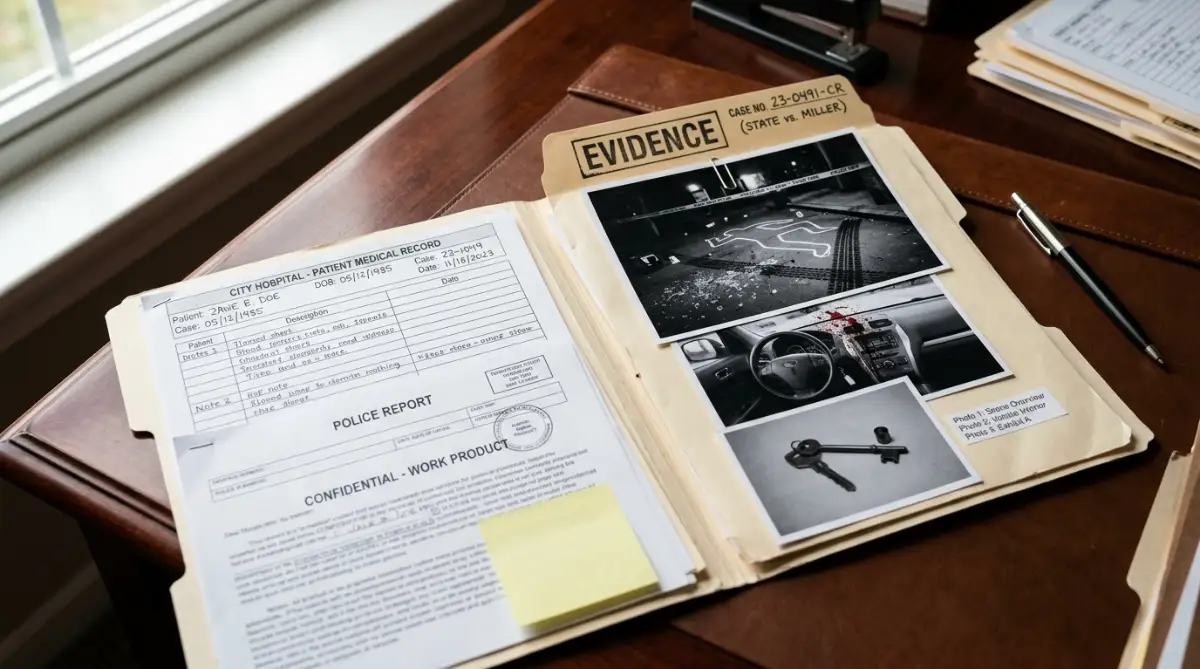
Building a successful personal injury lawsuit begins on the ground floor with tangible, objective proof gathered directly from the scene of the incident and medical treatment facilities. This section covers the foundational evidence categories that establish fault and physical injury:
- Physical Evidence Preserved from the Accident Scene: Physical evidence provides objective proof that cannot easily be disputed, including vehicle damage, crash debris, defective products, and torn clothing.
- Photographic and Video Surveillance Evidence: A single clear photograph or video snippet from wide-angle scene shots, dashcams, or commercial security cameras can dismantle a defendant's false claims immediately.
- Official Police Reports and Incident Records: Responding law enforcement officers compile official incident reports containing vital facts like weather conditions, diagrams, and motor vehicle code citations.
- Comprehensive Medical Records and Treating Physician Notes: Medical records form the backbone of your damages claim, proving causation through emergency room logs, diagnostic imaging, and surgical reports.
- Detailed Financial Proof of Economic Damages: Every dollar claimed for lost wages or out-of-pocket medical bills must be substantiated with itemized bills, tax returns, and employer statements. If you need financial guidance while awaiting settlement funds, read our guide on improving your credit score before applying for a mortgage or learn about choosing financial loans wisely.
Personal Injury Evidence Comparison Matrix
Myth vs. Reality of Personal Injury Evidence
- Myth: As long as you tell the truth about your pain, insurance companies will voluntarily pay your medical bills.
- Reality: Insurance adjusters rely strictly on documented physical and medical evidence; unverified statements are routinely ignored or contested.
- Myth: Police reports are always final and completely determine who wins a civil personal injury lawsuit.
- Reality: While influential, police reports are preliminary investigations and can be challenged with stronger expert or video evidence in court.
My Personal Pro Tip: When I was organizing my own legal paperwork, I made the mistake of waiting weeks to request my physical therapy notes and pharmacy receipts, which caused unnecessary delays. My advice to you is to request complete, itemized copies of every medical record and billing statement the moment you finish treatment so your legal team has ammunition ready.
Visual Insight: Essential Evidence Needed to Win Your Injury Case
Watch this comprehensive video guide featuring experienced trial attorneys as they break down the most critical pieces of evidence needed to build a winning personal injury lawsuit. Learning how lawyers gather and preserve scene data, medical records, and expert opinions will empower you to protect your legal rights.
Testimonial Evidence, Expert Witnesses, Spoliation, and Trial Preparation
Beyond physical and medical documentation, winning a high-value personal injury lawsuit requires subjective and technical evidence that translates your physical suffering into undeniable legal proof. This section details testimonial evidence, expert analysis, and legal techniques to protect your claim:
Eyewitness Testimony and Specialized Experts:
Unbiased eyewitnesses who have no financial interest in the outcome carry immense credibility. Furthermore, complex claims often require testimony from credentialed professional experts such as accident reconstruction specialists, biomechanical engineers, medical specialists, and forensic economists who calculate lifetime care costs.
Preserving Corporate Evidence with Spoliation Letters:
In cases involving corporate defendants or commercial trucking companies, crucial digital data or surveillance footage is controlled entirely by the opposing party. Under US law, corporations routinely destroy video files after 30 days unless legally notified. Your attorney must immediately issue a formal Spoliation of Evidence Letter to place the defendant on notice, protecting digital logs from being deleted.
As your litigation proceeds over many months, keeping your household finances stable is crucial. If medical bills accumulate or credit scores drop while awaiting settlement funds, explore additional educational guides such as how to choose your first home insurance policy without stress or review insights on affordable educational pathways if you need career upskilling. Furthermore, ensuring your personal records and assets remain organized online can be streamlined via easy AI website builders for small businesses.
Ultimately, combining qualitative pain journals, family testimonies, and strict social media caution safeguards your case integrity. Guarding your digital footprint and maintaining consistent medical treatment ensures that defense attorneys cannot distort your daily activities to devalue your rightful financial compensation.

Common Mistakes That Can Destroy Your Evidentiary Chain
Even with strong evidence, simple mistakes early in your case can ruin your chances of winning a lawsuit. Be sure to avoid these critical pitfalls:
- Gaps in Medical Treatment: Waiting weeks to see a doctor or missing physical therapy sessions gives insurance adjusters an excuse to argue your injuries were not serious.
- Failing to Follow Doctor's Orders: Ignoring medical advice or returning to strenuous physical work too early will be used by defense attorneys to show you failed to mitigate damages.
- Giving Recorded Statements Without an Attorney: Insurance adjusters use leading questions during recorded phone calls to trick victims into admitting partial fault.
- Discarding Physical Evidence: Throwing away torn clothing, broken helmets, or damaged property deprives your case of crucial physical proof.
Turn Evidence into Justice and Complete Recovery
Winning a personal injury lawsuit requires far more than telling your story—it demands a methodical, well-organized evidentiary strategy that proves negligence, establishes medical causation, and quantifies every financial and emotional loss. By preserving physical proof, seeking immediate medical care, securing expert testimony, and avoiding common insurance traps, you can build an unassailable case that forces insurance companies to pay the full compensation you deserve.
Evidence Gathering Checklist for Injury Victims
- Immediately at the Scene: Call 911, take wide and close-up photographs, gather witness contact details, and request police response.
- At the Hospital / Clinic: Describe all pain symptoms accurately to doctors, request copies of discharge paperwork, and keep diagnostic imaging scans.
- At Home: Start a daily pain journal, keep all receipts for medical expenses, and obtain wage loss documentation from your employer.
- Legal Action: Contact a dedicated personal injury attorney as soon as possible to send spoliation letters and preserve digital surveillance footage.
Reclaiming your life after a life-altering accident is a journey that requires courage, patience, and unwavering resolve. Gathering evidence and battling insurance companies may feel like an exhausting ordeal, but every photograph, medical report, and witness statement you collect brings you one step closer to justice. Remember that you do not have to carry this heavy burden alone. Partnering with an experienced, empathetic personal injury attorney ensures that your story is told accurately, your rights are fiercely defended, and your future is securely protected.
Reflecting on my own turbulent experience gathering evidence after my accident, I know firsthand how intimidating the legal process feels when you are hurting. I want you to save yourself months of stress by building your evidentiary foundation early. If you ever feel overwhelmed by paperwork or insurance adjusters, remember that meticulous preparation is your greatest asset on the road to full recovery.
Additional Financial & Legal Resources
Managing recovery and financial stability requires comprehensive planning. Explore our approved guides:
- Learn how to manage credit standings through improving your credit score before mortgage applications.
- Review funding options by reading federal vs. private student loans and how to choose wisely.
- Understand property protection principles via how to choose your first home insurance policy without stress.
- Discover digital management tools via easy AI website builders for small businesses.
- Explore alternative skill development through the best community colleges in the USA for affordable education.
Frequently Asked Questions (FAQs)
What is the most important evidence in a personal injury lawsuit?
Comprehensive medical records connecting your injuries directly to the accident, alongside objective physical or photographic scene evidence, form the most crucial proof.
Can I win a personal injury case without eyewitnesses?
Yes, physical evidence, police reports, surveillance footage, and expert medical testimony can successfully prove liability even without independent eyewitnesses.
How long do I have to collect and preserve accident evidence?
You should begin collecting evidence immediately; digital surveillance footage and physical skid marks can be wiped or destroyed within days or weeks of an accident.
What is a spoliation of evidence letter?
A formal legal notice sent by an attorney to a defendant requiring them to preserve all digital, electronic, and physical records related to an accident.
Why should I avoid posting on social media during a lawsuit?
Insurance defense attorneys monitor social media accounts to twist innocent photos or status updates out of context to argue your injuries are exaggerated.
Disclaimer: The information provided in this article is for general informational, educational, and entertainment purposes only and does not constitute formal legal, financial, or medical advice. Reading this article or interacting with this website does not establish an attorney-client or fiduciary relationship. Personal injury laws, rules of evidence, statutes of limitations, and court procedures vary significantly across different US states and local jurisdictions. If you or a family member has suffered an injury, you should consult directly with a licensed personal injury attorney and certified financial professional in your jurisdiction to receive guidance tailored to your specific situation.