The Hidden Credit Trap: How Unseen Mistakes Damage Your Financial Life
A few years ago, I walked into an auto dealership feeling completely confident that I would drive away in a new car with a low interest rate. To my absolute horror, the finance manager handed me a rejection letter because my credit score had suddenly dropped by eighty points without my knowledge. I spent weeks feeling stressed and embarrassed, trying to figure out why paying my bills on time was not enough. That frustrating experience forced me to dig into credit scoring rules so I could protect my financial standing forever. I remember sitting at my kitchen table analyzing my credit report line by line, wishing someone had taught me these rules in school. That journey taught me how vital it is to monitor subtle shifts in credit utilization to prevent unexpected point drops.
You apply for a new apartment lease, a car loan, or a low-interest credit card, expecting smooth approval. Suddenly, the lender hands you a rejection letter or demands a massive interest rate because your rating dropped unexpectedly.
Watching your score fall without understanding why creates an immediate feeling of frustration and anger. You work hard to manage your finances, yet unknown factors pull down your credit standing behind the scenes.
Why everyday people struggle with falling credit scores:
- Following outdated financial advice: Many people believe carrying a balance on credit cards builds credit faster, which is completely false.
- Misunderstanding credit scoring algorithms: Credit bureaus calculate scores using complex formulas that most consumers never learn in school.
- Falling victim to unaddressed credit report errors: Clerical mistakes by banks and credit bureaus go unnoticed without active credit monitoring.
- Focusing only on minimum monthly payments: Paying minimums keeps accounts current but causes interest and credit utilization ratios to skyrocket.
The emotional and financial impact of credit score drops:
- Constant anxiety when applying for loans: Fearing instant rejection makes every major purchase feel like a nerve-wracking gamble.
- Paying thousands extra in interest fees: Lower scores force you into higher interest rates on mortgages, car loans, and personal credit lines.
- Loss of financial independence: A damaged score can prevent you from renting a home, starting a business, or securing favorable insurance rates.
I have seen countless individuals face this exact frustration. You pay your bills on time every month, yet your score suddenly dips by thirty or forty points.
When you do not understand what triggers these drops, you feel like the whole financial system is stacked against you. You wonder if closing an old card or checking your score caused the sudden drop.
The truth is that credit scoring models follow very specific, logical rules. Once you learn what actions trigger penalty points, you can easily protect your rating and build a strong financial record.
What Drives Your Rating Down: The Core Scoring Pitfalls
Your credit score is a numerical summary of how reliably you handle debt over time. Major scoring models like FICO and VantageScore use five main categories to calculate your total rating.
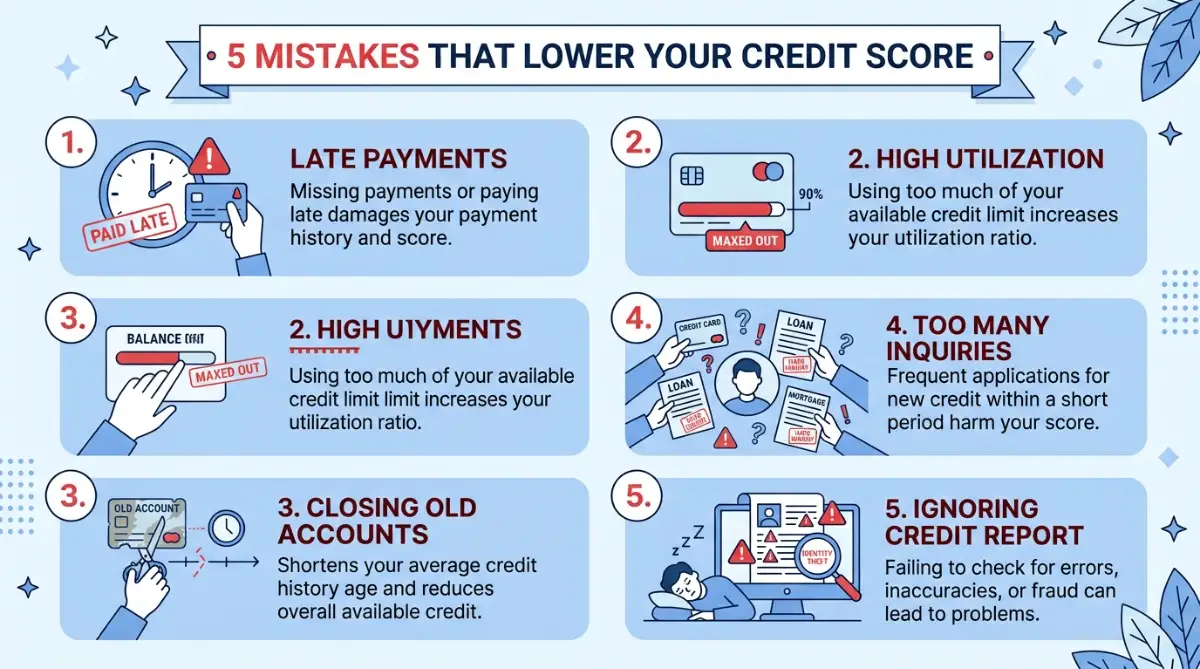
Before reviewing individual credit scoring factors, watch this helpful breakdown to learn about the top mistakes that quietly ruin your credit rating and how you can avoid them.
Understanding Scoring Weights
Payment history and credit utilization make up sixty-five percent of your total credit score. Keeping these two factors optimized is the fastest way to shield your profile from sudden drops.
Comparing Credit Scoring Factors
Myth vs Reality: Credit Score Management
Myth: "Carrying a small balance on your credit card every month improves your score."
Reality: Paying your balance in full every month keeps utilization low and avoids unnecessary interest charges while building credit.
My Personal Pro Tip: Here is a major mistake I made early in my financial journey: as soon as I paid off my very first credit card, I closed the account thinking it was the responsible thing to do. My score dropped almost thirty points the following month because I accidentally shortened my average credit age and cut my total credit limit in half. My pro tip is to keep your oldest cards open and active by placing a tiny recurring subscription on them with automatic bill pay enabled.
Watch this helpful breakdown to learn about the top mistakes that quietly ruin your credit rating and how you can avoid them:
Advanced Practical Strategies to Shield and Raise Your Rating
Protecting your score requires more than just avoiding obvious mistakes. You can use proven financial strategies that proactively boost your credit profile over time. I have helped many people fix their financial ratings after unexpected dips. Implementing these advanced habits gives you total control over how banks and scoring algorithms perceive your creditworthiness. One smart way to instantly drop your credit utilization ratio is to request a credit limit increase on your current cards. If your credit limit increases while your spending stays the same, your utilization percentage drops automatically. To ensure your credit profile meets general lending standards before requesting loans, you can review our guide on how to improve your credit score to prepare your file for future applications.
Another powerful tactic is timing your payments before the billing statement date. Most credit card issuers report your account balance to credit bureaus on your monthly statement closing date, not on your payment due date. If you pay your balance on the due date, your statement may still report a high balance to credit bureaus. Paying down your balance a few days before this closing date ensures the card issuer reports a near-zero balance to credit agencies. If you are balancing student financing or looking at alternative educational funding alongside your credit journey, reviewing insights on federal vs private student loans helps you understand how different liabilities impact your overall financial health.
Furthermore, building an emergency cushion prevents credit dependence during tough times. Relying on credit cards during financial emergencies is a major reason why people end up with maxed-out accounts and dropped scores. Having cash on hand allows you to cover unexpected car repairs or medical bills without touching your credit lines. You can follow our guide on building an emergency reserve fund to create a financial safety net quickly. For small business owners or freelancers managing commercial credit profiles, you can explore resources on easy AI website builders for small businesses to establish professional online branding.
Additionally, maintaining household protection against unexpected liability keeps your overall financial house in order. For related insights on safeguarding your personal assets and insurance standing, check out tips on how to choose your first home insurance policy without unnecessary stress. Keeping your financial records organized and your utilization ratios low protects your borrowing power for major life decisions. You will enjoy lower interest rates and smoother loan approvals whenever you need financing.
 Unexpected Financial Traps That Silently Damage Your Score
Many credit score drops happen because consumers fall for subtle traps that seem completely harmless at first glance. Recognizing these hidden hazards helps you avoid sudden rating losses.
Co-Signing Loans for Friends or Relatives
Co-signing a loan for a family member or friend carries massive financial risk because that debt appears directly on your credit report, damaging your rating if they pay late.
Ignoring Unpaid Utility, Medical, or Parking Bills
Unpaid utility or medical balances often get sent to third-party collection agencies that report defaulted accounts directly to major credit bureaus, dropping scores significantly.
Simple Do's and Don'ts for Credit Management
- Do set up balance alerts for when spending reaches twenty percent of limits.
- Do keep your oldest credit card active with a small recurring utility bill.
- Do dispute incorrect negative marks on credit reports promptly.
- Don't apply for store credit cards just to get small checkout discounts.
- Don't ignore official mail or emails from credit card issuers regarding terms.
- Don't co-sign loans for friends or relatives unless you can pay the debt yourself.
Action Plan for Tomorrow: Take Control of Your Financial Future
Rebuilding and protecting your credit score is a journey that starts with small, daily decisions. You do not need to feel overwhelmed or intimidated by credit scoring systems anymore.
- Automate Minimum Payments: Set up auto-pay on every credit card account to guarantee you never miss a due date.
- Audit Current Utilization: Calculate the balance-to-limit ratio on each card and prioritize paying down balances above thirty percent.
- Pull Credit Reports: Access your free credit reports from the major bureaus and review them for errors.
Taking that first active step to download my credit report and dispute simple errors changed my financial life forever. If I could rise above that stressful situation and rebuild my confidence on my own, I know you have the power to do it too. Believe in your ability to build strong credit, take immediate action today, and enjoy the financial freedom you deserve.
Recommended Reading Resources
Explore these internal guides to master your overall financial strategy:
- How to Improve Your Credit Score Before Applying for a Mortgage
- Federal vs Private Student Loans Guide
- How to Choose Your First Home Insurance Policy Without Stress
- Easy AI Website Builders for Small Businesses Simple Setup Guide
Frequently Asked Questions
How long does a late payment stay on my credit report?
A late payment mark remains on your credit report for up to seven years, though its negative impact decreases over time with steady on-time habits.
Does paying off a loan completely lower my credit score?
Paying off an installment loan can sometimes cause a temporary minor dip because the account closes, slightly reducing your active credit mix.
How often should I check my credit reports for errors?
You should check your credit reports at least once every three to four months; requesting your own reports is free and does not hurt your score.
What constitutes a good credit utilization ratio?
Keeping your credit utilization ratio below thirty percent across all cards is ideal, though staying under ten percent yields the highest score boosts.
Can checking my own credit score lower my rating?
No, checking your own score is considered a soft inquiry, which has zero impact on your credit rating.
Disclaimer: This article is strictly for educational and informational purposes and does not constitute formal financial, legal, or credit counseling advice. Credit scoring algorithms and lender requirements vary depending on individual financial profiles, financial institutions, and credit reporting agencies. Always consult with a qualified financial advisor or certified credit counselor before making major credit decisions.