The Untold Stress of Needing Cash Without Collateral
A few years ago, when an unexpected emergency hit my family, I felt completely trapped because I had no home or car to offer as collateral. I spent stressful nights worrying about how I would cover my bills without risking the few assets I owned. Learning how unsecured personal loans work saved my financial health, and I want to share the exact path that helped me get funded smoothly. I remember sitting at my desk late at night, overwhelmed by confusing bank terms and feeling entirely alone. That scary experience taught me how powerful the right guidance can be when you need money without risking your property. Taking the time to understand credit basics changed my entire financial future for the better.
Living through unexpected financial emergencies makes your heart sink. When sudden medical bills pop up, home repairs stall, or credit card balances pile up, you feel cornered.
You need extra money right away to regain control of your life. However, the thought of pledging your car or home as collateral terrifies you. Facing heavy financial pressure while worrying about losing your hard-earned assets creates immense daily anxiety.
Why do so many everyday people struggle when looking for cash options?
- Borrowers often fall for predatory ads that promise instant cash without checking your credit standing.
- Many applicants assume that no collateral means lenders do not care about your debt history.
- Misleading loan offers hide high interest rates and surprise origination fees in tiny fine print.
- Applying for random personal loans without checking basic eligibility damages your credit score quickly.
This ongoing financial uncertainty takes a heavy toll on your peace of mind and confidence:
- Constant fear of unexpected expenses ruins your sleep and distracts you during daily work hours.
- Feeling financially trapped breaks down your self-esteem and leaves you feeling completely helpless.
- Rejection letters from automated bank systems make you feel like a statistic instead of a person.
- Financial stress spills over into family conversations, creating unwanted tension at home.

When you need money without pledging assets, banks look at you under a microscopic lens. Since you offer no house, vehicle, or savings account to back up the debt, lenders take on all the financial risk.
That is why automated underwriting software evaluates your credit habits, monthly cash flow, and job stability with extreme precision. The lender wants to be entirely sure that you have the income and discipline to pay back the funds.
Most folks do not realize that unsecured borrowing is built entirely on personal trust and track records. If your paperwork shows irregular deposits or high existing credit card balances, bank computers flag your profile instantly.
Lenders are not trying to make your life difficult; they are simply running risk formulas to protect their capital. Learning how these risk formulas work helps you present your financial profile in the absolute best light.
The Core Mechanics of Unsecured Borrowing
Unsecured personal loans give you access to a lump sum of money without requiring you to risk any physical property. You receive the funds upfront and agree to pay the money back in equal monthly installments over a set timeframe.
Because the lender has no physical asset to seize if you default, they charge slightly higher interest rates than secured loans. However, getting approved depends entirely on how well you manage your money, credit cards, and monthly obligations.
How Lenders Evaluate Your Risk Profile Without Assets
When you apply for an unsecured loan, the bank's underwriting system reviews four primary pillars of your financial life. These pillars tell the bank whether you are a safe borrower or a potential default risk.
Comparing Risk Evaluation Metrics
Myth vs Reality: Unsecured Borrowing
Myth: "Unsecured loans never check your credit score."
Reality: Lenders check credit history very carefully since no physical collateral is backing the debt.
My Personal Pro Tip: During my first personal loan search, I made the mistake of ignoring origination fees and ended up with less cash than I needed. My loan officer showed me that checking the total Annual Percentage Rate gives you the true picture of your borrowing costs. Always calculate your net payout after fees before you sign any final contract.
Watch this simple video to see how credit scores directly impact your loan approval odds and interest rates. Seeing these practical steps in action will give you the knowledge you need before reading the rest of our guide below!
Advanced Strategies to Secure Unsecured Loans Without Collateral
Once you understand how lenders review your risk profile, you can utilize advanced strategies to improve your approval odds. Securing an unsecured loan without pledging assets requires careful preparation and organized paperwork. One of the most effective steps is optimizing your credit score baseline. Your credit score acts as your digital reputation when you request money without collateral. A higher score proves to lenders that you take your financial promises seriously and pay bills on time. You can learn more about strengthening your credit history by reading our guide on how to improve your credit score before submitting formal loan applications.
Mastering your debt-to-income balance is another crucial component of successful borrowing. Lenders want to confirm that you have enough room in your monthly budget to handle a new loan payment easily. To qualify for a lender's lowest rates, target a back-end DTI ratio of 30% to 36% or lower. Eliminating small monthly credit balances before applying reduces your overall DTI percentage. If you are also managing educational expenses or student financing, you can check out insights on federal vs private student loans to see how debt types influence your monthly cash flow.
Streamlining your income and employment proof gives underwriters the confidence to approve your loan request. Gather your paperwork ahead of time so you can upload complete files the moment the bank asks. Recent pay stubs, W-2 forms, tax returns, and bank statements prove that your earning power is consistent. Furthermore, shopping around with multiple lenders allows you to compare APR offers and find the lowest total cost. Take advantage of online soft-credit-check pre-qualification tools to evaluate personalized interest rate quotes without hurting your credit score. For related insights on managing household financial risks, check out tips on how to choose your first home insurance policy to protect your overall stability.
Evaluating fixed versus variable interest options ensures you select the right structure for your financial goals. A fixed-rate loan provides complete predictability with equal monthly payments over the life of the debt. Avoiding hidden fees and understanding origination charges keeps your borrowing costs transparent and manageable. If you run a small business or manage freelance side earnings, you can also review resources on easy AI website builders for small businesses to establish professional income documentation.
Finally, establishing a post-funding safety buffer protects your budget against unexpected surprises. Once your loan money lands in your bank account, set aside your first two monthly installment payments in a separate savings account. Lenders feel much more confident working with borrowers who maintain active cash reserves alongside their debt accounts. By combining these advanced steps, you turn a complex borrowing process into a smooth, successful experience.
 Blunders That Can Ruin Your Loan Request
Navigating the unsecured borrowing world requires careful attention to detail. A single innocent mistake during the application process can lead to immediate rejections, unexpected fees, or long-term credit damage.
Trapped by Origination Fees and Hidden APRs
Many borrowers focus entirely on the base interest rate without reading the full loan agreement. Lenders often add origination fees that range from 1% to 8% of the total borrowed amount, which gets subtracted directly from your loan proceeds.
The Danger of Stacking Credit Applications
When people need money fast, they often panic and fill out applications on five or six lender websites in a single afternoon. This habit, known as application stacking, triggers multiple hard inquiries and causes severe damage to your credit profile.
Simple Do's and Don'ts for Unsecured Loans
- Do use soft credit check pre-qualification tools to rate shop safely without score drops.
- Do borrow only the exact amount required to solve your specific financial emergency.
- Do read the full APR disclosure to account for origination fees and processing costs.
- Don't submit formal applications across multiple lenders simultaneously within a short window.
- Don't accept extra loan amounts just because a lender offers a higher borrowing limit.
- Don't run up new charges on credit cards after using a loan to clear past balances.
Your 24-Hour Action Plan for Safe Borrowing
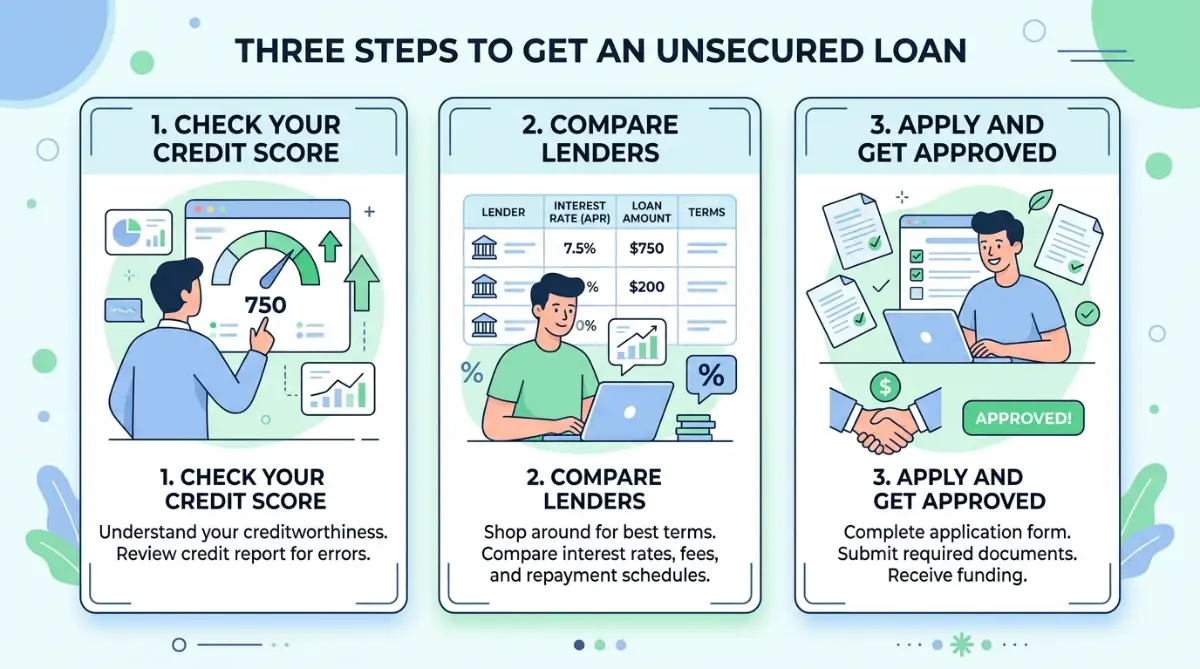
Getting approved for an unsecured personal loan does not require luck or complex financial tricks. It comes down to checking your numbers, organizing your papers, and presenting a clean risk profile to lenders.
- Pull Your Credit Reports: Check for any balance or payment errors and dispute them early.
- Calculate Your DTI Ratio: Confirm your monthly debt payments sit comfortably below thirty-six percent.
- Pre-Qualify Safely: Use soft-check online tools to compare pre-qualified APR offers without score damage.
- Gather Financial Files: Collect pay stubs, W-2 forms, and tax documents into an organized folder.
Organizing my finances and securing a safe unsecured loan gave me my peace of mind back when I needed it most. Do not let fear hold you back from taking charge of your credit profile today. Pick one practical action step from this guide right now, and start building your path toward financial freedom.
Recommended Reading Resources
Explore these internal guides to master your overall financial strategy:
- How to Improve Your Credit Score Before Applying for a Mortgage
- Federal vs Private Student Loans Guide
- How to Choose Your First Home Insurance Policy Without Stress
- Easy AI Website Builders for Small Businesses Simple Setup Guide
Frequently Asked Questions
Can I get a personal loan without offering any collateral?
Yes, unsecured personal loans allow you to borrow funds without risking your home, car, or other personal assets.
How do lenders evaluate my application without collateral?
Lenders evaluate your credit score, debt-to-income ratio, job stability, and monthly income cash flow to measure risk.
Will pre-qualifying for a loan hurt my credit score?
No, pre-qualifying uses a soft credit check that allows you to compare interest rate offers without damaging your credit score.
What is an origination fee on a personal loan?
An origination fee is an upfront administrative charge deducted directly from your loan payout by the lender.
How long does it take to receive unsecured loan funds?
Most online lenders disburse approved loan funds directly into your checking account within one to three business days.
Disclaimer: The information provided in this article is intended strictly for educational and informational purposes. It does not constitute formal financial, legal, or investment advice. Loan terms, interest rates, eligibility requirements, and lender policies vary based on individual credit profiles, geographic location, and market conditions. Always consult with a licensed financial advisor or a qualified banking professional before signing any binding loan contracts or taking on new debt obligations.