How a Rising Variable Rate Squeezed Sarah's Monthly Kitchen Budget
I recall working with Sarah, a high school librarian who took out a $15,000 unsecured personal loan to renovate her kitchen. Attracted by a promotional 7.5% initial APR on a variable-rate loan compared to an 8.9% fixed-rate offer, she chose the variable option to minimize her immediate monthly outlay.
However, over the following 18 months, central bank interest rate hikes pushed her variable rate up to 11.2%, increasing her monthly payment by nearly $65 and straining her modest monthly budget. I felt her anxiety as she explained how those rising payments squeezed her groceries and utility budget every single month.
I helped her refinance into a fixed-rate loan to eliminate payment uncertainty, but that experience proved to me why evaluating long-term market trends is essential. Choosing between fixed and variable interest rates dictates your budget predictability for years to come.
When applying for a personal loan—whether to consolidate high-interest credit cards, renovate your home, or cover emergency bills—this choice represents a major financial decision. It dictates not only your monthly installment amount, but also your long-term cost of borrowing.
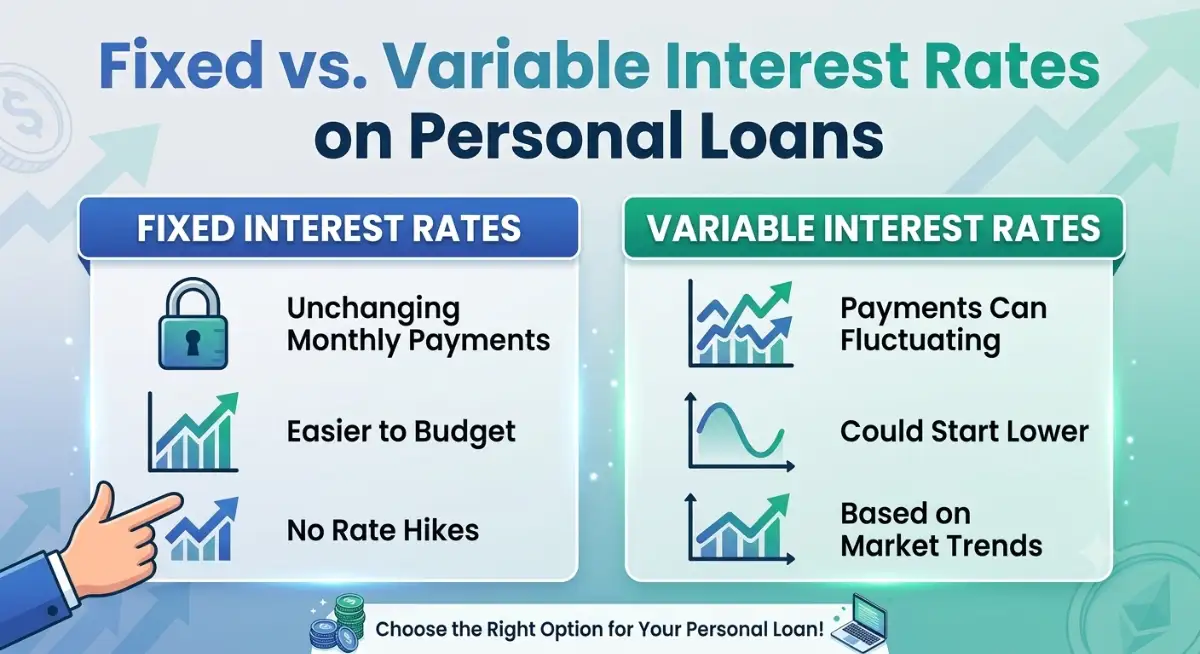
A fixed interest rate locks in your payment for the entire duration of the loan, offering complete budget predictability. A variable interest rate fluctuates periodically based on broader macroeconomic benchmark rates.
While variable-rate loans often start with lower initial interest rates, they carry the risk of rising monthly payments if central banks raise interest rates. Deciding which structure aligns with your financial strategy requires analyzing market trends, income stability, and risk tolerance.
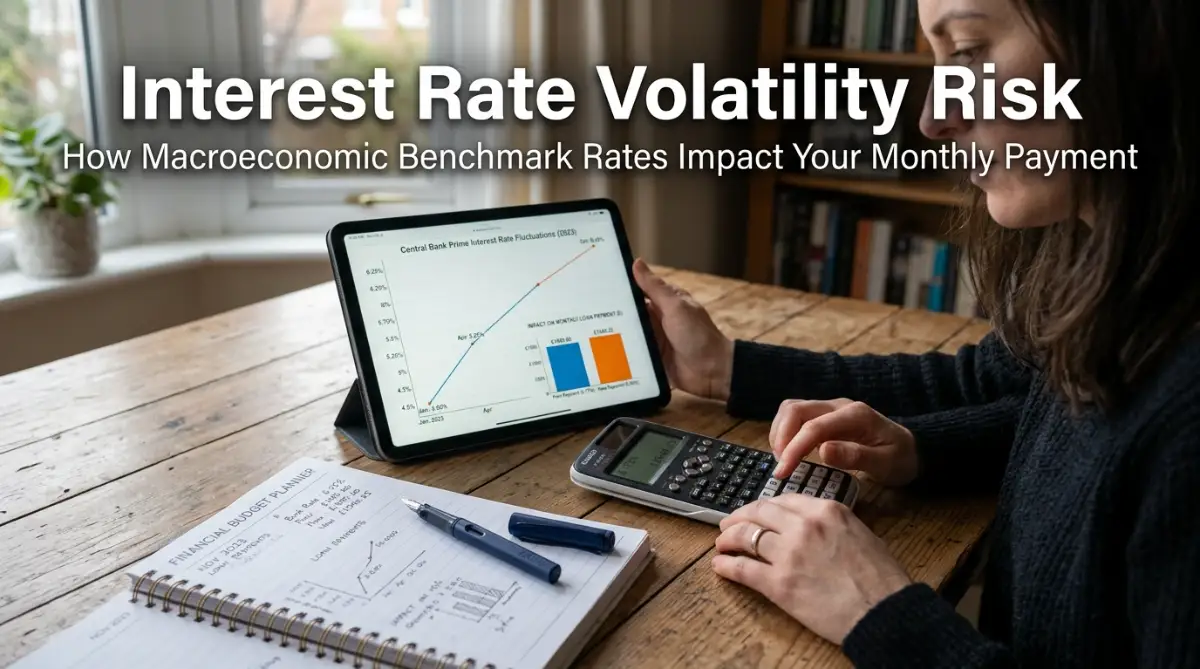
Navigating personal finance options effectively requires understanding how financial institutions calculate borrowing costs. When you understand how interest rates function, you can select the rate structure that protects your household budget.
Both fixed and variable borrowing options offer distinct advantages depending on your repayment timeline and risk appetite. Evaluating market conditions before signing a loan agreement ensures you avoid unexpected rate spikes later.
In this guide, we break down how fixed and variable loans operate, evaluate benchmark rate mechanisms, compare pros and cons, and share a practical decision framework.
Let's step through the fundamental principles of interest rate selection so you can borrow with complete confidence.
What Is a Fixed Interest Rate Personal Loan?
A fixed interest rate personal loan is an installment credit agreement where the Annual Percentage Rate (APR) remains identical from the day your contract is signed until your final payment is cleared. Regardless of inflation or market turbulence, your interest rate never changes.
Fixed-rate loans are the most common unsecured debt product offered by commercial banks, credit unions, and online fintech lenders. They provide complete financial peace of mind for working families.
If you take out a 36-month fixed-rate loan at 9.5% APR with a $350 monthly payment, that payment remains exactly $350 on every single due date over the three-year term. To explore unsecured borrowing options with clear terms, review our guide on how to get a personal loan with no collateral.
What Is a Variable Interest Rate Personal Loan?
A variable interest rate personal loan (sometimes called an adjustable rate loan) features an interest rate that adjusts periodically based on changes to an underlying benchmark financial index. The most common benchmark indices used in the US are the Prime Rate and the Secured Overnight Financing Rate (SOFR).
Lenders calculate variable rates by adding a fixed margin (such as 3.5%) to the benchmark rate. For instance, if the Prime Rate sits at 7.0% and your lender adds a 3.5% margin, your initial borrowing rate is 10.5%.
If central bank policy shifts cause the Prime Rate to rise to 8.0%, your loan rate automatically increases to 11.5%, raising your required monthly installment. Conversely, if benchmark rates fall, your interest rate and monthly payment decrease automatically, saving you money without requiring a loan refinance.
Side-by-Side Comparison: Fixed vs. Variable Interest Rates
Debunking Common Interest Rate Myths
- Myth 1: Variable-rate personal loans are always cheaper than fixed-rate personal loans.
- Reality: Variable loans only start with lower initial APRs; if central banks raise rates during your loan tenure, a variable loan can become far more expensive than a fixed option.
- Myth 2: Fixed-rate personal loans do not allow you to pay off your balance early.
- Reality: Most reputable personal loan lenders offer zero prepayment penalties on fixed-rate loans, allowing you to pay off your principal early to save on interest.
- Myth 3: You can convert a variable personal loan into a fixed loan whenever you want.
- Reality: Most personal loan contracts do not allow direct rate conversion; you must formally refinance into a new fixed-rate personal loan to lock in your rate.
My Personal Pro Tip: Whenever I choose between fixed and variable interest rates, I use my "18-Month Rule!" If I plan to pay off my entire loan balance within 18 months or less, I opt for a lower variable interest rate to save money on financing charges. But if my loan tenure stretches beyond 18 months, I always select a fixed interest rate to lock in budget predictability and protect my monthly cash flow against unexpected central bank rate hikes!
If you want a detailed video breakdown explaining fixed vs. variable interest rates, watch this video below:
Advanced Strategies to Manage Interest Rate Risk and Refinance Safely
Understanding how benchmark interest rates function in the broader economy allows you to time your borrowing decisions strategically. Central banks adjust benchmark rates to manage inflation and economic growth cycles.
When inflation rises, central banks raise target benchmark rates to cool consumer demand, which increases variable loan payments. When economic growth slows, central banks lower rates to encourage borrowing, reducing variable loan costs.
If you choose a variable-rate loan, always check the contract for rate caps. Periodic caps limit how much your interest rate can increase within a single year, while lifetime caps set an absolute ceiling on your maximum rate.
If central bank policy shifts push your variable loan rate too high, you can execute a loan refinancing strategy. Refinancing replaces your existing variable debt with a new fixed-rate personal loan at current market rates.
If you are working on optimizing your credit score before applying for new financing options, staying proactive is essential. Learning how to improve your credit score before applying for a mortgage provides a valuable step-by-step framework for credit optimization.
Similarly, taking steps to safeguard your physical household assets provides ongoing peace of mind. Learning how to choose your first home insurance policy without stress safeguards your living environment against unexpected property losses.
If you are balancing student debt alongside personal loans, organizing your commitments is necessary. Reviewing federal vs private student loans: how to choose wisely helps you make informed choices about higher education debt.
Students attending the best community colleges in the USA for affordable education often avoid heavy loan burdens by keeping their tuition costs low from the start.
Finally, if you run a small business or side hustle to earn extra income, keeping overhead low protects your monthly cash flow. Utilizing easy AI website builders for small businesses allows you to build a professional website quickly without spending thousands on developers.
 Major Pitfalls to Avoid When Choosing Interest Rate Structures
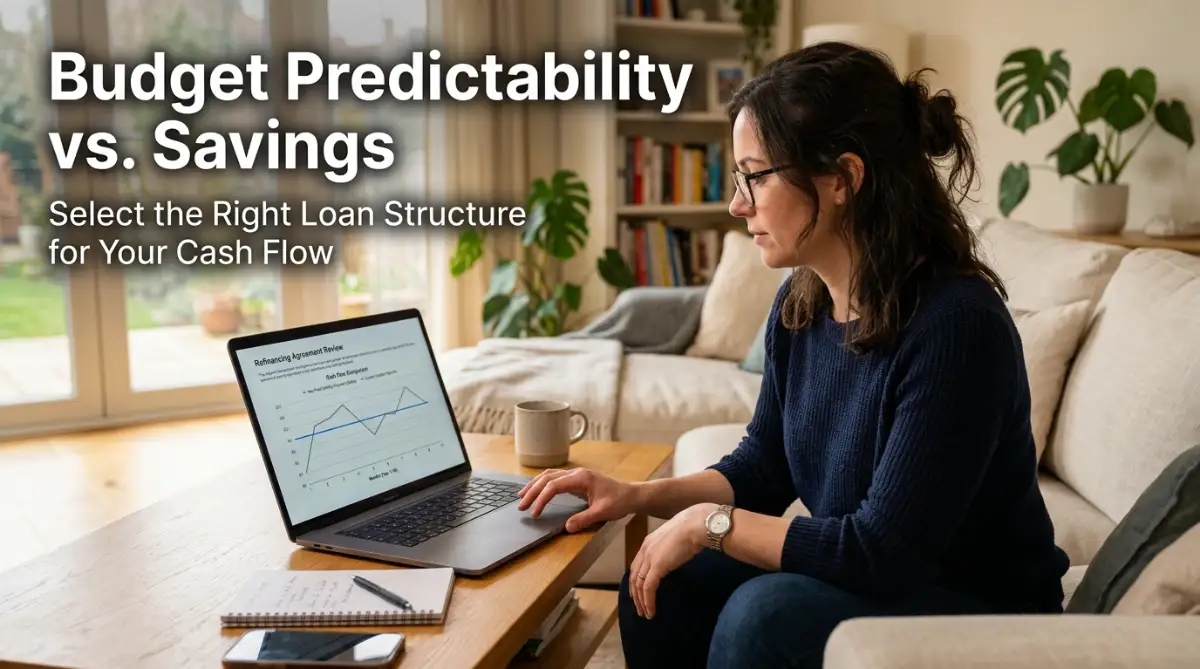
While variable-rate loans offer lower starting interest rates, falling for marketing traps without analyzing your cash flow can lead to financial strain. The most common mistake is choosing a variable rate during an inflationary economy.
When central banks are actively raising interest rates to combat inflation, variable loan rates will rise rapidly. Accepting a variable rate in a rising-rate environment guarantees that your monthly loan payment will increase over time.
Another major pitfall is taking out a long-term variable loan without checking for contractual lifetime rate caps. Without a reasonable lifetime cap, a sudden economic shift could push your interest rate to unaffordable levels.
Lastly, avoid selecting long repayment tenures on variable debt unless you plan to pay off the principal early. Extending variable debt over 60 or 72 months exposes your household budget to years of unpredictable rate adjustments.
Choosing the Right Rate Structure for Financial Stability
Selecting between fixed and variable interest rates on personal loans comes down to your loan tenure, cash flow flexibility, and current economic conditions. Fixed-rate personal loans offer unmatched predictability and peace of mind.
Variable-rate loans offer lower starting interest rates, making them attractive for short-term borrowing and rapid debt payoff. Evaluating your financial goals and understanding rate risk mechanisms ensures you make a safe choice.
I know how stressful it feels when fluctuating monthly bills threaten your family's financial peace of mind. Choosing an interest rate structure that fits your personal cash flow gives you total confidence, and I am always here to guide you toward safe, reliable borrowing choices!
Frequently Asked Questions About Fixed and Variable Loan Rates
Can I convert a variable-rate personal loan into a fixed-rate loan later?
Most personal loan contracts do not allow direct rate conversion within the same loan. However, you can convert a variable-rate loan into a fixed-rate loan at any time by refinancing through a new fixed-rate personal loan.
Are fixed-rate personal loans always more expensive than variable-rate loans?
Fixed-rate loans typically carry slightly higher starting APRs because lenders absorb the risk of potential market rate increases. However, if benchmark rates rise over time, a fixed-rate loan can become significantly cheaper than a variable-rate alternative.
How often do variable interest rates adjust on personal loans?
Adjustment frequency varies by lender and contract agreement. Variable rates typically adjust monthly, quarterly, or semi-annually based on changes to the specified benchmark index.
What is a rate cap on a variable personal loan?
A rate cap is a contractual limit on how much your variable interest rate can increase. Periodic caps limit rate increases within a single adjustment period, while lifetime caps set a maximum ceiling on your loan rate regardless of benchmark index spikes.
When is a variable interest rate better than a fixed interest rate?
A variable interest rate is advantageous if you plan to pay off your loan quickly (within 6 to 18 months) or if central banks are actively lowering benchmark interest rates, allowing you to benefit from declining monthly payments.
Category Disclaimer
The information provided in this article is for educational and informational purposes only and does not constitute formal financial, credit, legal, or lending advice. Personal loan interest rates (APRs), rate adjustment terms, origination fees, and approval criteria vary based on individual creditworthiness, income verification, lender underwriting policies, and regional regulations. Always consult with a certified financial planner or credit counselor before entering into binding loan agreements.