How Americans Are Making Money with Digital Products: A Step-by-Step Guide to Passive Income, Online Stores, and Digital Assets
Across the United States, a quiet financial revolution is taking place. Every day, thousands of everyday Americans—including elementary school teachers, stay-at-home parents, corporate accountants, college students, and retired professionals—are earning thousands of dollars in monthly passive income. They aren't stocking physical inventory, managing complex warehouse logistics, packing cardboard shipping boxes, or driving delivery vehicles. Instead, they are leveraging the multi-billion-dollar Digital Product Economy.
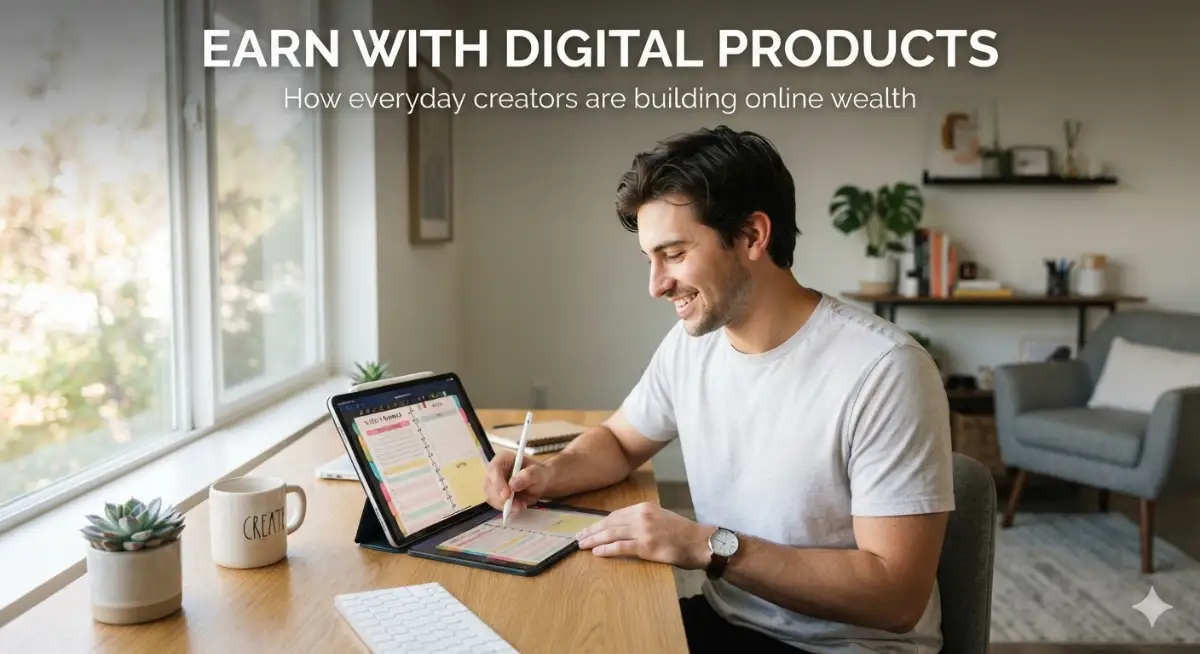
A digital product is an intangible asset or piece of media that can be authored once and sold repeatedly online to customers worldwide without ever needing to replenish inventory stock. From simple PDF budget planners and Canva social media templates to Notion productivity hubs, e-books, and educational video guides, digital products offer an unprecedented business model featuring 90% to 98% gross profit margins. Once a digital file is uploaded to an online store, automated checkout systems deliver the file to buyers instantly via email download links—generating real revenue 24/7/365. In this ultimate step-by-step guide, we explore how Americans are building profitable digital product businesses, evaluate top digital product categories, compare online selling platforms, and reveal a practical roadmap to launch your own digital product store.
Rachel, a third-grade teacher in North Carolina, spent hours every Sunday creating colorful classroom reading worksheets and educational lesson plans for her students. Realizing that fellow elementary teachers across the country spent hours searching for ready-to-use teaching materials, Rachel decided to list her digital lesson plans on Etsy and Teachers Pay Teachers as $5 PDF downloads. In her first month, she earned $120 in passive sales. Encouraged, she created a library of 40 digital printable packs over her summer break. Within eighteen months, Rachel’s digital printable store generated over $3,400 per month in automated digital income, covering her family's mortgage payment entirely while she focused on her passion for teaching. Rachel shares: "Creating digital printables turned the lesson plans I was already making into an automated second income for my family."
When I first looked into selling digital items online years ago, I felt completely lost and overwhelmed by the technical setup. I worried that I needed advanced coding skills or expensive graphic design software to build a profitable online store. It was only after I tested simple drag-and-drop tools that I realized how straightforward digital publishing really is. That early hurdle taught me that anyone can build a recurring revenue stream with the right guidance.
Across the United States, everyday creators, teachers, and professionals are building lucrative passive income streams without ever stocking inventory or managing shipping logistics. By leveraging the multi-billion-dollar digital product economy, you can author an asset once—such as a PDF planner, spreadsheet, or design template—and sell it repeatedly on autopilot. In this comprehensive guide, we explore why digital assets boast 90%+ profit margins, compare top-selling platforms like Stan Store and Etsy, and reveal a proven step-by-step roadmap to launch your own profitable online digital store.
1. Why the Digital Product Business Model Beats Physical E-Commerce
Comparing traditional physical product selling against digital asset distribution highlights why millions of entrepreneurs are choosing digital products:
To analyze broader consumer spending economics and digital asset management strategies, explore our comprehensive analysis of small business software economics and digital asset management.
My Personal Pro Tip (By Md Jahangir Alam): When you create your first digital asset, do not try to build a massive 200-page product right away. I always recommend starting with a hyper-focused, single-solution printable or spreadsheet that solves one exact problem. Buyers love speed and convenience, and smaller niche products often convert much faster!
Watch this expert video breakdown demonstrating how everyday creators design simple digital products, set up automated online stores, build email lists, and scale passive digital sales:
2. Top Digital Product Categories Generating Income for Americans
You do not need to be a software engineer to create best-selling digital products. Everyday creator categories generate substantial revenue:
Proven Best-Selling Digital Asset Categories:
- Digital Planners & Printable Worksheets: Fitness logs, meal planners, bullet journals, wedding budget sheets, and home organization printables designed on Canva.
- Notion & Excel Financial Dashboards: Automated budget trackers, debt payoff calculators, rental property managers, and freelance invoice templates.
- Canva & Social Media Design Bundles: Real estate flyer templates, Instagram story bundles, podcast thumbnail art, and presentation slide decks.
- Specialized How-To PDF Guides & E-Books: Step-by-step career blueprints (e.g., "How to Become a Virtual Assistant" or "The Small Business LLC Setup Manual").
- Lightroom Presets & Audio Stems: One-click photo editing filters for photographers and background audio tracks for content creators.
Carlos, a freelance graphic designer, noticed that small local business owners frequently reached out asking for cheap social media branding templates. Because Carlos couldn't take on low-budget 1-on-1 clients, he spent a weekend creating a 50-piece "Small Business Social Media Template Pack" in Canva. He listed the template bundle on Stan Store for $27 and promoted it through short video walkthroughs on TikTok and Instagram Reels. Within four months, over 650 small business owners purchased his template bundle, generating over $17,500 in automated sales with zero physical shipping. Carlos shares: "Selling digital templates allowed me to serve budget-conscious customers profitably without sacrificing my hourly freelance client time."

3. Choosing the Right Platform to Sell Your Digital Products
Selecting the ideal digital storefront depends on your marketing strategy, technical comfort, and target audience:
- Stan Store (Best for Social Media Creators): An all-in-one link-in-bio mobile storefront engineered specifically for TikTok, Instagram, and YouTube creators. Allows 1-click digital downloads, courses, and calendar bookings directly from mobile phones.
- Gum road & Pay hip (Best for Beginners with $0 Upfront Cost): Free-to-start digital checkout platforms that charge a small transaction percentage fee only when you make a sale. Handles global VAT taxes and automated file delivery effortlessly.
- Etsy Digital (Best for Built-In Search Traffic): Millions of active buyers search Etsy daily for digital printables, planner templates, and graphic files, providing organic marketplace traffic without paid advertising.
- Shopify & Systeme.io (Best for Full Brand Customization): Full-featured e-commerce platforms ideal for creators building standalone digital product stores and automated email marketing funnels.
To discover strategies for sourcing small business grants and founder funding, read our guide on proven strategies for sourcing small business grants and founder funding.
4. Marketing Strategies to Sell Digital Products Without Paid Ads
The secret to building a wildly profitable digital product business is driving high-intent organic traffic to your store without burning cash on Facebook or Google ads:
- Short-Form Video Demonstrations (TikTok & Reels): Film short 15-second screen recordings demonstrating how your digital product solves a specific problem (e.g., showing how an automated Excel spreadsheet calculates debt payoff dates in real-time).
- Pinterest Visual Marketing: Create eye-catching Pinterest pins linking directly to your Etsy or Stan Store digital product pages. Pinterest acts as a visual search engine where buyers actively look for printables and templates.
- Free "Lead Magnet" Email Funnels: Give away a simple 1-page free sample PDF in exchange for a customer's email address. Send an automated 3-email welcome sequence offering a 20% discount on your full digital product bundle.
Learn how to optimize financial workflow automation and business banking operations in our essential guide to financial workflow automation and business banking management.
If you are exploring career opportunities in remote small business operations or digital asset management, review our guide to the best high-paying remote roles and digital nomad career opportunities.
Sarah, a corporate recruiter who recently transitioned into remote work, published a short 25-page digital PDF guide titled "Beginner to Booked: How to Become a Virtual Assistant." She priced her PDF guide at $19 and linked it in her social media bio. By sharing helpful resume tips and client interview clips on TikTok, her videos resonated with job seekers. In her first 90 days, Sarah sold over 480 copies of her PDF guide, generating $9,120 in passive digital income. Sarah reflects: "You don't need a 300-page textbook to make money. If your digital guide solves one specific problem clearly, customers will gladly buy it."
5. The Master 5-Step Digital Product Launch Checklist
Follow this chronological 5-step checklist to launch your digital product store:
- Step 1: Pick an Idea with Proven Demand: Research popular digital products on Etsy, Gum road, or Amazon to confirm people are actively paying for your topic.
- Step 2: Create Your Digital File on Canva or Notion: Design a clean, professional digital asset (PDF guide, template, or spreadsheet).
- Step 3: Set Up Your Digital Storefront: Create a free account on Stan Store, Gum road, or Etsy Digital and upload your product files.
- Step 4: Create High-Quality Mockup Graphics: Use free Canva device mockups to display how your digital product looks on iPad, laptop, or paper screens.
- Step 5: Publish Helpful Educational Content: Share short screen-recording videos and social media posts demonstrating the benefits of your digital product to drive traffic to your store link.
6. Final Summary & Path Forward
Selling digital products represents one of the most accessible, high-margin, and empowering financial opportunities available in the modern digital economy. By converting your knowledge, organizational tools, or creative designs into downloadable digital assets, you build an automated online store that generates income indefinitely with zero inventory stress.
As I look back at my own journey building digital assets, I realize that taking that first step changes everything. Take charge of your online earning potential today by designing your first digital asset, setting up your automated checkout store, sharing your work, and stepping confidently into an empowered, scalable, and location-independent digital future!
Frequently Asked Questions
What is a digital product?
A digital product is an intangible asset or piece of media—such as a PDF guide, template, spreadsheet, or preset—that can be sold repeatedly online without physical inventory.
How much money do I need to start a digital product store?
You can start with $0 to $50 by using free platforms like Gumroad or Stan Store and designing your files on free software like Canva or Notion.
Which platform is best for selling digital printables?
Etsy Digital is fantastic for organic marketplace search traffic, while Stan Store and Gum road are ideal for social media creators selling directly to followers.
How do buyers receive digital products after purchasing?
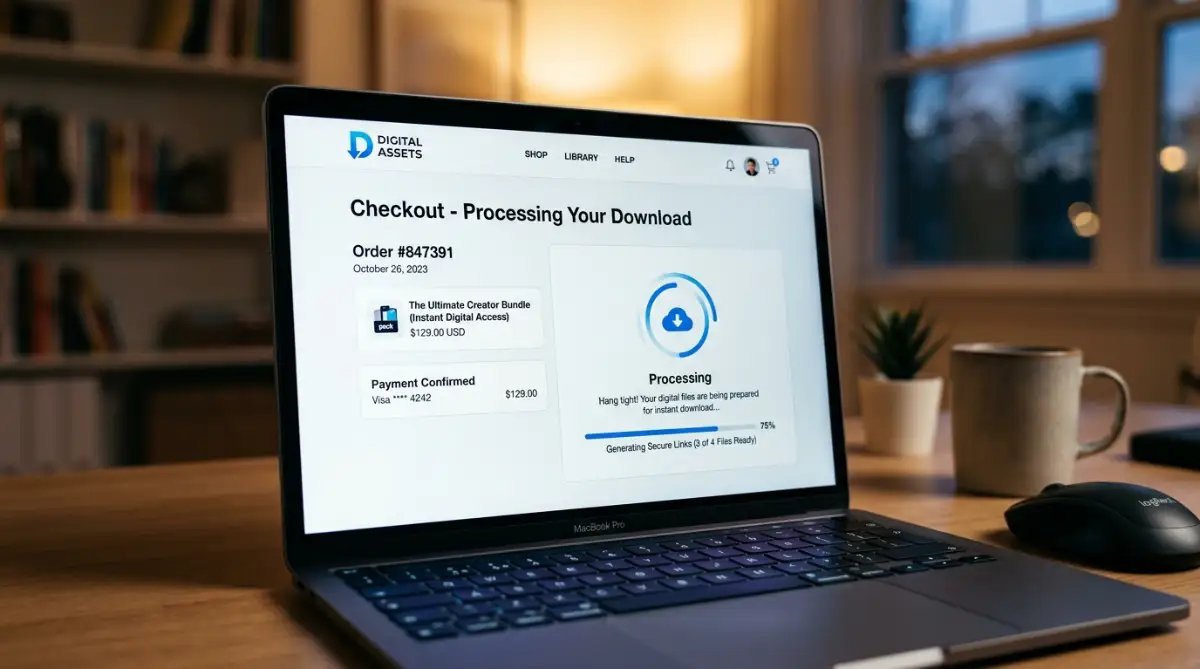
Automated checkout systems deliver the digital file instantly to the buyer via email download links or an instant redirection page immediately following payment.
Do I need an LLC or business license to sell digital downloads?
You can start as a sole proprietor while testing your ideas, but it is wise to form an LLC as your store grows to protect your personal assets.
Disclaimer
The information provided in this article is for educational, informational, and general operational guidance only and does not constitute formal financial, legal, tax, or business investment advice. Digital product sales volumes, platform transaction fees, conversion rates, and passive income results vary significantly based on product quality, niche market demand, personal execution, and individual marketing effort. Readers are strongly encouraged to perform independent market research and consult with a Certified Public Accountant (CPA) before launching online commercial ventures.