
How to Turn Your Skills into a Profitable Online Business: A Step-by-Step US Guide to Service Packaging, Digital Offer Creation, and Scaling Revenue
We are living through an unprecedented economic era where traditional 9-to-5 corporate employment security is rapidly giving way to individual digital entrepreneurship. Across the United States, millions of talented professionals—ranging from graphic designers, copywriters, and software developers to accountants, teachers, digital marketers, and project managers—are coming to a powerful realization: the specialized skills, knowledge, and experience they utilize every day at their jobs represent valuable, personal economic capital.
However, many professionals remain trapped trading their finite hours for a fixed hourly wage or annual corporate salary. Working as a traditional employee caps your earning potential and leaves your financial stability tied to a single corporate employer. The modern digital economy offers a far superior alternative: packaging your personal skills and expertise into a profitable, scalable online business. Whether you launch a high-ticket freelance consulting agency, build productized digital service packages, create downloadable digital assets, or host paid online coaching communities, transforming your skills into an online business grants you complete financial control, location freedom, and scalable profit margins. In this comprehensive guide, we unpack the step-by-step framework to monetize your expertise, evaluate online business models, craft irresistible value propositions, and acquire high-paying clients globally.
David, a senior corporate accountant working 60-hour weeks for a corporate accounting firm, felt completely burned out by long commutes and stagnant salary raises. Recognizing that local small business owners desperately needed help setting up bookkeeping software and understanding tax deductions, David decided to monetize his accounting skills independently. He spent two weekends creating a 1-on-1 virtual "Small Business Financial Setup" consulting package and an editable QuickBooks setup template bundle. He published helpful accounting tips on LinkedIn and reached out directly to local founders. Within eight months, David acquired ten recurring monthly client accounts, generating $6,500 in monthly recurring online revenue. He resigned from his corporate job to run his online consulting business full-time. David reflects: "Your job pays you for your time; your own online business pays you for the true market value of your skills."
Millions of talented professionals remain trapped trading their finite hours for a fixed corporate salary, unaware that their daily expertise represents powerful economic capital. The modern digital economy makes it possible to break free from traditional employment by packaging your personal skills into a scalable, high-margin online business. In this comprehensive guide, we explore a proven step-by-step framework to audit your capabilities, select the ideal business model, master value-based pricing, and acquire high-paying clients organically without spending a fortune on paid advertising.
1. Step 1: Auditing and Validating Your Monetizable Skills
Before launching a website or creating social media business pages, you must conduct a thorough skill inventory to identify which of your abilities solve acute, high-value market problems:
The Skill Audit Framework:
- Hard Professional Skills (High Commercial Value): Technical, measurable abilities—such as full-stack web development, SEO copywriting, UI/UX design, paid Google/Meta ad management, financial accounting, or video editing.
- Soft & Advisory Skills (High Consulting Value): Strategic expertise—such as team management, public speaking, business leadership, language instruction, or career executive coaching.
- The "Hair-on-Fire" Test: Evaluate whether your skill solves an urgent, costly business problem. B2B skills that directly help clients make more money (sales/marketing) or save time/money (accounting/automation/operations) command the highest pricing power.
To analyze broader small business software economics and digital asset management strategies, explore our comprehensive analysis of small business software economics and digital asset management.
My Personal Pro Tip (By Md Jahangir Alam): When packaging your skills, never focus on listing software tools or hours worked. I always advise framing your offer around the specific financial outcome or time saved for the client. When you sell results instead of time, your pricing power multiplies overnight!
Watch this expert video breakdown detailing digital offer creation, skill packaging, audience building, and automated sales funnel setups:
2. Step 2: Selecting the Ideal Online Business Model
Transforming skills into revenue can take several distinct structural forms depending on your available time, financial goals, and desired level of client interaction:
A. High-Ticket Freelance Services & Agencies (Fastest Cash Flow)
Offering specialized 1-on-1 services (such as designing custom Shopify websites or writing sales email funnels) is the fastest way to replace job income. Securing just three retainer clients at $1,500 per month generates a steady $4,500 monthly cash flow instantly.
B. Productized Services (Standardized Deliverables)
Instead of custom hourly quoting, package your skill into a standardized productized deliverable with a fixed price and turnaround time (e.g., "3-Day Logo & Brand Identity Package for $1,200"). Standardizing your process streamlines client onboarding and increases hourly profitability.
Elena, a freelance content writer, spent two years charging $35 an hour on crowded freelance job boards, constantly competing against low-cost global bidders. Exhausted by the race to the bottom, she pivoted her strategy. She stopped selling "hourly writing" and created a high-value productized offer called the "Website Copywriting Makeover" priced at a flat $1,800 per project. She targeted mid-sized local law firms and dental practices, explaining how persuasive website copy converted more website visitors into paying clients. In her first month pitching her new package, two clients signed contracts, earning Elena $3,600 for twenty hours of total work. Elena shares: "Clients don't buy hours; they buy the business results your skills deliver. Packaging your services value-first changes everything."

3. Step 3: Packaging, Value-Based Pricing, and Positioning
To attract high-paying clients, you must position your skill set as a premium, results-oriented solution rather than a cheap commodity:
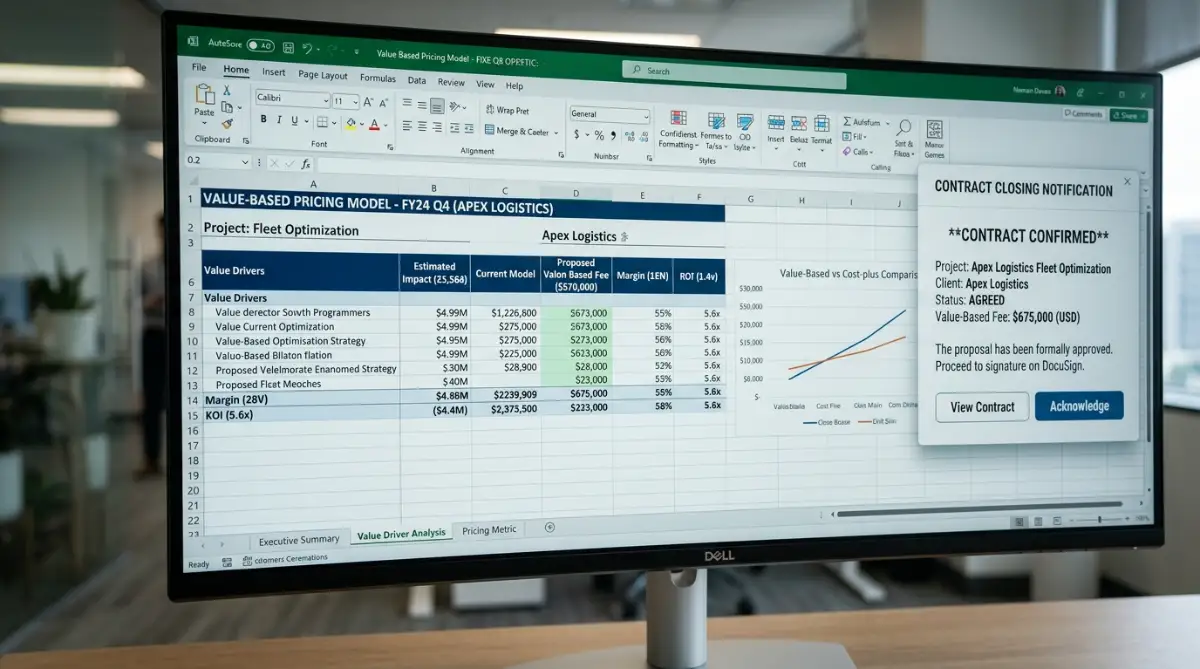
- Embrace Value-Based Pricing: Never charge hourly rates. Hourly pricing penalizes you for working fast and efficiently. Price your services based on the financial outcome you generate for the client (e.g., if your email copy helps an e-commerce brand make $30,000 in sales, a $3,000 package fee is an incredible bargain for them).
- Build a High-Impact 1-Page Portfolio Site: Use modern, fast web builders (like Webflow, Framer, or Carrd) to showcase 3 to 5 detailed client case studies, client testimonial quotes, clear service tiers, and an automated Calendly booking link.
- Craft a Clear Value Proposition Statement: Define your focus using this framework: "I help [Target Client] achieve [Specific Business Result] through [Your Specialized Skill] without [Major Client Pain Point]."
To discover strategies for sourcing small business grants and founder funding, read our guide on proven strategies for sourcing small business grants and founder funding.
4. Step 4: Organic Client Acquisition and Operational Scaling
Acquiring your first 5 to 10 paying clients does not require spending thousands on paid ad campaigns. Organic content marketing and direct relationship building deliver the highest conversion rates:
A. Authority Content Publishing on LinkedIn & YouTube
Publish daily short-form educational posts and breakdown videos demonstrating how you solve specific industry problems. Sharing behind-the-scenes teardowns, case study breakdowns, and tactical advice builds immediate trust and positions you as a recognized industry authority.
B. Direct Cold Outreach and Community Networking
Identify target business owners on LinkedIn or inside specialized Discord and Slack communities. Send personalized, value-first video audits or loom walkthroughs pointing out specific improvements they can make, concluding with a friendly invitation to book a 15-minute discovery call.
Learn how to optimize financial workflow automation and business banking operations in our essential guide to financial workflow automation and business banking management.
If you are exploring career opportunities in remote small business operations or system administration, review our guide to the best high-paying remote roles and digital nomad career opportunities.
Marcus, a video editor specializing in YouTube production, built a $14,000/month remote agency purely through organic LinkedIn content. Every week, Marcus posted 60-second video teardowns showing popular podcasts how better audio editing and animated captions could double their viewer retention rates. His educational posts attracted inbound inquiries from corporate executives and podcasters. Rather than cold calling, Marcus responded to inbound comments with a free 3-minute video analysis of their channel. His personal, value-first outreach closed four $3,000/month retainer clients within 90 days. Marcus reflects: "Giving away your best tips publicly on social media is the single fastest way to attract high-paying clients who already trust your skills."
5. The Master 6-Step Skill-to-Business Launch Roadmap
Follow this chronological implementation checklist to turn your skills into an online business:
- Step 1: Perform a Personal Skill Audit: Select one high-value hard skill that solves an acute B2B or B2C problem.
- Step 2: Define Your Ideal Client Profile (ICP): Identify exact industry job titles, company revenue sizes, and specific pain points.
- Step 3: Create an Outcome-Based Offer Package: Define 3 flat-fee service packages or a digital product bundle with clear deliverables.
- Step 4: Launch a Minimalist 1-Page Portfolio Website: Include case study proofs, client testimonials, and a Calendly scheduling widget.
- Step 5: Publish Daily Educational Content on LinkedIn/X: Share practical breakdowns, client wins, and skill tutorials to build authority.
- Step 6: Automate Invoicing and Contract Onboarding: Use tools like Stripe, DocuSign, and Notion to deliver seamless client onboarding.
6. Final Summary & Path Forward
Your specialized skills and professional knowledge represent your greatest economic asset. Continuing to trade your expertise for a fixed corporate paycheck limits your income and locks you into a rigid lifestyle. By packaging your skills into productized online services, digital products, or consulting offers, you build a resilient, highly profitable online business that grants you complete financial independence and total control over your career.
As I reflect on how liberating it is to be the CEO of your own skill-based business, I encourage you to take that first step. Take charge of your professional destiny today by auditing your skills, packaging your value, launching your online offer, and stepping confidently into an empowered, scalable, and highly profitable digital future!
Frequently Asked Questions
How do I figure out which of my skills are actually monetizable?
Conduct a skill audit focused on hard commercial abilities that save businesses time or generate direct revenue, such as copywriting, software development, or financial accounting.
Should I charge hourly rates or value-based pricing?
Always avoid hourly rates because they penalize efficiency. Use value-based pricing or flat-fee productized packages tied to the business results you deliver.
Do I need a fancy website to start selling my services?
No, a clean, minimalist 1-page portfolio built on tools like Carrd, Framer, or Webflow featuring case studies and a scheduling widget is entirely sufficient.
How can I get my first clients without spending money on ads?
Leverage organic content marketing on LinkedIn or YouTube, and perform personalized direct outreach offering free value-first video audits to target clients.
What is a productized service?
A productized service takes custom freelance work and packages it into a standardized fixed-price, fixed-deliverable offering to streamline sales and scaling.
Disclaimer
The information provided in this article is for educational, informational, and general operational guidance only and does not constitute formal financial, legal, tax, or business investment advice. Online business revenue, client acquisition rates, consulting retainers, and digital product sales vary significantly based on individual skill level, market demand, pricing strategy, execution consistency, and sales effort. Readers are strongly encouraged to perform independent market research and consult with a Certified Public Accountant (CPA) or business attorney before forming commercial entities or leaving primary employment.