How Fear of Credit Damage Almost Cost Rachel $1,800 in Unnecessary Interest
A few years ago, I counseled a talented graphic designer named Rachel who needed a $10,000 loan to consolidate her high-interest credit card debts. I watched her hesitate for weeks because she was terrified that checking rates across multiple banks would trigger hard credit pulls and ruin her 710 credit score.
Out of fear, she almost accepted the very first offer from her local bank branch carrying a steep 17.5% APR and a $500 origination fee. My heart went out to her because I knew how stressful credit score anxiety can feel when you are trying to make a smart money decision.
I showed her how soft-credit pre-qualification tools work, and in just 20 minutes across three online platforms, she discovered a competing offer at a 10.2% APR with zero origination fees. That simple comparison saved her over $1,800 in total interest without dropping her credit score by a single point during the rate shopping phase.
Her experience demonstrates why mastering rate shopping mechanics is essential for smart, low-cost borrowing. When an unexpected financial need arises—whether consolidating high-interest credit cards, funding home repairs, or covering medical bills—finding the right personal loan can save you thousands of dollars.
However, many consumers face a frustrating catch-22 when shopping for credit: they want to compare multiple offers from different lenders, but they fear hard credit checks will damage their credit score. This fear often leads borrowers to accept the very first loan offer they receive, missing out on far better terms.
Fortunately, modern financial technology and credit reporting frameworks allow you to comparison shop for personal loans safely. Let's unpack the exact steps to shop for personal loans without credit damage and secure the most affordable terms.

Taking advantage of soft-inquiry pre-qualification tools puts you in total control of your borrowing journey. Instead of guessing what interest rate you might receive, pre-qualification gives you real, customized quotes upfront.
Understanding how credit reporting agencies handle rate shopping allows you to navigate the lending market with confidence. You no longer have to settle for expensive loan terms out of fear of damaging your credit score.
In this guide, we will explore the physical difference between soft and hard credit pulls, break down key loan metrics beyond monthly payments, and share a 5-point rate shopping checklist. Following this practical blueprint ensures you secure the lowest borrowing costs available.
Your Secret Weapon: Soft-Pull Pre-Qualification Explained
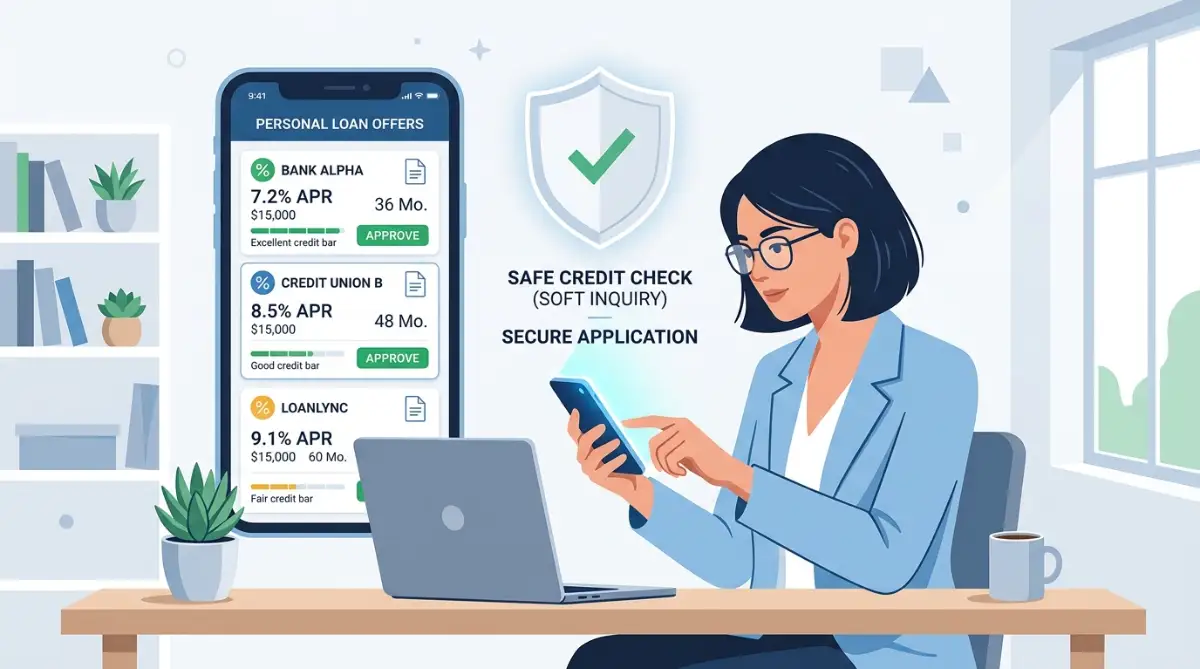
Many modern online lenders allow you to check your potential interest rates and loan terms using a soft credit inquiry or "soft pull." A soft inquiry is a preliminary review of your credit file that does not leave a permanent mark on your credit report.
Soft-pull pre-qualification allows lenders to estimate your rates and approval odds without triggering a hard inquiry that lowers your score. You can pre-qualify with multiple online lenders in a single afternoon to find the best deal safely.
Always look for explicit language stating "checking your rate will not affect your credit score" on a lender's website before entering your personal details. This simple check gives you a clear picture of your real borrowing options without any credit risk.
Understanding the Difference: Hard Pull vs. Soft Pull
To protect your credit score, you must understand the operational difference between these two types of credit inquiries. Knowing when a credit check impacts your score keeps your financial profile safe.
A soft credit inquiry occurs when a lender or credit bureau checks your credit report as part of a preliminary pre-qualification review or background check. Soft inquiries have zero impact on your credit score and are completely invisible to other creditors who view your file.
On the other hand, a hard credit inquiry occurs when you submit a formal, binding loan application. Hard pulls are recorded on your credit report for two years and may temporarily lower your credit score by 3 to 5 points.
Step-by-Step Guide to Comparing Loan Offers Safely
Executing your loan comparison process systematically ensures you find the lowest borrowing costs while protecting your score from unnecessary hard inquiries. Follow this four-step strategy:
Step 1: Check Your Credit Reports Independently: Before reaching out to lenders, request free copies of your credit reports from Equifax, Experian, and TransUnion. Reviewing your own credit report is always classified as a soft inquiry. Check for inaccurate debt balances or errors that could artificially depress your score.
Step 2: Utilize Soft-Inquiry Pre-Qualification Forms: Visit reputable online lending platforms, credit unions, and commercial banks that offer soft credit pull pre-qualification. Fill out basic details including your income, employment status, housing costs, and requested loan amount to receive custom rate quotes in minutes.
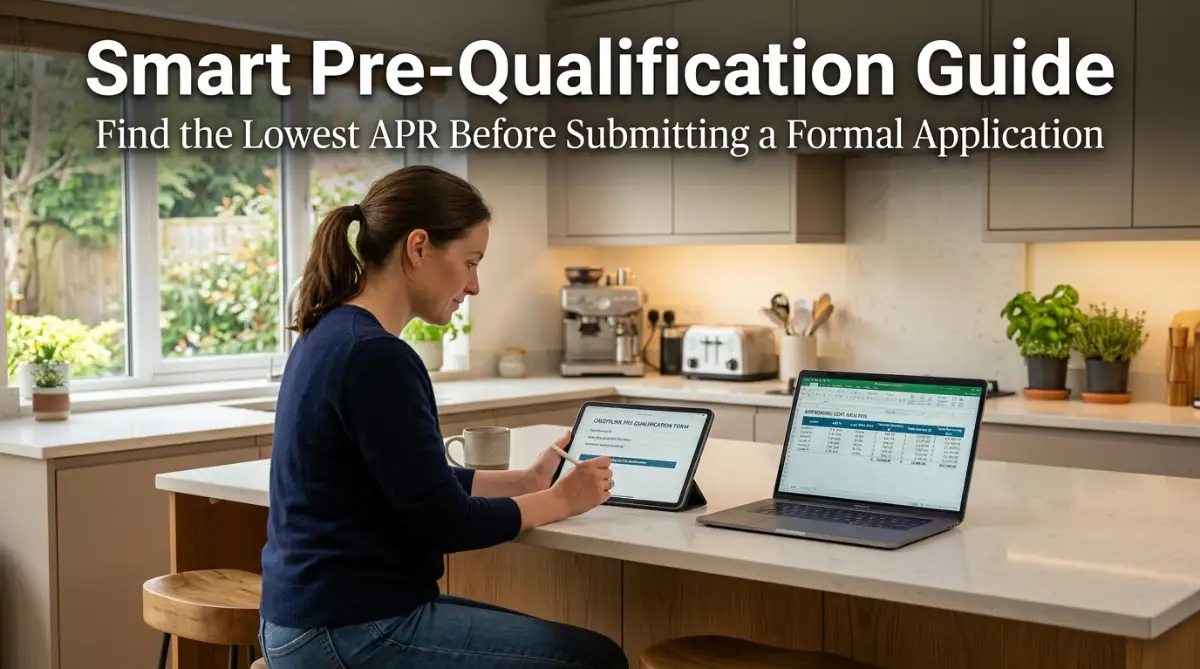
Step 3: Organize and Compare Offers in a Spreadsheet: Gather pre-qualification disclosures from 3 to 5 different lenders and record key terms in a spreadsheet. Do not look solely at the monthly payment number; compare the Annual Percentage Rate (APR), total tenure, origination fees, and prepayment terms.
Step 4: Submit One Formal Hard Application: Once you identify the single offer that provides the lowest APR and most favorable terms, submit a formal application with that specific lender. At this final stage, the lender performs a hard credit inquiry to finalize your loan documents.
Evaluating Key Metrics Beyond the Monthly Payment
A common pitfall among borrowers is focusing exclusively on the monthly payment amount while ignoring hidden loan costs. A lender can easily make a loan appear affordable by extending the repayment term from 36 months to 72 months.
While an extended term reduces the monthly payment number, it significantly increases the total interest you pay over the life of the loan. Evaluating the Annual Percentage Rate (APR) ensures you see the true, complete cost of credit.
The APR incorporates both the base interest rate and any mandatory lender fees, such as upfront origination charges. Comparing effective APRs across competing pre-qualification offers protects you from hidden fee structures.
Personal Loan Comparison Metrics Guide
Debunking Common Rate Shopping Myths
- Myth 1: Pre-qualifying with multiple online lenders will trigger multiple hard credit pulls.
- Reality: Soft-credit pre-qualification tools allow you to check rates with dozens of lenders with zero impact on your credit score.
- Myth 2: A lower monthly payment always means you are getting a cheaper loan deal.
- Reality: Lenders can lower your monthly payment simply by stretching your loan duration, which increases the overall interest you pay over time.
- Myth 3: You should always accept the loan offer from your current primary bank branch.
- Reality: Online fintech lenders and federal credit unions frequently offer significantly lower APRs and zero origination fees compared to traditional banks.
My Personal Pro Tip: Whenever I shop for personal loan rates, I always complete all my soft-credit pre-qualification checks on the exact same day using an incognito browser window! Organising my pre-qualification quotes side-by-side in a simple spreadsheet lets me quickly spot which lender offers zero origination fees before I submit any formal application!
If you want a detailed video guide on how soft vs hard credit checks work during loan shopping, watch this video below:
Advanced Strategies for Credit Protection and Rate Optimization
Understanding credit scoring rules allows you to use strategic timing to protect your credit score during major financing purchases. Modern credit scoring algorithms include built-in consumer protections designed specifically for rate shopping.
Under standard FICO scoring frameworks, multiple hard inquiries submitted within a defined rate shopping window (typically 14 to 45 days) for the same credit product are treated as a single hard inquiry. This means that even if you submit formal applications to two or three lenders within a short window while finalizing your loan, your credit score suffers the impact of only one hard inquiry.
However, using soft-pull pre-qualification tools prior to submitting any formal application remains the cleanest strategy. Soft pre-qualification eliminates inquiry impacts altogether during the initial comparison phase, ensuring your credit score remains untouched until you pick the winning offer.
If you are planning to apply for major long-term financing like a mortgage or home loan soon, building a strong credit profile early is essential. Learning how to improve your credit score before applying for a mortgage provides a proven framework for credit optimization.
Similarly, taking steps to safeguard your physical household assets provides ongoing peace of mind as your wealth grows. Learning how to choose your first home insurance policy without stress protects your property against unexpected storm or fire damage.
If you are balancing student debt alongside personal finances, organizing your obligations is necessary. Reviewing federal vs private student loans: how to choose wisely helps you make informed choices about higher education funding.
Students attending the best community colleges in the USA for affordable education often avoid heavy debt burdens by keeping tuition costs manageable from day one.
Finally, if you run a small business or side hustle to earn extra income, keeping overhead low protects your monthly cash flow. Utilizing easy AI website builders for small businesses allows you to build a professional website quickly without spending thousands on developers.
Major Pitfalls That Lead to Overpaying on Personal Loans
Failing to analyze full loan disclosures can result in significant financial loss over time. The most common mistake borrowers make is falling for low headline interest rates while ignoring heavy upfront origination fees.
A loan with an 11% interest rate and a 6% origination fee may actually cost more overall than a competing loan with a 12% interest rate and zero fees. Always compare the complete APR to see the true borrowing cost.
Another major trap is submitting multiple formal applications to different lenders simultaneously without using pre-qualification first. Every formal application triggers a hard inquiry, which lowers your credit score and signals financial distress to underwriters.
Lastly, avoid selecting long repayment tenures just to secure lower monthly payments unless necessary. Choosing a shorter 36-month tenure instead of a 60-month tenure reduces total interest expenses substantially.
Achieving Financial Confidence Through Smart Rate Shopping
Comparing personal loan offers does not have to come at the expense of your credit score. By leveraging soft-inquiry pre-qualification tools, analyzing true APRs, and understanding rate shopping protections, you maintain total control over your borrowing journey.
Finding an affordable personal loan with favorable terms gives you the financial leverage needed to achieve your goals while preserving your long-term credit health. Smart money management starts with making informed, deliberate choices before signing any contract.
I know how stressful shopping for a loan can feel when you are worried about your credit score. Taking your time, using soft pre-qualifications, and holding lenders accountable to transparent APRs gives you total peace of mind, and I am always here to support you on your financial journey!
Frequently Asked Questions About Rate Shopping for Personal Loans
How many pre-qualification forms can I complete without hurting my credit score?
You can complete as many pre-qualification forms as you like, provided the lenders explicitly use soft credit pulls. Soft inquiries have zero impact on your credit score, regardless of how many you generate.
Can my final approved loan terms differ from my pre-qualification offer?
Yes. Pre-qualification estimates are based on soft credit data and unverified income. When you submit a formal application, the lender performs a hard credit check and verifies your documents, which may cause minor adjustments to the final offer.
What happens if my formal personal loan application gets rejected?
If your formal application is rejected, the lender records a hard inquiry on your credit report, causing a minor temporary score drop. The lender is legally required to send an Adverse Action Notice detailing the specific reasons for denial.
What is a FICO rate shopping window?
A rate shopping window is a built-in algorithmic feature where multiple hard inquiries for the same credit product submitted within 14 to 45 days are counted as a single hard inquiry for credit score calculation purposes.
Are loans with zero origination fees always better?
Not necessarily. A loan with an origination fee may still be cheaper overall if its base interest rate is significantly lower than a zero-fee competing loan. Always compare the total APR to verify true borrowing costs.
Category Disclaimer
The information provided in this article is for educational and general consumer guidance purposes only and does not constitute formal financial, credit, legal, or lending advice. Personal loan interest rates (APRs), origination fees, and approval criteria vary based on individual creditworthiness, income verification, lender underwriting policies, and regional regulations. Always review Truth in Lending Act (TILA) disclosures before entering into binding loan agreements.