How a Burst Water Pipe Forced Me to Learn the Truth About Collateral
Two years ago, my home water heater completely burst on a freezing Sunday afternoon. I panicked when I checked my checking account and realized I did not have three thousand dollars saved up for emergency plumbing repairs.
I rushed to my local bank branch the next morning expecting an easy emergency loan. The loan officer reviewed my application and told me I needed to pledge my car title as collateral before they could approve my funds.
I felt a cold knot in my stomach because I could not risk losing the vehicle I used to drive my children to school every day. The thought of losing my car over a plumbing repair kept me awake for nights.
That scary situation forced me to research modern online lending alternatives across the United States. I discovered that I could qualify for an unsecured personal loan based on my income and credit history alone.
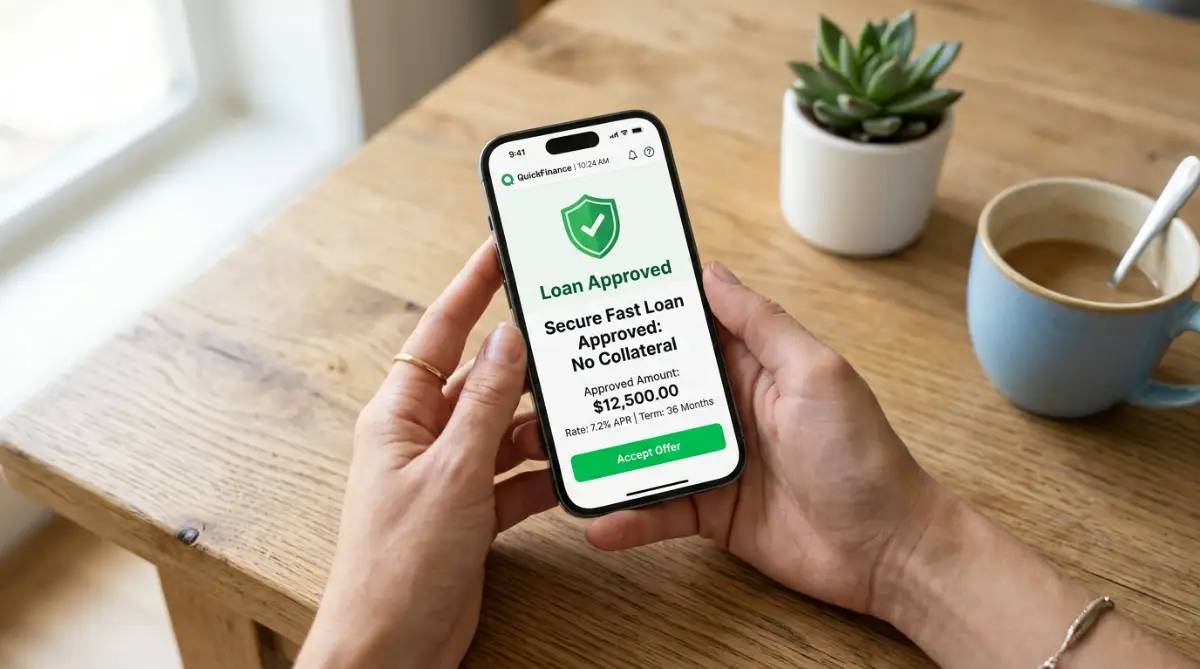
I submitted an online soft-credit pre-qualification form, got approved in hours, and received direct deposit funding the next business day without pledging a single asset. That experience taught me that fast emergency cash does not require risking your personal property.
Today, I am going to share that exact no-collateral borrowing framework with you so you can handle unexpected expenses safely.
Navigating sudden financial emergencies, medical bills, car repairs, or high-interest credit card debt can feel overwhelming. During times of urgent cash needs, many borrowers mistakenly assume that securing a personal loan requires risking their personal property.
For millions of renters, young professionals, and homeowners, pledging home equity or a car title is simply not an acceptable choice. Risking your family's essential assets to cover short-term financial gaps creates unnecessary fear and stress.
Fortunately, the modern consumer financial landscape offers a practical alternative through unsecured personal loans. An unsecured personal loan allows you to borrow funds with zero physical collateral required.
Approval is based on your creditworthiness, steady income, debt-to-income ratio, and financial track record. Online lenders, credit unions, and commercial banks approve billions in unsecured loans every year, depositing funds into checking accounts within 24 to 48 hours.
In this guide, we demystify how to get a personal loan with no collateral, evaluate credit approval factors, compare interest rates, and protect your financial health.
The Mechanics of No-Collateral Borrowing: Secured vs. Unsecured Loans
To borrow money safely, you must understand the legal distinction between secured and unsecured loans. Knowing how these loan types work protects your personal property from unexpected repossession.
A secured loan requires you to pledge a physical valuable asset—such as a home equity line, automobile title, or savings account—as collateral. If you default on payments, the lender has the legal right to seize your asset to recover their money.
An unsecured personal loan requires zero collateral. Approval is granted based on your income stability and credit track record, keeping your home, vehicle, and personal savings completely safe.
Comparing Online Lenders, Credit Unions, and Banks
When searching for a no-collateral personal loan, choosing the right lender type makes a huge difference in your overall borrowing cost. Different financial institutions cater to different credit profiles and speed requirements.
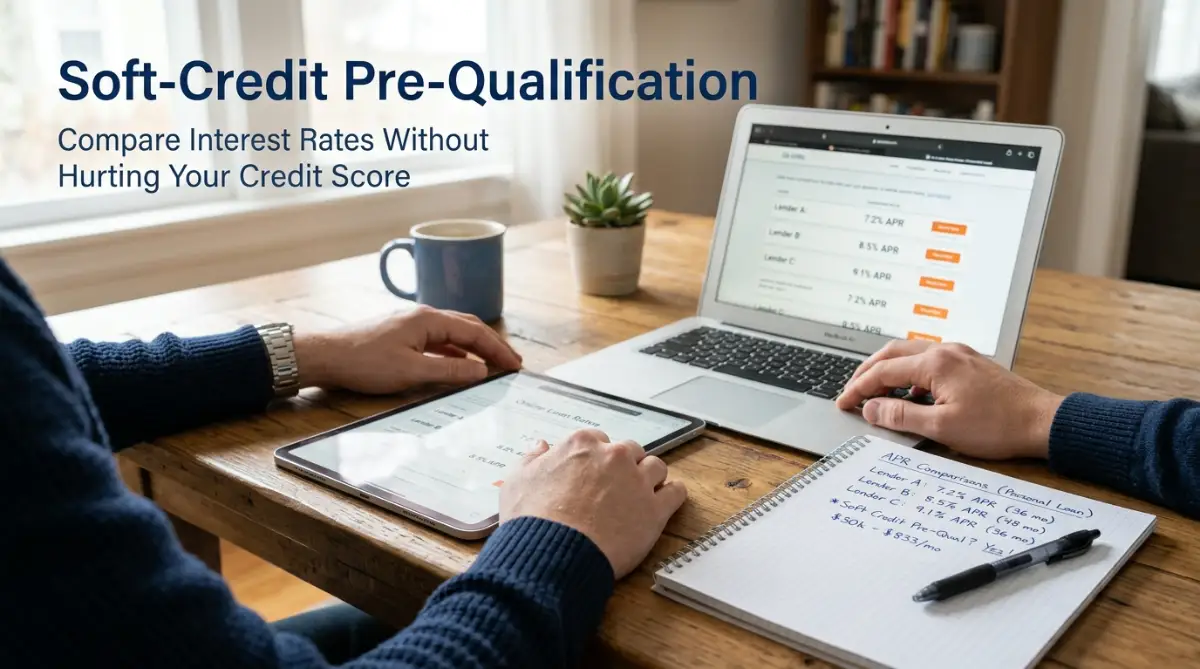
Online fintech lenders specialize in rapid digital approvals and soft-credit pre-qualification checks. They allow you to view personalized interest rate offers in minutes without impacting your credit score.
Federal credit unions offer lower interest rates capped by federal law, making them an excellent choice for fair or rebuilding credit. Traditional commercial banks provide relationship discounts for existing account holders with excellent credit scores.
However, you should avoid high-cost payday loans and car title loans at all costs. These predatory products charge interest rates exceeding 300% APR and threaten your vehicle with immediate repossession.
Unsecured Loan Rates and Approval Speeds by Lender Type
Understanding APRs, Origination Fees, and Prepayment Penalties
Evaluating an unsecured personal loan requires looking beyond the monthly payment amount to understand total borrowing costs. The Annual Percentage Rate (APR) represents the true yearly cost of your loan, including interest and mandatory fees.
Some lenders charge an upfront origination fee ranging from 1% to 8% of your total loan amount to cover administrative processing. This fee is deducted directly from your initial payout (for example, a $10,000 loan with a 5% fee yields a $9,500 direct deposit).
Always prioritize lenders that charge zero origination fees and zero prepayment penalties. Lenders with no prepayment penalties allow you to pay off your balance early to save money on interest.
Debunking Myths About No-Collateral Personal Loans
- Myth 1: Pre-qualifying for an unsecured loan online will hurt your credit score.
- Reality: Pre-qualification uses a soft credit check, which has zero effect on your credit score. A hard credit check only happens when you formally accept a loan offer.
- Myth 2: You need an excellent credit score above 750 to get approved without collateral.
- Reality: Many online lenders and credit unions approve unsecured loans for borrowers with fair credit scores (580 to 669) by evaluating steady income and debt-to-income metrics.
- Myth 3: Unsecured personal loans are only useful for debt consolidation.
- Reality: Unsecured loans offer complete spending flexibility, allowing you to pay medical bills, fund emergency home repairs, or cover unexpected moving expenses.
My Personal Pro Tip: Whenever I need to borrow emergency cash or consolidate credit card balances, I always check soft-credit pre-qualification offers across at least three different online lenders first. Comparing multiple pre-qualification offers side-by-side lets me pick the lender with the lowest APR and zero origination fees before any hard credit check touches my credit report!
If you want a detailed video guide explaining unsecured personal loan qualification criteria, watch this video below:
Advanced Strategies to Get Approved Fast and Pay Off Debt Early
Securing an unsecured personal loan with competitive rates requires following a clear strategy. Using smart financial tactics helps you qualify for lower APRs and eliminate debt faster.
The first step is auditing your credit reports before submitting an application. Check your credit score for free and dispute any incorrect negative marks on your Equifax, Experian, or TransUnion reports.
The second step is calculating your Debt-to-Income (DTI) ratio. Divide your total monthly debt payments by your gross monthly income; lenders prefer a DTI ratio under 35% to 40% for quick approvals.
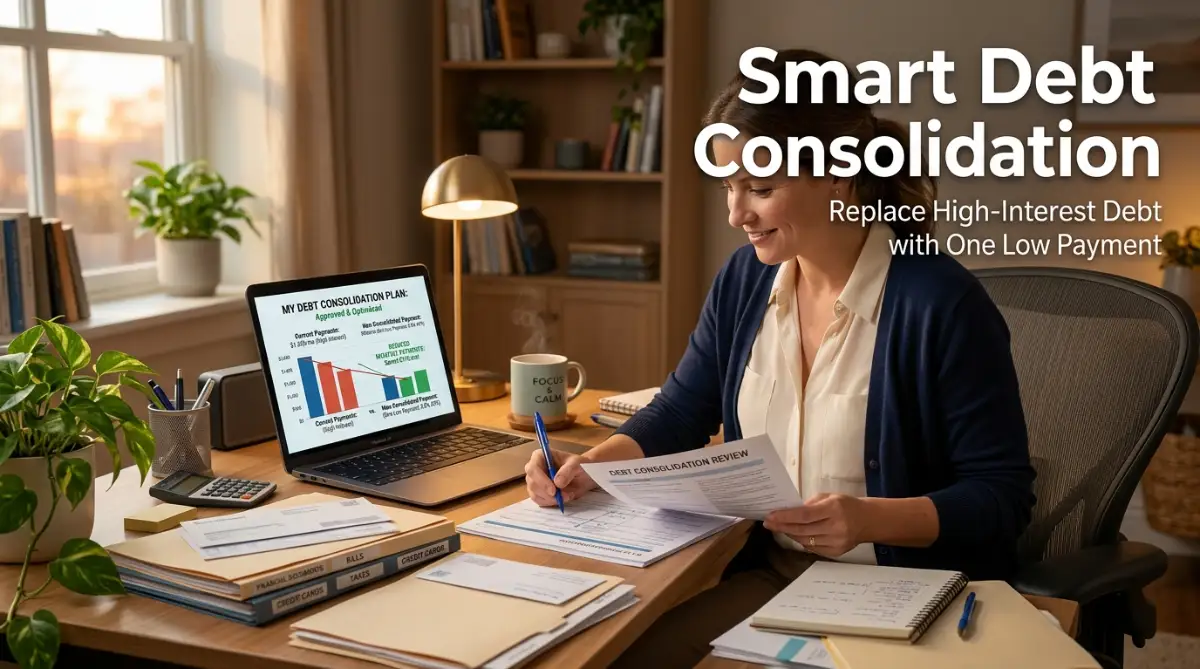
The third step is using an unsecured personal loan to consolidate high-interest credit card debt. Credit cards carry variable rates near 25% to 30% APR, whereas an unsecured loan locks in a single fixed monthly payment at a much lower interest rate.
The fourth step is enabling automated monthly payments from your checking account. Most online lenders offer a 0.25% APR discount when you enroll in automatic autopay, keeping your payments on time while lowering interest charges.
If you are planning long-term personal finance goals, learning how to improve your credit score before applying for a mortgage provides valuable insights into building strong credit habits.
Similarly, protecting your home against unexpected physical damage provides financial peace of mind. Learning how to choose your first home insurance policy without stress safeguards your property against costly repairs.
If you are balancing educational expenses alongside personal finances, organizing your debt is necessary. Reviewing federal vs private student loans: how to choose wisely helps you make informed choices about higher education funding.
Students attending the best community colleges in the USA for affordable education often avoid heavy debt burdens by keeping their tuition costs low from the start.
Finally, if you run a small business or side hustle, keeping overhead low protects your monthly cash flow. Utilizing easy AI website builders for small businesses allows you to build a professional website quickly without spending thousands on developers.
 Major Pitfalls to Avoid When Getting an Unsecured Loan
While unsecured personal loans offer convenience, making impulsive choices during an emergency can lead to financial mistakes. Knowing common borrowing traps protects your budget.
The biggest mistake is applying for a loan with hidden origination fees and early payoff penalties. Always read the loan disclosure agreement carefully to confirm that zero fees are added when paying off your balance early.
Another major mistake is submitting formal applications to multiple lenders at the same time. Each formal application triggers a hard credit inquiry, which temporarily drops your credit score by several points.
Always use soft-credit pre-qualification tools first to compare custom rate offers without hurting your credit score. Only submit one formal application after picking the lender with the best overall terms.
Lastly, avoid borrowing more money than you actually need for your emergency. Taking on additional debt just because a lender approves a higher limit increases your monthly payment burden unnecessarily.
Achieving Financial Stability Without Collateral Risk
Securing a personal loan with no collateral is a safe, practical solution when you need emergency cash or want to consolidate high-interest credit card debt. By choosing unsecured options, you protect your home, car, and savings from repossession risk.
Remember to compare pre-qualification offers, check for origination fees, and select transparent lenders. Replacing variable credit card balances with a fixed-rate personal loan gives you a clear path toward becoming debt-free.
I know how overwhelming it feels when an unexpected emergency expense pops up out of nowhere. Taking control of your personal finances with a clean, no-collateral loan gives you total peace of mind, and I am always here to help you make smart, safe financial choices!
Frequently Asked Questions About No-Collateral Personal Loans
What is the minimum credit score needed for an unsecured personal loan?
While borrowers with excellent credit (740+) qualify for the lowest interest rates, many online lenders and credit unions approve unsecured personal loans for fair credit borrowers with scores around 580 to 600.
How fast can I get direct deposit funding for an unsecured loan?
Many online fintech lenders provide fast approvals and direct deposit funding within 24 to 48 hours after you verify your income and banking details.
Can a lender take my car or home if I default on an unsecured personal loan?
No, unsecured loans require zero collateral, meaning lenders cannot immediately repossess your home or vehicle if you default. However, late payments will damage your credit score and could result in collection efforts.
What is the difference between soft-credit pre-qualification and a hard credit check?
Soft-credit pre-qualification allows you to view customized interest rates and loan offers with zero impact on your credit score. A hard credit check occurs only when you formally accept a loan offer and submit your final application.
Are there fees for paying off an unsecured personal loan early?
Most reputable online personal loan lenders charge zero prepayment penalties, allowing you to pay off your loan early at any time to save on total interest charges.
Category Disclaimer
The information provided in this article is for educational and informational purposes only and does not constitute formal financial, credit, legal, or lending advice. Personal loan interest rates (APRs), origination fees, loan terms, and funding speeds vary significantly based on individual credit scores, income verification, debt-to-income ratios, lender underwriting criteria, and state regulations. Always compare pre-qualification offers and consult with a Certified Financial Planner (CFP) before signing binding loan contracts.