The Silent Wall: The Constant Worry of Low Credit
I still remember sitting on my living room floor, staring at my computer screen, feeling completely helpless. I had just tried to apply for my first modest apartment lease, but the system instantly flashed with a cold rejection notice due to my low credit score. It was one of the most embarrassing moments of my life, and it made me feel like my hard work meant absolutely nothing to the world. I spent weeks worrying that I would never secure stable housing or decent financial terms. That painful realization pushed me to study how credit scores are calculated and repaired. Once I learned the rules of the system, I managed to rebuild my score and take back control of my future.
You sit at your kitchen table at midnight, staring at your computer screen. You just tried to apply for a basic apartment lease or a low-rate personal loan, but the screen flashes with a cold rejection notice.
Your credit score is low, and it feels like a heavy chain wrapped around your ankles, dragging down every dream you try to build. The shame of being told your hard work is not enough to secure a simple financial contract leaves you completely defeated, anxious, and deeply worried about your family's future.
You want to make a smart move, but the constant worry makes it hard to think straight. You are not just looking for money; you are looking for safety and peace of mind.
Most people get overwhelmed by the endless advertisements online that offer immediate credit fixes but charge thousands in hidden fees. Confusing financial jargon makes simple credit report documents look like a foreign language designed to keep you in the dark. Eager borrowers often hire shady repair companies that use illegal tactics, which accidentally damages their profile permanently. Unethical blogs often promote predatory high-rate credit building cards instead of explaining safe, free recovery methods. First-time borrowers often give up too quickly, assuming that building a bad history back up takes several years.
The constant worry of unresolved credit debt drains your daily energy, making it hard to focus on your job and your family. You start doubting your own intelligence, wondering why you did not build a larger savings cushion earlier. Anxiety over cash shortages and score drops creates silent tension in your home, leading to unhappy arguments with the people you love.
The fear of being rejected by lenders damages your self-esteem and makes you feel powerless in your own financial journey. This endless loop of stress ruins your sleep patterns, which slowly harms your physical health and daily happiness.
 Let us look at a common scenario to understand this reality. Meet John, a hardworking manager from Texas who wanted to buy a modest family home. He had a stable salary and paid his rent on time, but his credit report was dragged down by a few old mistakes from his college days.
Every mortgage lender he visited turned him down, treating him like a risky number on a bank spreadsheet. John felt completely lost, caught between wanting to build a home and feeling ignored by the system.
This is the exact wall where thousands of honest, hardworking people get stuck every single day across the country. We live in a society where emergencies and mistakes do not wait for you to become a certified credit expert.
You deserve a fair, clear path to improve your score on your own merits, without feeling like a prisoner of your financial past. That is why understanding how to repair your credit score fast is so important.
We wrote this guide to wipe away the confusion and show you how to stand on your own two feet. Let us move past the stress and look at the actual facts together.
Your Step-by-Step Guide to Raising Your Credit Rating
Your credit score is your digital financial signature. Lenders use this document to decide if you are a safe person to trust with their cash.
Because there is no physical asset to protect the bank, lenders rely heavily on your credit score and stable income to measure their risk. Let us explore the most important steps to build a strong profile for quick approval.
Core Steps for Credit Recovery
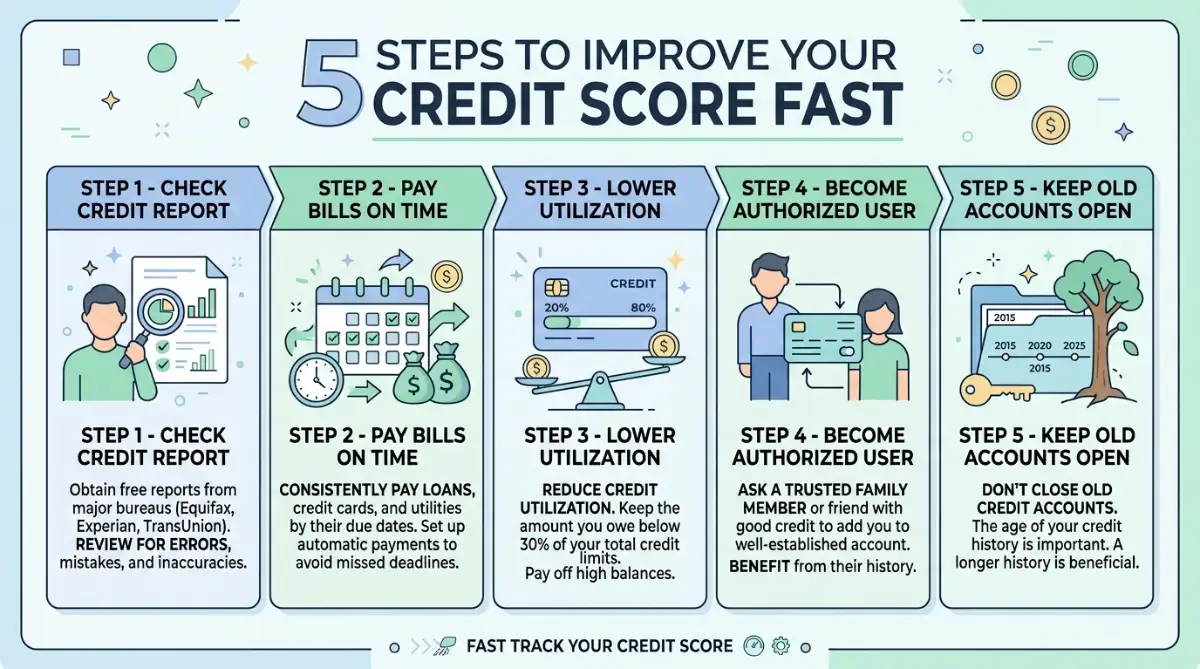
- Step 1: Decode and polish your credit report by disputing reporting errors.
- Step 2: Optimize your credit utilization ratio by keeping balances low.
- Step 3: Establish a flawless payment routine using automated transfers.
Comparing Borrower Profiles
Myth vs Reality: Raising Your Credit Score
Myth: "Closing old, unused credit cards will instantly improve your credit score."
Reality: Closing old accounts reduces your total credit limit, which raises your credit utilization ratio and can drop your score. It is much better to keep those old accounts open to show a longer credit history.
My Personal Pro Tip: Always use credit monitoring tools that offer soft checks. This lets you check your eligibility with a soft credit check, which protects your score from damage while showing your actual rates and pre-qualification standing.
Before you continue reading, take a moment to watch this quick, simple video that breaks down how credit scores work so you can easily plan your path to success:
Pro Strategies to Master Your Credit Rating and Secure Better Terms
Once you understand the basic rules of credit building, you can start using advanced strategies to improve your financial profile. Managing your credit history is a lot like preparing for a major marathon; the more polished and organized your habits look, the faster you will see a positive rise in your score. Let us examine some expert secrets that will help you stay ahead of the game and secure the best possible terms. One effective method involves requesting credit line increases. Many credit card users do not realize they can use their current cards to boost their scores quickly. You can call your card issuer directly and ask for a credit limit increase. If you have paid your bills on time for several months, the bank will often approve your request without a hard credit check. Since your actual debt remains the same, your overall credit utilization ratio drops instantly. To ensure your profile meets general lending standards, you can review our guide on how to improve your credit score before submitting formal applications.
Another powerful tactic is leveraging the authorized user strategy. If you have a short credit history or your score is too low, you can ask a close family member for help by adding you as an authorized user on their oldest credit card account. You do not even need to hold the physical card or spend a single dollar, as their long-term payment history will automatically show up on your credit report. If you are also managing student debt alongside your credit rebuilding journey, reading insights on federal vs private student loans helps you understand how different liabilities impact your overall creditworthiness. For small business owners or freelancers building commercial credibility, you can explore resources on easy AI website builders for small businesses to establish professional online branding.
Furthermore, establishing a cash shield prevents future debt emergencies. Once your immediate credit emergency is solved, your next target should be to stop borrowing for good by learning how to build a bulletproof emergency fund fast. Having your own cash reserve means you will never have to pay interest to a bank again when a crisis happens. For related insights on safeguarding your overall household stability, check out tips on how to choose your first home insurance policy to protect your living environment. Finally, if you are looking at alternative educational paths to upgrade your career skills without massive debt, researching options like best community colleges in the USA provides affordable avenues for academic growth. Taking a disciplined, structured approach ensures your credit score steadily climbs toward prime status.
 Credit Traps That Can Destabilize Your Financial Life
When you are facing an urgent money problem, it is very easy to make hasty decisions. Credit companies understand how to make their loan products look incredibly attractive. You must train yourself to see past their clever advertising and avoid common credit traps.
The Trap of Multiple Fast Applications
Many beginners make the classic mistake of applying for several credit cards at the same time to see who gives them the best limit, triggering hard inquiries that damage their profile.
Closing Old Accounts Prematurely
Closing credit cards you do not use anymore shortens your average credit history length and reduces your overall credit limit, automatically driving up your utilization ratio.
Simple Do's and Don'ts for Credit Management
- Do check your credit report regularly for reporting errors and dispute inaccuracies.
- Do keep old credit card accounts open to preserve your average credit history length.
- Do set up automatic payments to guarantee a perfect monthly payment record.
- Don't apply for multiple credit cards or loans simultaneously within a short window.
- Don't max out your credit limits immediately after receiving a card limit increase.
- Don't close your oldest credit accounts even if they carry a zero balance.
Your Action Plan for Tomorrow: Reclaiming Control of Your Money
Taking control of your finances is a journey that starts with small, daily steps. You do not have to figure out everything today, but you must start moving in the right direction.
- Calculate Monthly Income and Bills: Write down every single dollar coming in and going out.
- Get Your Free Credit Report: Use a trusted website to check your score and look closely for errors.
- Compare Options Safely: Find lenders offering soft credit checks and evaluate rates side by side.
Taking that first active step to download my credit report and dispute simple errors changed my financial life forever. If I could rise above that stressful situation and rebuild my confidence on my own, I know you have the power to do it too. Stay strong, keep learning, and take that first step toward financial peace today.
Recommended Reading Resources
Explore these internal guides to master your overall financial strategy:
- How to Improve Your Credit Score Before Applying for a Mortgage
- Federal vs Private Student Loans Guide
- How to Choose Your First Home Insurance Policy Without Stress
- Best Community Colleges in the USA for Affordable Education
Frequently Asked Questions
How long does it take to repair a low credit score?
Minor improvements can happen in weeks by fixing errors, while major score recoveries typically take six to twelve months of consistent habits.
Will checking my own credit score lower it?
No, checking your own credit score or report constitutes a soft inquiry, which has zero impact on your credit rating.
Is it smart to close old credit cards once they are paid off?
No, keeping old accounts open preserves your credit history length and maintains a lower credit utilization ratio.
How does credit utilization affect my score?
Credit utilization measures the percentage of your credit limits currently in use; keeping it below 30% significantly boosts your score.
Can an authorized user strategy help raise a low score?
Yes, being added as an authorized user on an account with a strong on-time payment history can quickly boost your credit score.
Disclaimer: The information provided in this article is for educational and informational purposes only. It should not be taken as professional financial or legal advice. Always consult with a certified financial planner or advisor before making any major financial decisions or signing loan agreements.