How Messy Communication Almost Destroyed My Agency
I remember staring at my laptop screen at 11:00 PM, feeling a heavy knot of panic in my stomach. My remote team had completely missed a major client deadline because an important file was buried in a messy chat thread. I was paying thousands of dollars for random apps, but my daily operations were a complete disaster zone.
My inbox was overflowing with confused emails from contractors asking what they were supposed to do next. The stress of managing people across three different time zones was slowly destroying my physical health and my weekends. I was constantly acting as a human bottleneck for every single project.
That expensive, humiliating client failure forced me to completely rethink my entire management system. I realized that surviving remote work required a centralized software brain, not just a collection of random communication tools.
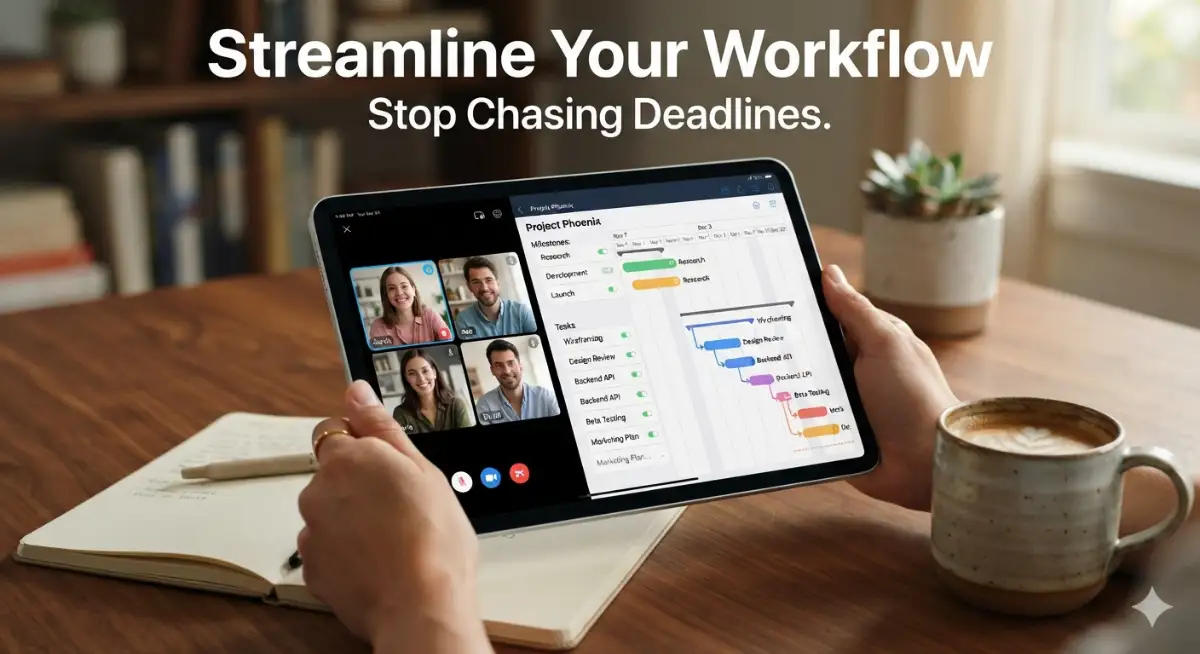
Without a proper system in place, remote teams naturally drift into complete chaos and disorganization. Employees spend more time searching for lost documents than they actually spend completing their assigned tasks.
If you are struggling to keep your remote staff on the same page, you are definitely not alone. I spent the last two years testing every major management platform to see what actually works for distributed teams.
Today, I want to share the absolute best SaaS project management software for remote teams available on the market. Let us explore the exact tools that helped me organize my team, protect my energy, and scale my business efficiently.
Your Guide to the Ultimate Remote Management Tools
Choosing the right software can feel incredibly overwhelming when every company promises to solve all your business problems. You cannot simply sign up for a random app and expect your team to instantly become highly productive.
You need to find a tool that perfectly matches your specific workflow and your team's technical skill level. A complex enterprise tool might be completely useless for a small team of five creative freelancers.
I have categorized the top platforms based on their primary strengths and optimal use cases. This breakdown will help you make a highly informed decision before you swipe your business credit card.
1. Monday.com: The Visual Powerhouse
When it comes to highly visual, customizable dashboards, Monday.com is currently leading the industry by a wide margin. It uses a brilliant color-coded grid system that allows managers to see the exact status of a project instantly.
You can easily build custom workflows for everything from software development tracking to content marketing calendars. The interface is incredibly intuitive, meaning your non-technical staff will learn how to use it within an hour.
It also features powerful automation rules that move tasks to the next phase without any manual human input. If your team relies heavily on visual data, this tool is an absolute game-changer for daily operations.
2. Asana: The King of Team Collaboration
Asana has been a dominant force in the software market for years, and their recent updates make it better than ever. It excels at breaking down massive, overwhelming projects into tiny, actionable sub-tasks.
Every task can have a specific assignee, a strict due date, and detailed instructions attached to it. This completely eliminates the common excuse of not knowing who was supposed to complete a specific duty.
Asana seamlessly connects with other internal messaging platforms to keep your entire digital ecosystem connected. It acts as the central hub where all real work is actually tracked and measured accurately.
3. ClickUp: The All-in-One Replacement
If you are tired of paying for five different software subscriptions, ClickUp is designed specifically for you. Their main marketing promise is to be one app to replace them all, and they genuinely deliver on that goal.
It includes native features for project tracking, internal document creation, goal setting, and team chat. You can view your projects as a simple list, a Kanban board, a calendar, or a complex Gantt chart.
The sheer amount of customization can be slightly intimidating for absolute beginners at first glance. However, once you set it up correctly, it is one of the most powerful productivity suites for modern businesses.
Watch the Software Comparison in Action
Sometimes reading about a platform is not enough to truly grasp how its interface feels during a busy workday. Seeing a live walkthrough can instantly clarify which dashboard makes the most logical sense to you.
Watch this comprehensive software comparison below to see exactly how these tools operate in real time:
4. Notion: The Ultimate Digital Workspace
Notion started as a simple note-taking application, but it has evolved into an incredibly robust management platform. It gives you a completely blank digital canvas to build a custom workspace exactly how your brain works.
You can create connected databases to track your active clients, store your company standard operating procedures, and manage daily tasks. Everything is built using simple building blocks, giving you total creative control over the layout.
It is particularly beloved by content creators, writers, and highly creative remote marketing teams. If you need a tool that handles both complex databases and long-form writing easily, Notion is unmatched.
5. Jira: The Developer's Best Friend
If you manage a remote team of software engineers or product developers, Jira is the industry standard you must consider. It is built specifically around the Agile methodology and managing complex software sprints.
It allows your engineering team to track bugs, manage feature requests, and plan software releases with incredible precision. The reporting features offer deep insights into your team's actual coding velocity and performance.
While it is generally too complicated for a simple marketing team, it is absolutely essential for software development. IT professionals heavily recognize Jira as a top-tier tool for strict coding environments.
6. Trello: The Simplicity Champion
Sometimes you do not need complex reporting or advanced automation; you just need to know what needs to be done today. Trello provides the absolute easiest Kanban board experience on the internet.
You create simple vertical lists like 'To Do', 'Doing', and 'Done', and simply drag task cards between them. It is so user-friendly that you can onboard a brand new employee in less than five minutes.
It is perfect for managing simple content calendars or tracking basic client requests without a steep learning curve. If your team is small and gets easily overwhelmed by complex software, Trello is the perfect starting point.
7. Basecamp: The Agency Favorite
Basecamp takes a highly unique approach to project management by completely eliminating complex charts and graphs. They focus heavily on reducing team stress and keeping communication organized in one quiet place.
Instead of endless lists of sub-tasks, Basecamp uses message boards, group campfires, and automatic check-in questions. It gently asks your team what they worked on today at the end of every shift.
This asynchronous communication style is highly praised for reducing remote worker burnout and constant notification fatigue. It is an excellent, low-stress choice for design agencies and consulting firms.
Top SaaS Platforms Comparison Overview
Here is a clear, highly scannable breakdown of the tools we just covered to help you choose quickly. Always consider your specific budget and primary team goal before making a final purchasing decision.
Myth vs Reality: Project Management Software
- Myth: Buying an expensive management tool will instantly fix a lazy or unmotivated remote team.
- Reality: Software only highlights existing workflow problems; it requires strong human leadership to actually fix company culture.
- Myth: You have to force your team to log every single minute of their day into the platform.
- Reality: Micro-managing time creates resentment. Good software tracks overall output and results, not just hours sitting at a desk.
- Myth: Onboarding a new platform takes months of painful technical training.
- Reality: Most modern tools feature intuitive drag-and-drop interfaces that a standard employee can learn in a single afternoon.
My Personal Pro Tip:
I always designate one single person on my team as the official software champion. Their only job is to learn every keyboard shortcut, master the automation rules, and train new employees on how we use the tool. This simple strategy stops my team from constantly asking me basic technical questions all day long!
Advanced Implementation Strategies for Remote Teams
Purchasing a premium subscription is only the first ten percent of the battle for remote productivity. If you just invite your team to a blank dashboard without a plan, they will abandon it within a week.
To ensure long-term success, you must implement a highly structured onboarding strategy. Let me share some advanced operational secrets that helped my remote staff embrace our new software joyfully.
First, you must establish clear rules regarding how the team communicates inside the tool versus your chat app. I always enforce a rule that any conversation regarding a specific deliverable must happen inside the software task card.
This creates a permanent, searchable record of the project history that anyone can review later. Using the best AI project management software to organize your remote team ensures these rules are easily enforceable.
If you fail to set these strict boundaries, your team will continue sending important files through hidden private messages. Next, you must invest heavily in building standard operating procedures directly inside your new platform.
Whenever you assign a recurring task, attach a link to a quick video explaining exactly how to complete it. Documented processes are the secret weapon of highly profitable remote companies everywhere.
Another massive strategy is leveraging native automation features to eliminate annoying administrative busywork. Almost every top tool on our list allows you to set up basic conditional logic rules.
For instance, when a writer marks a draft as ready, the software should automatically reassign the task to the editor. To take things further, you can integrate apps that boost your small business productivity with simple AI tools without needing extra staff.
This completely removes the need for human managers to constantly poke people and ask them to move projects forward. Finally, you must be patient during the transition period and expect a temporary drop in output.
It takes the human brain a few weeks to fully adapt to new visual layouts and new digital habits. Hold a weekly feedback session where employees can safely share what parts of the software are confusing them.
Costly Implementation Mistakes You Must Avoid
I have made plenty of embarrassing and incredibly expensive mistakes while trying to organize my remote workforce. Some of these errors cost me thousands of dollars in lost productivity and caused severe frustration among my best employees.
My absolute biggest blunder was falling victim to severe tool fatigue. I thought that buying a different specialized app for every single minor problem was the mark of a professional agency.
I was paying for a separate chat app, a separate file storage system, a separate goal tracker, and a separate task manager. My employees had to keep eight different browser tabs open just to complete a single daily assignment.
The constant context switching exhausted their brains, and important details constantly fell through the cracks between platforms. I learned the hard way that consolidating your work into one primary software is always better than having ten disconnected tools.
Another terrible mistake I made was completely ignoring user permissions and digital security protocols. I initially gave every single freelance contractor full administrative access to my entire company dashboard because it felt easier.
One careless contractor accidentally deleted an entire board containing six months of client project history. To prevent this, you should always protect your small business data with easy AI security tools and strict user permissions.
Recovering that lost data was an absolute nightmare, and it taught me a harsh lesson about digital boundaries. I also deeply regret overcomplicating my project boards with too many custom fields and mandatory tags.
I created a system that required employees to fill out ten different dropdown menus before they could close a simple task. The administrative burden became so heavy that my team simply stopped updating their tasks entirely.
The best project management system is always the simplest one that your team will actually stick to daily. Do not force your creative workers to act like robots just to satisfy your desire for perfect tracking data.
Embracing a Calmer Remote Future
Transforming your remote team from a chaotic group of stressed individuals into a highly synchronized unit takes dedication. You do not need to have a perfect, flawless dashboard on day one of your software journey.
Start by simply moving your most important weekly project out of your email inbox and into a structured Kanban board. Once your team experiences the sheer relief of centralized communication, they will eagerly adopt the rest of the system.
I genuinely hope my past failures and current strategies help you design a daily workflow that brings you total peace of mind. I can confidently say that taking the time to master my project management software completely saved my business and my health!
Frequently Asked Questions
What is the easiest SaaS project management tool for beginners?
Trello is widely considered the most beginner-friendly platform due to its highly visual, intuitive drag-and-drop interface. You can set up a basic workflow in under five minutes without reading any complex technical manuals. It is perfect for teams transitioning away from physical whiteboards.
Is it safe to store sensitive company data in SaaS software?
Yes, reputable enterprise platforms utilize bank-level encryption and strict compliance certifications to protect your data effectively. However, you should always enforce strong passwords and require two-factor authentication for all your remote employees. Regular external backups of your critical boards are also highly recommended.
How much should a small business expect to spend on these tools?
Most premium platforms charge on a per-user, per-month basis, typically ranging from $8 to $15 per employee. A team of ten people should expect to invest roughly $100 to $150 monthly for a robust management solution. The massive amount of time saved easily covers this operational cost.
Can these platforms integrate with our current communication tools?
Absolutely. The best modern SaaS tools feature native integrations with popular apps like Slack, Microsoft Teams, and Zoom. You can easily set up rules that automatically send a Slack notification whenever a high-priority task is completed or delayed.
How do I convince my team to actually use the new software?
The secret to high adoption rates is leading by example and completely stopping all work-related requests via email or private chat. If an employee messages you for a file, politely ask them to create a task card in the software instead. Once they realize that actual work only happens inside the platform, they will adapt quickly.
Do I need to hire an expert to set up my workspace?
While large corporations often hire consultants to build highly complex automated workflows, small businesses absolutely do not need to. Almost all of these tools provide extensive libraries of free, pre-built templates for marketing, HR, and sales operations. You can simply download a template and customize it as your team grows.
Category Disclaimer:
The information provided in this article is for educational and general operational purposes only. Software features, subscription pricing, and digital security standards are subject to rapid change. Always verify current tool capabilities and consult with an IT professional regarding your company's specific data security requirements.