Best Hybrid Cars for American Families: The Ultimate Guide to Fuel Economy, Safety, and Cargo Space
Managing the daily logistics of a modern American household requires an extraordinary degree of coordination, energy, and transportation mobility. On any given week, parents find themselves coordinating early morning school drop-offs, driving to youth sports practices, managing grocery runs, commuting to work, and packing up for long weekend family road trips. For decades, the traditional American family vehicle was an internal combustion engine gasoline-powered sedan, station wagon, or heavy V6 SUV. However, as fuel prices fluctuate unpredictably and family budgets face ongoing cost-of-living pressures, driving an inefficient gas vehicle that averages 18 to 22 miles per gallon can drain thousands of dollars from household savings every year. When I first looked at our family's monthly fuel expenses adding up next to our grocery and utility bills, I felt completely overwhelmed by how much of our income was literally vanishing into gas station pumps. Our older midsize SUV was guzzling gas during stop-and-go school carpools, and I knew we needed a reliable alternative that wouldn't force us to change our busy driving habits or worry about public charging networks. Taking the time to research hybrid power options changed everything for our household, providing immediate relief at the pump while retaining the passenger space we desperately needed.
This financial pressure explains why Hybrid Electric Vehicles and Plug-In Hybrid Electric Vehicles have rapidly emerged as the undisputed top choice for American family buyers. Hybrid technology seamlessly combines a clean gasoline internal combustion engine with one or more electric traction motors and a high-efficiency battery pack.
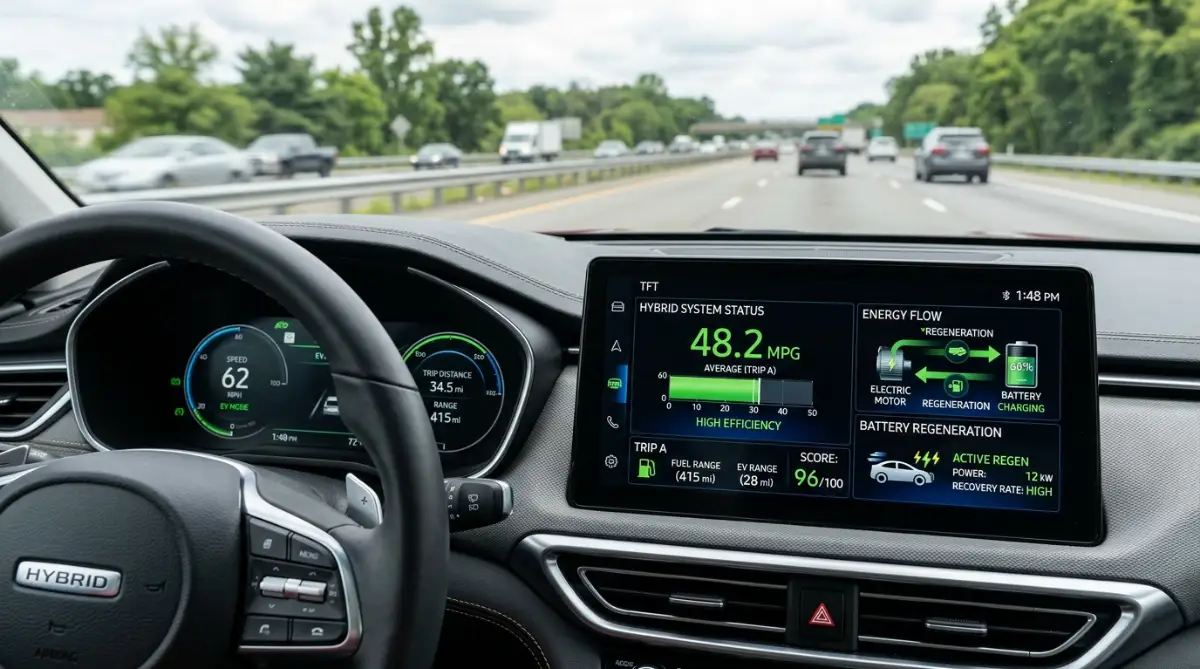
Hybrids deliver stellar fuel economy often reaching 38 to 50+ MPG, smooth acceleration, and reduced carbon emissions—all without requiring drivers to change their daily habits, worry about EV range anxiety, or wait at public charging stations during long road trips. In this comprehensive buyer's guide, we evaluate the best hybrid cars, crossovers, 3-row SUVs, and minivans for American families, comparing crash safety scores, real-world fuel efficiency, interior cargo volumes, and smart family-friendly technologies.
The Ultimate Guide to the Best Hybrid Cars for American Families: Fuel Economy, Safety, and Space
Are you tired of watching your hard-earned money vanish at the gas pump every single week during school drop-offs and soccer practices? Upgrading to a family hybrid vehicle is one of the smartest financial decisions a modern household can make, offering incredible fuel efficiency, advanced safety features, and spacious 3-row cargo room. In this comprehensive guide, we compare the best traditional hybrids and plug-in hybrids on the market, breaking down real-world MPG, safety ratings, and cargo capacities to help you find the perfect ride for your loved ones today!

1. Hybrid Technology Breakdown: HEVs vs. PHEVs for Families
When shopping for a family hybrid vehicle, understanding the difference between traditional self-charging hybrids and plug-in hybrids helps you choose the right power train for your daily driving routine:
My Personal Pro Tip: Whenever I test-drive a family hybrid with dealership sales representatives, I always request to drive on both stop-and-go local city streets and high-speed interstate highways. In my experience, testing both environments reveals how smoothly the vehicle transitions between electric battery power and the gas engine, while also letting you check cabin noise levels at 70 miles per hour.
Watch this video guide for an expert visual review detailing top-ranked family hybrid models, real-world fuel economy test results, and cargo space evaluations:
Top Compact & Midsize Hybrid Cars/SUVs for Small Families
For families with one or two children, compact and midsize hybrid crossovers offer the perfect combination of maneuverability, fuel economy, and flexible rear cargo space:
- Toyota RAV4 Hybrid / Corolla Cross Hybrid: The long-standing king of family crossovers, offering standard Electronic All-Wheel Drive, 40 MPG combined, and legendary Toyota hybrid drivetrain reliability. For related financing help, review our guide on managing educational loans and smart family budgeting.
- Honda CR-V Hybrid / Civic Hybrid: Celebrated for an ultra-refined interior, class-leading rear-seat legroom, whisper-quiet cabin insulation, and a smooth hybrid drive system delivering 40 MPG.
- Hyundai Tucson Hybrid / Kia Sportage Hybrid: Delivers punchy turbocharged hybrid performance, bold modern styling, dual 12.3-inch panoramic screens, and an industry-leading 10-year/100,000-mile power train warranty.
3. Premier 3-Row Hybrid SUVs & Minivans for Large Families
For larger families or active carpool drivers requiring seating for six to eight passengers, these 3-row electrified powerhouses deliver maximum utility without sacrificing fuel economy:
- Toyota Grand Highlander Hybrid: Features adult-sized legroom across all three rows and generous rear cargo space behind the third row for strollers and luggage, achieving up to 36 MPG combined.
- Chrysler Pacifica Hybrid (PHEV): Stands as one of the most versatile family haulers, offering 32 miles of pure electric driving range followed by 30 MPG in hybrid mode, power sliding doors, and seating for seven.
- Kia Sorento Hybrid & Hyundai Santa Fe Hybrid: Offering three rows of seating in a maneuverable midsize footprint with available captain's chairs, advanced safety suites, and 36+ MPG efficiency. You can explore how to protect your household investments by reading our guide on choosing a home insurance policy without stress, or review our suggestions on simple website building tools for small businesses if you run a remote side venture.
4. Essential Family Safety & Comfort Features to Prioritize
When comparing hybrid models at dealership lots, look beyond exterior styling and ensure the vehicle includes these critical family-oriented features:
- Top-Tier Ii HS Safety Pick+ Ratings: Verify that your target model earned top crash-test ratings from the Insurance Institute for Highway Safety, featuring robust roof strength and advanced side-impact protection. Learn how to protect your finances by reading our guide on improving your credit score before applying for financial products.
- Active Driver-Assistance Suites: Ensure standard inclusion of Automatic Emergency Braking with Pedestrian Detection, Blind-Spot Monitoring, Rear Cross-Traffic Alert, and Lane-Keeping Assist.
- LATCH Child Seat Ergonomics: Test the accessibility of lower anchors and top tethers for installing rear-facing and forward-facing child safety car seats.
- Tri-Zone Climate Control & Rear USB Ports: Dedicated rear-seat climate vents and multiple high-output USB-C ports keep children comfortable and their devices charged during long family road trips.
5. Common Pitfalls to Avoid When Buying a Family Hybrid
Even seasoned car buyers make critical errors when transitioning to hybrid vehicles. A common mistake is buying a plug-in hybrid without having access to a home garage outlet or Level 2 charger, forcing you to rely solely on gas without capturing the electric savings. Another pitfall is ignoring real-world cargo space measurements behind the third row, which can leave you struggling to fit strollers and groceries. Finally, always verify that the hybrid battery warranty meets or exceeds state and federal longevity standards.
6. The 5-Point Family Hybrid Buyer's Checklist
Follow this master checklist before signing a purchase contract for your new family hybrid:
- Step 1: Perform the Stroller & Luggage Trunk Test: Bring your bulky family stroller or suitcases to verify real-world rear cargo depth.
- Step 2: Test Car Seat Installation: Install your actual child safety seats in the second row during your test drive to confirm legroom.
- Step 3: Verify Federal Hybrid Battery Warranty: Confirm federal law mandates a minimum 8-year / 100,000-mile high-voltage battery warranty.
- Step 4: Calculate Fuel Savings vs. Price Premium: Compare hybrid trim pricing to ensure your annual gas savings recoup the price difference within 2 to 3 years.
- Step 5: Audit Out-the-Door Dealer Pricing: Request transparent, written out-the-door price quotes from multiple local dealerships to avoid markups.
7. Final Thoughts and Moving Forward
Selecting the ideal hybrid car for your family is one of the smartest long-term investments you can make. By choosing an electrified vehicle that combines 40+ MPG fuel efficiency, top Ii HS safety crash ratings, versatile cargo space, and proven mechanical dependability, you protect your family budget while upgrading your daily driving comfort.
In my own family's driving routine, switching to a hybrid crossover eliminated the weekly stress of high gas prices while making our daily school runs and road trips much more enjoyable. Take charge of your family's automotive future today. Evaluate your seating needs, test-drive top-rated hybrid models, verify safety ratings, and step confidently into a comfortable, fuel-efficient, and stress-free driving journey with the people you love most!
8. Frequently Asked Questions
Do hybrid cars require special maintenance compared to regular gas cars?
No, hybrid cars require standard maintenance like oil changes and tire rotations. In fact, regenerative braking systems often extend brake pad lifespan significantly compared to traditional gas cars.
Can plug-in hybrid cars run on gas alone if I don't charge them?
Yes, plug-in hybrids feature a gas engine that automatically takes over once the electric battery is depleted, operating just like a standard self-charging hybrid.
How long do hybrid car batteries last?
Federal regulations mandate an 8-year or 100,000-mile warranty on hybrid batteries, but modern lithium-ion packs frequently last well beyond 150,000 to 200,000 miles with normal use.
Are hybrid SUVs more expensive to insure than gas SUVs?
Insurance rates depend primarily on vehicle safety ratings, repair costs, and driver history. Because hybrids feature advanced safety suites, their insurance premiums are often comparable to gas models.
Do hybrids lose fuel economy during winter weather?
Yes, cold winter temperatures and cabin heating demands can temporarily reduce hybrid fuel efficiency by 10% to 20%, which is still a much smaller drop than pure gas vehicles experience.
9. Automotive & Financial Disclaimer
The information provided in this article is for educational, informational, and general consumer guidance only and does not constitute formal mechanical, financial, legal, or automotive purchase advice. Vehicle fuel economy ratings, cargo dimensions, safety awards, MSRP pricing, and warranty terms are subject to change by manufacturers over time. Buyers are strongly encouraged to conduct independent test drives, verify child seat fitment, and check official manufacturer websites before purchasing a vehicle.
![10 Cheapest EVs You Can Buy Right Now in the USA [Huge Savings]](https://martinesy.com/storage/uploads/blogs/1786111292_10-cheapest-evs-you-can-buy-right-now-in-the-usa-huge-savings.webp)