How I Almost Gave Up on Buying an Electric Car (And Why You Don't Have To)
I still remember standing at the gas station two years ago, watching the digital pump numbers climb past sixty dollars. My wallet felt lighter every single week, and I knew I needed to make a change in my life.
I decided to look into buying an electric car to escape those high fuel prices once and for all. But when I opened my laptop and started searching online, my excitement vanished in seconds.
Every popular review talked about luxury trucks and futuristic sedans costing seventy thousand dollars or more. I felt defeated because I simply could not justify taking on a massive monthly car payment just to save money on gas.
I almost closed my laptop and gave up on my dream of owning an electric vehicle completely. Luckily, I decided to dig deeper into manufacturer listings, local dealership inventories, and federal tax incentives.
What I discovered changed my perspective on the entire automotive market. There is a quiet revolution happening in the car industry right now, and affordable electric cars are finally filling showroom floors across the United States.
You do not need to be a millionaire or take on crushing debt to drive a reliable, long-range electric vehicle today. If you are tired of spending hundreds of dollars at the pump every month, you are in the right place.
The Complete Guide to the 10 Most Affordable EVs in America
The electric car market has shifted dramatically over the past few years. Auto makers are no longer just building high-end luxury vehicles for early adopters.
Today, car companies are competing fiercely to offer reliable, feature-packed electric vehicles at price points that everyday American families can actually afford. Between falling battery manufacturing costs and federal tax incentives, going electric is more practical than ever before.
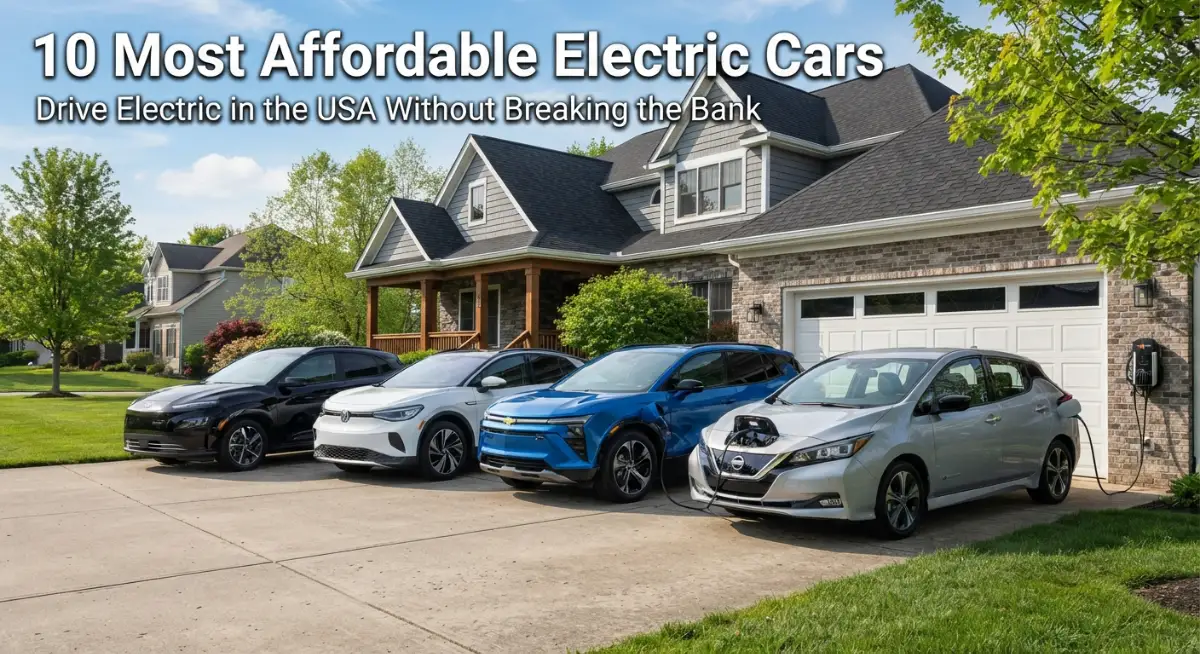
To help you find the perfect match for your lifestyle and budget, I have put together a detailed breakdown of the ten most affordable electric vehicles currently available in the US market.
1. Nissan Leaf
Starting MSRP: ~$28,140
Estimated Range: 149 to 212 miles
Drivetrain: Front-Wheel Drive (FWD)
The Nissan Leaf holds a special place in automotive history as one of the original mass-market electric vehicles. It remains the absolute cheapest brand-new EV you can buy in America today.
For daily commuters, city drivers, and short suburban errands, the entry-level Leaf offers incredible value. The interior is comfortable, quiet, and packed with standard safety features like automatic emergency braking and blind-spot monitoring.
While its CHAdeMO fast-charging port is becoming dated compared to newer standards, it is still an ideal option if you plan to charge overnight at home. According to reviews on Edmunds, the Leaf provides a smooth ride that makes daily commuting peaceful and low-cost.
2. Chevrolet Equinox EV
Starting MSRP: ~$34,995 (Effective price lower with federal tax credits)
Estimated Range: Up to 319 miles
Drivetrain: Available FWD or AWD
General Motors hit a home run with the introduction of the Chevrolet Equinox EV. It offers a spacious crossover body style, modern infotainment displays, and over three hundred miles of range on a single charge.
What makes the Equinox EV truly special is its eligibility for the full $7,500 federal clean vehicle tax credit. When applied at the point of sale, this incentive brings the effective starting price down under thirty thousand dollars.
For American families looking for a versatile daily driver that can handle long highway road trips, the Equinox EV sets a new benchmark for budget-friendly electric transportation.
3. Hyundai Kona Electric
Starting MSRP: ~$32,675
Estimated Range: Up to 261 miles
Drivetrain: Front-Wheel Drive (FWD)
Hyundai completely redesigned the Kona Electric, giving it a futuristic exterior design and a surprisingly spacious cabin. It feels far more expensive inside than its reasonable price tag suggests.
The Kona Electric comes loaded with dual 12.3-inch panoramic display screens, wireless Apple CarPlay, and Android Auto as standard equipment. Its punchy electric motor delivers quick acceleration that makes city driving and merging onto highways effortless.
While it does not qualify for the federal tax credit when purchased outright, leasing deals often pass those savings directly on to drivers through incredibly low monthly payments.
4. Fiat 500e
Starting MSRP: ~$32,500
Estimated Range: 149 miles
Drivetrain: Front-Wheel Drive (FWD)
If you live in a dense city environment where parking spaces are tiny and street traffic is tight, the Fiat 500e is a stylish choice. This Italian-designed electric hatchback brings personality and fun back into budget car buying.
It is lightweight, nimble, and easy to maneuver through tight urban corridors. While its 149-mile range is shorter than larger SUVs, it is more than enough for urban professionals who drive short distances daily.
It also supports fast charging, allowing you to add up to 80% of battery life in about thirty minutes at a Level 3 public charger.
5. Mini Cooper SE
Starting MSRP: ~$30,900
Estimated Range: 114 miles
Drivetrain: Front-Wheel Drive (FWD)
The Mini Cooper SE proves that buying a budget electric vehicle does not mean giving up driving excitement. It retains the signature go-kart handling and playful styling that Mini fans have loved for decades.
Because it has a small battery pack, it charges very quickly even on a standard household outlet or basic Level 2 charger. Its limited range makes it best suited as a secondary family vehicle or a fun daily commuter car for short trips.
If your daily commute is under thirty miles round trip, the Mini Cooper SE offers maximum driving enjoyment for very little money.
6. Volkswagen ID.4
Starting MSRP: ~$39,735
Estimated Range: 206 to 291 miles
Drivetrain: FWD or All-Wheel Drive (AWD)
The Volkswagen ID.4 is built at VW's manufacturing facility in Chattanooga, Tennessee, which helps it qualify for federal tax incentives. It offers a smooth, European-style driving experience combined with a roomy, high-tech interior.
Passengers in the back seat will appreciate generous legroom, making it a great option for growing families or carpooling. The ID.4 also includes three years of complimentary 30-minute charging sessions on the Electrify America network.
According to test data from Kelley Blue Book, the ID.4 stands out as one of the most balanced and comfortable compact electric SUVs on the market.
7. Kia Niro EV
Starting MSRP: ~$39,600
Estimated Range: 253 miles
Drivetrain: Front-Wheel Drive (FWD)
Kia has built a strong reputation for reliability and tech innovation, and the Niro EV is a prime example of that commitment. This crossover features an attractive cabin made with sustainable materials and user-friendly technology.
Its 253-mile driving range gives you plenty of confidence for weekend road trips without frequent charging stops. The Niro EV also comes with Kia's industry-leading 10-year/100,000-mile powertrain and battery warranty.
That warranty peace of mind makes it a smart long-term investment for drivers who want to keep their cars for many years.
8. Tesla Model 3 (Rear-Wheel Drive)
Starting MSRP: ~$38,990
Estimated Range: 272 miles
Drivetrain: Rear-Wheel Drive (RWD)
No electric vehicle conversation is complete without mentioning Tesla. The entry-level Model 3 Rear-Wheel Drive remains one of the most popular and efficient electric sedans in the world.
Buying a Tesla gives you seamless access to the nationwide Tesla Supercharger network, which is widely considered the gold standard for public charging reliability. The Model 3 features minimalist interior styling, impressive software updates over the air, and sports-car-like acceleration.
When you factor in fuel savings and minimal maintenance requirements, the total cost of owning a Model 3 is comparable to many traditional gas-powered midsize sedans.
9. Volvo EX30
Starting MSRP: ~$34,950
Estimated Range: Up to 275 miles
Drivetrain: FWD or All-Wheel Drive (AWD)
The Volvo EX30 is a newcomer to the subcompact electric crossover market, bringing premium Scandinavian luxury down to an accessible price point. It boasts a stunning interior made from recycled denim, flax, and wool blends.
Despite its small footprint, it packs a serious punch with fast acceleration and a competitive 275-mile battery range. It also includes Volvo's world-renowned safety systems, protecting drivers with advanced driver-assist tools.
For buyers who want luxury styling and high-end safety features without paying a luxury price, the EX30 is a standout competitor.
10. Certified Pre-Owned & Used EVs (The $15,000 to $20,000 Bargain)
Starting Price: ~$12,000 to $20,000
Estimated Range: 150 to 259 miles
Example Models: Used Chevrolet Bolt EV/EUV, Used Hyundai Ioniq Electric, Used Nissan Leaf Plus
If a thirty-thousand-dollar new car is still beyond your current budget, the used EV market offers incredible bargains right now. Late-model used electric cars like the Chevrolet Bolt EV or EUV often sell for under eighteen thousand dollars.
Even better, used EVs priced under $25,000 bought through a licensed dealer may qualify for a used clean vehicle tax credit of up to $4,000. You can check exact eligibility details directly on the official IRS Clean Vehicle Credit Page.
Buying a two-year-old used EV lets the original owner absorb the initial depreciation while you enjoy years of low-cost, gas-free driving.
How to Pick the Right Budget EV for Your Daily Life
Choosing an affordable electric vehicle is slightly different from buying a traditional gas-powered car. Instead of just focusing on horsepower or paint colors, you need to evaluate your daily driving routine and home charging setup.
First, calculate your actual daily mileage rather than worrying about rare coast-to-cross-country road trips. Most American drivers travel less than forty miles per day, according to data from the US Department of Transportation.
Second, figure out where you will charge your vehicle overnight. Plugging into a standard 120-volt wall outlet adding 3 to 5 miles of range per hour might be enough for short commutes, but installing a 240-volt Level 2 charger in your garage is the ultimate convenience setup.
Third, look beyond the sticker price and calculate your total cost of ownership. Electric cars require no oil changes, spark plug replacements, or complex transmission repairs, which saves you thousands of dollars in maintenance over time.
If you are planning to finance your vehicle purchase, getting your personal finances in order first is essential. Working on how to improve your credit score before applying for a mortgage or auto loan can drop your interest rate significantly and save you a fortune in monthly interest charges.
Comparison of the 10 Most Affordable EVs in the USA
Debunking Common Myths About Budget Electric Cars
- Myth 1: Cheap electric cars do not have enough battery range for real-world driving.
- Reality: Most modern budget EVs offer between 200 and 300 miles of range on a single charge. Since the average American drives around 37 miles per day, you only need to plug in once or twice a week for normal driving.
- Myth 2: EV batteries degrade completely and need replacement after just a few years.
- Reality: Modern liquid-cooled lithium-ion battery packs are engineered to last the lifespan of the vehicle. Furthermore, federal law requires manufacturers to cover EV batteries under warranty for at least 8 years or 100,000 miles.
- Myth 3: Charging an electric car at home will skyrocket your monthly electric bill.
- Reality: While your electricity usage will increase slightly, charging an EV costs roughly one-third the price of filling a gas tank for the same mileage. Official fuel economy estimates from FuelEconomy.gov show that switching saves the average driver over $1,000 per year on fuel.
My Personal Pro Tip: Before you buy any electric car, contact your local electric utility company! Many power companies in the US offer cash rebates between $500 and $1,500 just for installing a home Level 2 charger. They also offer special "discounted night rates" for EV owners who charge their cars between midnight and 6 AM, cutting your charging costs in half!
If you want to watch a detailed video review of these budget electric cars, check out this video below:
Advanced Strategies to Save Thousands on Your EV Purchase
Navigating the car-buying process requires strategy if you want to walk away with the best possible deal. Beyond negotiating the sticker price at the dealership, there are several advanced financial moves you can make to lower your overall expenditure.
First, pay close attention to how federal tax incentives are applied. Thanks to updated regulations, qualifying buyers can transfer their $7,500 federal clean vehicle credit directly to the dealer at the time of purchase.
This means you do not have to wait until tax season next year to get your money back. Instead, the dealer reduces the upfront purchase price of the car by $7,500 right on the spot, lowering your monthly loan payments immediately.
Second, consider the "lease loophole" if you are eyeing an imported EV like the Hyundai Kona Electric or Kia Niro EV that does not qualify for the purchase credit. Federal tax laws allow auto financing companies to claim a $7,500 commercial clean vehicle credit on leased vehicles, regardless of where they were assembled.
Most manufacturers pass this full $7,500 savings directly to the customer as a lease cash incentive. You can lease the car for two or three years to enjoy the discount, and then buy out the lease if you want to keep the car long-term.
Third, look at your household insurance setup before driving your new electric car off the lot. Insurance rates for electric vehicles can vary widely between carriers because replacement parts and high-voltage technology require specialized repair technicians.
Shopping around for quotes from multiple insurance providers ensures you do not overpay for coverage. Learning how to choose your first home insurance policy without stress can also help you bundle auto and home insurance policies together for maximum annual discounts.
Fourth, manage your educational or personal debt wisely so you have healthy monthly cash flow for car ownership. If you are balancing student loans alongside major life expenses, reviewing federal vs private student loans: how to choose wisely can help you restructure payments and free up room in your budget.
Similarly, students attending the best community colleges in the USA for affordable education save thousands on tuition, leaving them in a much stronger financial position to buy a reliable car for commuting.
Finally, if you plan to launch a small business or side hustle around your new vehicle—such as delivery or rideshare driving—keep your overhead low. Utilizing easy AI website builders for small businesses allows you to set up a professional digital presence quickly without spending thousands on web developers.
Major Mistakes People Make When Buying Cheap Electric Cars
While buying a budget electric vehicle is a smart financial move, making impulse decisions without research can lead to costly mistakes. The most common error buyers make is ignoring charging speeds.
Not all electric cars charge at the same rate. A car that maxes out at 50 kW fast-charging will take over an hour at a highway public charger, while a car capable of 150 kW charging can get you back on the road in twenty minutes.
If you travel frequently, slow charging speeds will turn long trips into frustrating experiences. Always check the peak DC fast-charging rate before signing a purchase contract.
Another major pitfall is buying a used EV without verifying its battery health status. Unlike traditional gas engines that show wear through mechanical noise or fluid leaks, an electric car's battery health is stored in its onboard computer system.
If you buy a used EV with a degraded battery, your real-world driving range will be significantly lower than the factory rating. Always ask the seller for a certified battery health diagnostic report or hire an independent EV specialist to inspect the pack before paying.
Lastly, do not forget to factor in home charging installation costs. While a 120-volt Level 1 cord plugs into standard household outlets, installing a Level 2 240-volt charging station requires a dedicated 40-amp or 50-amp circuit.
If your home’s main electrical panel is old, you might need a panel upgrade that costs between $1,000 and $3,000. Get a quote from a licensed electrician before buying the car so there are no unexpected surprises.
Driving Into a Greener and Cheaper Future
Switching from a gas-powered car to an affordable electric vehicle is one of the most rewarding financial decisions you can make. You eliminate weekly trips to gas stations, lower your routine maintenance bills, and enjoy a quiet, smooth ride every day.
The electric car market is no longer reserved for high earners who can afford luxury price tags. With incredible options like the Nissan Leaf, Chevy Equinox EV, and used Chevy Bolt, going green is practical for almost any budget.
I hope this guide gives you the clarity and confidence you need to take your next step toward electric vehicle ownership. I would love to hear about your journey—take a look at your daily commute, check out a local test drive, and see how much money you can save by going electric today!
Frequently Asked Questions About Affordable EVs
What is the absolute cheapest electric car in the USA right now?
The Nissan Leaf is currently the cheapest brand-new electric car available in the United States, with a starting MSRP of around $28,140. However, after applying the $7,500 federal clean vehicle tax credit, models like the Chevrolet Equinox EV can have an even lower effective purchase price.
Can I get a tax credit on a used electric vehicle in the US?
Yes, qualifying buyers can receive a federal tax credit of up to $4,000 on a used electric car priced under $25,000. The vehicle must be at least two model years old and purchased through a licensed dealership.
How much money do you actually save on fuel with an EV?
On average, driving an electric car costs about one-third as much as driving a comparable gas-powered vehicle per mile. The average American driver saves between $1,000 and $1,500 per year on fuel costs alone after switching to an EV.
Do affordable EVs come with good battery warranties?
Yes, federal regulations require all auto manufacturers in the United States to cover EV battery packs for a minimum of 8 years or 100,000 miles. Some brands, like Hyundai and Kia, extend that coverage up to 10 years or 100,000 miles.
Is a Level 2 home charger necessary for an affordable EV?
While a Level 2 home charger is not strictly necessary for drivers with short daily commutes, it is highly recommended. It charges your vehicle four to five times faster than a standard Level 1 wall outlet, giving you a full battery overnight.
Category Disclaimer
The information provided in this article is for educational and informational purposes only. Prices, tax credit eligibility, vehicle specifications, and incentive programs are subject to change by manufacturers and government agencies. Always verify current pricing and tax regulations with a certified dealer or tax professional before making a purchase.