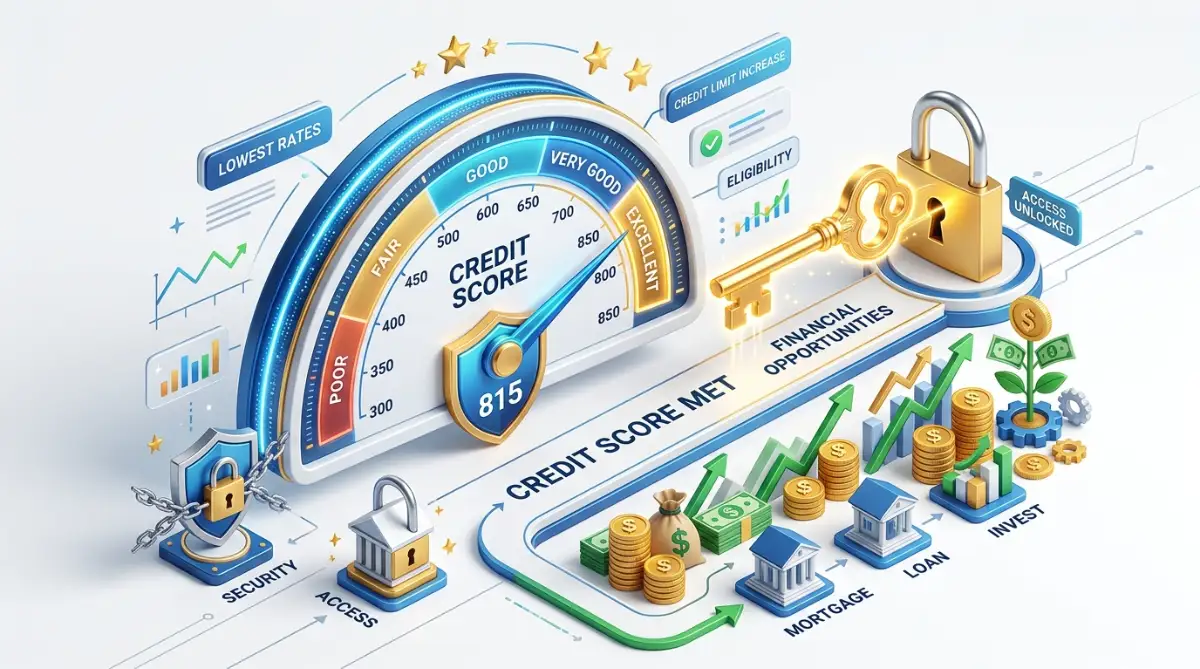
How a $700 Monthly Debt Trap Taught Me the Value of Consolidation
A few years ago, I counseled an IT administrator named Mark who found himself struggling under four separate high-interest credit card balances. I sat with him at his kitchen table as he showed me four different monthly due dates and over seven hundred dollars in minimum payments.
I watched his frustration grow as he realized that despite paying faithfully for over a year, high compound interest was eating away all his money. My heart went out to him because I knew how exhausting it feels to work hard every day without seeing your debt balance go down.
He assumed he needed a complicated debt relief program, but after reviewing his solid credit score, we found a much better solution. I helped him analyze his options and replace those four high-interest cards with a single fixed-rate consolidation loan.
By securing a single loan at an 11% APR, Mark cut his monthly outlay by $220 and set a firm three-year deadline to become completely debt-free. That experience proved to me how choosing the right financial tool can turn overwhelming debt into a structured recovery plan.
Managing personal finances in a complex economic environment often feels like an endless balancing act. Between high-interest credit card balances, medical bills, and short-term loans, keeping track of multiple creditors can quickly become overwhelming.
Fortunately, understanding the difference between debt consolidation plans and general personal loans gives you the power to regain control. Let's break down how each option operates so you can select the perfect strategy for your budget.
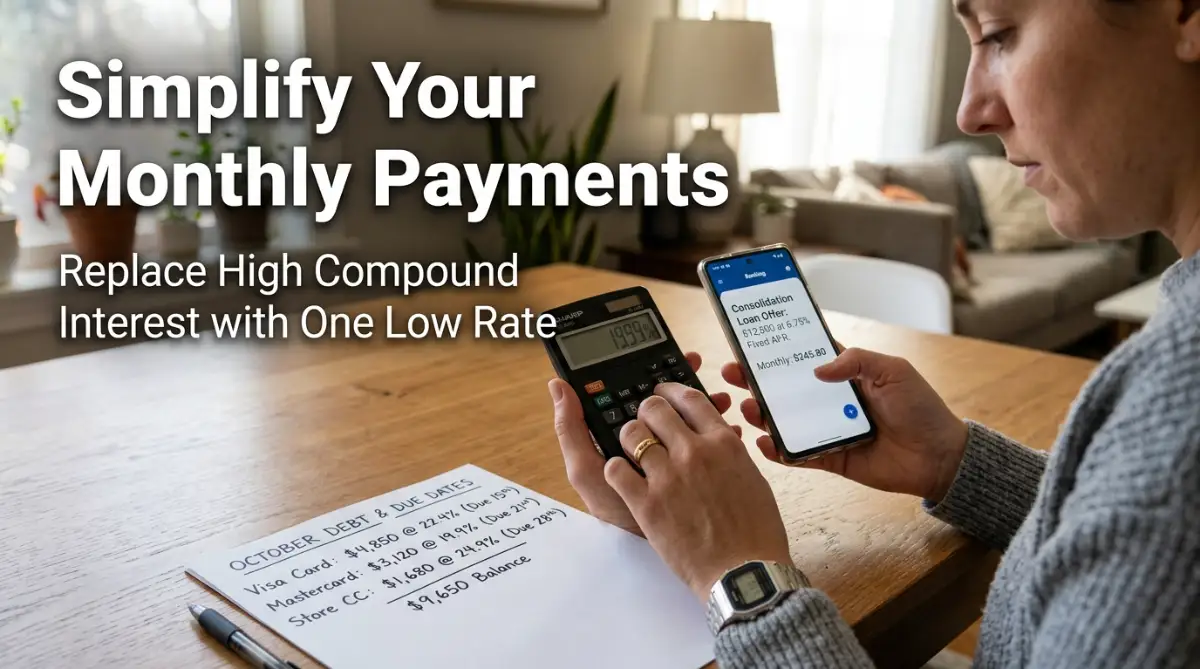
When debt begins to accumulate across various platforms, the mental fatigue of juggling multiple due dates is just as stressful as the financial burden. Choosing between a dedicated debt consolidation plan and a general personal loan requires evaluating how each option works.
While the terms "debt consolidation" and "personal loan" are often used interchangeably in marketing, they represent distinct approaches. A personal loan is a versatile financial product that provides a lump-sum cash payout for virtually any purpose.
Debt consolidation, on the other hand, is an overarching financial strategy designed specifically to combine multiple existing debts into a single, manageable monthly payment. This strategy is frequently executed using a specialized personal loan, a balance transfer credit card, or a structured management program.
Selecting the right path requires understanding how interest rates are calculated, how loan terms are structured, and how your unique credit score impacts your eligibility.
Let's examine the mechanics of both borrowing tools so you can make an informed, confident decision.
Demystifying Debt Consolidation and Personal Loans
To determine which borrowing strategy fits your financial circumstances, it is essential to separate the financial mechanism (the personal loan) from the strategic objective (debt consolidation).
A personal loan is an installment debt product offered by banks, credit unions, and online fintech lenders. When approved, the lender issues a lump sum upfront, which you agree to repay over a fixed tenure—typically between 12 and 84 months—at a fixed interest rate.
Personal loans are predominantly unsecured, meaning they require no physical collateral such as your home or car. Because of their flexibility, personal loans can be used for any legitimate expense, from emergency travel to home upgrades.
What Is Debt Consolidation?
Debt consolidation is an overarching management strategy rather than a single specific product. The goal of debt consolidation is to take several active high-interest debts—such as credit card balances, store cards, and medical bills—and merge them into one streamlined liability.
Debt consolidation can be accomplished through several distinct methods depending on your credit profile and financial preferences:
- A Debt Consolidation Personal Loan: Taking out a single fixed-rate personal loan equal to your existing debts and using those proceeds to pay off every individual creditor immediately.
- A 0% Intro APR Balance Transfer Credit Card: Moving existing credit card balances onto a new card offering a 0% promotional interest rate for an initial window (usually 12 to 21 months).
- A Debt Management Plan (DMP): Partnering with a non-profit credit counseling agency that negotiates reduced interest rates with your creditors and collects one monthly payment from you.
How Debt Consolidation Works: Mechanics and Key Benefits
When executed correctly, consolidating debt changes both the mathematical trajectory and the psychological weight of your financial obligations. Rather than distributing your income across multiple institutions with varying interest calculations, consolidation simplifies your finances into one predictable monthly payment.
The primary advantage of consolidating high-interest debt lies in interest rate reduction. Credit cards often carry compound interest rates exceeding 20% to 28% APR, making principal reduction extremely slow.
By replacing those revolving lines with an unsecured personal loan carrying a significantly lower fixed rate (8% to 14% APR), a much larger portion of your monthly payment goes toward reducing principal. This single shift saves you thousands of dollars in interest over the life of your loan.
Comparing Debt Consolidation Loans and General Personal Loans
Debunking Common Debt Consolidation Myths
- Myth 1: Debt consolidation eliminates your debt automatically.
- Reality: Consolidation reorganizes your existing debt into a new loan with better terms; you still must pay off the principal balance according to your new loan schedule.
- Myth 2: Taking out a consolidation loan will permanently ruin your credit score.
- Reality: While applying causes a minor temporary inquiry drop, paying off revolving credit cards immediately lowers your credit utilization ratio, which usually boosts your score within a few months.
- Myth 3: You should close all your credit card accounts as soon as they are paid off.
- Reality: Closing old credit card accounts reduces your total available credit limit and shortens your average credit age, which can actually lower your credit score.
My Personal Pro Tip: Whenever I use a personal loan to consolidate revolving credit card balances, I immediately lock away or destroy the physical credit cards! The single biggest trap in debt consolidation is using your newly cleared credit cards for fresh purchases while still paying off the consolidation loan. Locking away those cards guarantees you will not end up with double the debt!
If you want a detailed video breakdown on how debt consolidation works, watch this video below:
Advanced Strategies to Optimize Your Debt Payoff and Build Credit
Choosing between debt consolidation and a general personal loan requires looking at your long-term financial health. Implementing advanced debt strategies ensures that your borrowing decision supports your broader wealth goals.
The first advanced strategy is calculating your weighted average interest rate across all active debts. Add up your total credit card balances and calculate the overall average interest percentage you are paying each month.
Only accept a consolidation loan if its Annual Percentage Rate (APR) is noticeably lower than your current weighted average. This math check guarantees that consolidating actually saves you money rather than simply shifting numbers around.
The second strategy is using a consolidation loan to drastically lower your credit utilization ratio. Credit utilization accounts for 30% of your FICO score calculation.
When you pay off $10,000 in credit card balances using an installment loan, your revolving utilization drops to 0% overnight. This structural shift often produces a significant credit score increase within one to two billing cycles.
If you are planning major life financial goals, staying organized is essential. For instance, learning how to improve your credit score before applying for a mortgage helps you secure prime rates on future home loans.
Similarly, taking steps to safeguard your physical household assets provides ongoing peace of mind. Learning how to choose your first home insurance policy without stress protects your property against unexpected storm or fire damage.
If you are balancing educational debt alongside personal loans, organizing your commitments is necessary. Reviewing federal vs private student loans: how to choose wisely helps you manage higher education debt efficiently.
Students attending the best community colleges in the USA for affordable education often avoid heavy loan burdens by keeping tuition costs low from day one.
Finally, if you run a small business or side hustle to increase your income, keep technical overhead low. Utilizing easy AI website builders for small businesses allows you to build a professional website quickly without spending thousands on developers.
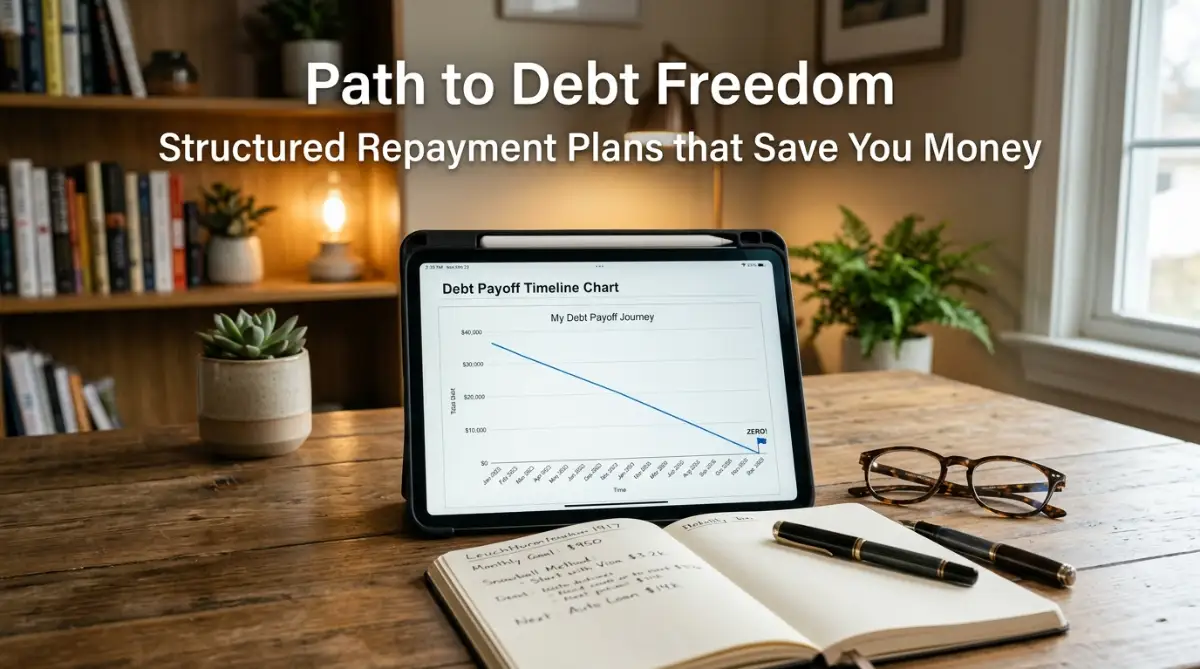
Major Mistakes That Lead to Compounding Debt Traps
While personal loans and debt consolidation offer effective recovery pathways, mismanaging these financial tools can worsen your financial situation. Recognizing common borrowing mistakes keeps your finances safe.
The most dangerous trap is running up new credit card balances after paying them off with a consolidation loan. This creates a double-debt nightmare where you must pay both your new monthly loan installment and new credit card bills simultaneously.
Another major mistake is ignoring upfront origination fees and total APR disclosures. Some lenders charge origination fees up to 8% of the loan amount, which reduces your actual cash payout while increasing borrowing costs.
Lastly, avoid extending your loan repayment tenure excessively just to get a lower monthly payment. Stretching a loan over 72 months increases the total interest paid over time, making your debt far more expensive in the long run.
Achieving Lasting Debt Freedom and Financial Peace
Navigating the choice between a dedicated debt consolidation strategy and a general personal loan comes down to your primary goal. If you are struggling under multiple high-interest credit card balances, debt consolidation is the clear winner.
If you require flexible funding for an upcoming major expense or project, a general personal loan offers the versatility you need. Evaluating your credit profile, comparing APRs, and committing to disciplined budgeting ensures long-term success.
I know how exhausting it feels to juggle multiple high-interest debts every single month. Choosing the right consolidation plan gives you immediate breathing room and a clear end date for your debt, and I am always here to support you on your path to financial freedom!
Frequently Asked Questions About Debt Consolidation and Personal Loans
Will applying for a debt consolidation personal loan hurt my credit score?
When you formally apply for a personal loan, the lender performs a hard credit inquiry, which may cause a minor temporary drop of 3 to 5 points. However, as you pay off revolving credit cards, your credit utilization ratio drops, which usually leads to a net score increase within a few months.
Can I consolidate debt if I have a fair or poor credit score?
Yes, but options may carry higher interest rates. If your credit score is below 670, you may qualify for specialized consolidation loans or debt management plans offered by non-profit credit counseling agencies.
What is the difference between debt consolidation and debt settlement?
Debt consolidation involves paying off existing debts in full using a new lower-rate loan, preserving your credit standing. Debt settlement involves negotiating with creditors to pay less than owed, which requires defaulting on payments and severely damages your credit score.
Is a 0% APR balance transfer credit card better than a consolidation loan?
A 0% balance transfer card is better if you have excellent credit and can pay off the entire balance within the 12 to 21 month promotional window. If you need 2 to 5 years to repay, a fixed-rate personal consolidation loan is the safer choice.
Do debt consolidation loans pay off my credit cards automatically?
Many direct debt consolidation lenders offer direct pay features where they send loan proceeds directly to your credit card issuers on your behalf, ensuring seamless consolidation.
Category Disclaimer
The information provided in this article is for educational and general consumer guidance purposes only and does not constitute formal financial, credit, legal, or lending advice. Loan products, interest rates (APRs), origination fees, and approval terms vary based on individual creditworthiness, income verification, lender underwriting policies, and regional regulations. Always consult with a certified financial planner before signing binding debt agreements.