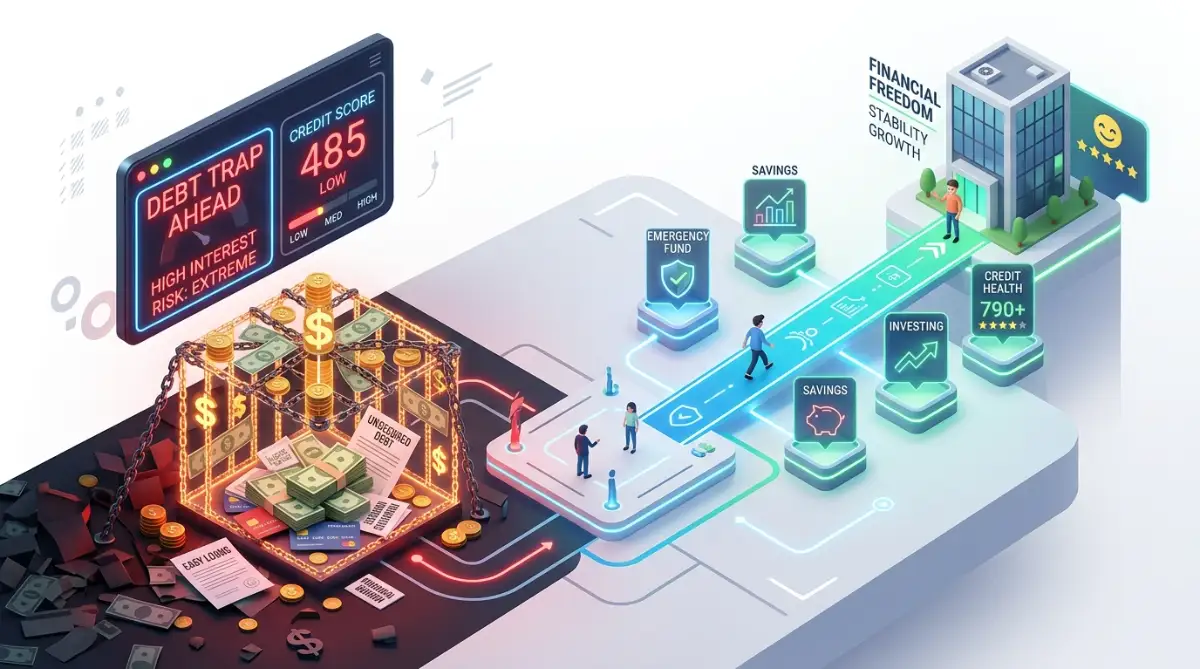
How a $450 Car Repair Turned into a $600 Debt Trap for Sarah
A few years ago, I counseled a young mother named Sarah who faced a sudden financial emergency when her car's alternator completely failed. She needed four hundred fifty dollars immediately to fix her vehicle so she wouldn't lose her job at a local clinic.
Fearing a traditional bank credit check because of past medical bills, I watched her walk into a local storefront offering instant cash advances with no credit check required. She walked out twenty minutes later with four hundred fifty dollars in hand, relieved that her emergency was solved.
But two weeks later, her paycheck barely covered her rent, forcing her to roll the loan over for another seventy-five dollar fee. Within four months, I helped her calculate that she had paid over six hundred dollars in fees alone while still owing the original four hundred fifty dollar principal.
In moments of sudden emergency, the promise of fast cash with zero questions asked feels like a lifesaver. However, behind those enticing no-credit-check advertisements lies a predatory trap designed to keep you borrowing forever.
Taking out a high-cost payday or title loan can quickly destroy your monthly budget and lock you in an escalating debt spiral. Fortunately, learning how these loans function allows you to protect your paycheck and choose significantly safer, low-cost alternatives.
Let's unpack the hidden mechanics of no-credit-check financing and explore how you can secure emergency cash without risking your long-term independence.
In moments of acute financial pressure, the promise of immediate cash with zero credit questions asked feels like a miraculous lifeline. Facing an urgent emergency—a burst water pipe, a hospital bill, or a vehicle breakdown—when your credit score is low is scary.
Traditional banks and credit unions often require days of manual underwriting and hard credit checks. For someone with a poor credit score or no established credit file, traditional channels frequently lead to frustrating rejections.
This is precisely where advertisements for "No-Credit-Check Loans" enter the picture, flashing enticing slogans like "Instant Approval" and "Guaranteed Cash." However, behind these attractive marketing claims lies a complex and often predatory financial reality.
While no-credit-check loans do deliver rapid cash without pulling your credit history from major bureaus, they come at a heavy cost. Lenders who bypass credit evaluations take on substantial risk, and they compensate by charging exorbitant interest rates and hidden fees.
Before signing any loan document under financial distress, understanding the true mechanisms, long-term risks, and safer alternatives is essential for protecting your financial future.
Let's examine how these short-term products operate and how you can break free from high-cost debt cycles.
What Are No-Credit-Check Loans and How Do They Function?
A no-credit-check loan is a short-term borrowing arrangement where the lender does not query your credit history through major credit bureaus (Equifax, Experian, or TransUnion). Instead of relying on a FICO score, these lenders assess alternative qualifications—most commonly your monthly income stubs, bank account details, or physical collateral.
Because these lenders skip standard credit evaluations, they streamline the approval process, often issuing funds within minutes or hours. However, borrowers seeking emergency funding should first explore legitimate borrowing methods through regulated institutions before turning to high-cost short-term lenders.
No-credit-check financing generally falls into four main categories:
- Payday Loans: Small-dollar, short-term advances (typically $100 to $1,000) that must be repaid in full, along with steep fees, on your next payday.
- Car Title Loans: Short-term loans where you pledge your vehicle's clean title as collateral, risking repossession if you default.
- No-Credit-Check Installment Loans: Unsecured loans offering slightly larger amounts repaid over several months, though interest rates remain sky-high.
- Pawn Shop Loans: Collateral-based loans where you surrender personal items (jewelry, tools) for cash, risking losing the item if unpaid.
The Illusion of "Easy Cash" — Uncovering the Real Costs
The primary marketing appeal of no-credit-check financing is easy accessibility. For individuals who have experienced credit damage, these loans present themselves as an inclusive solution.
However, the financial trade-off for this accessibility is steep. Lenders who do not verify credit history protect their capital by passing immense risk costs back onto the borrower through extreme pricing structures.
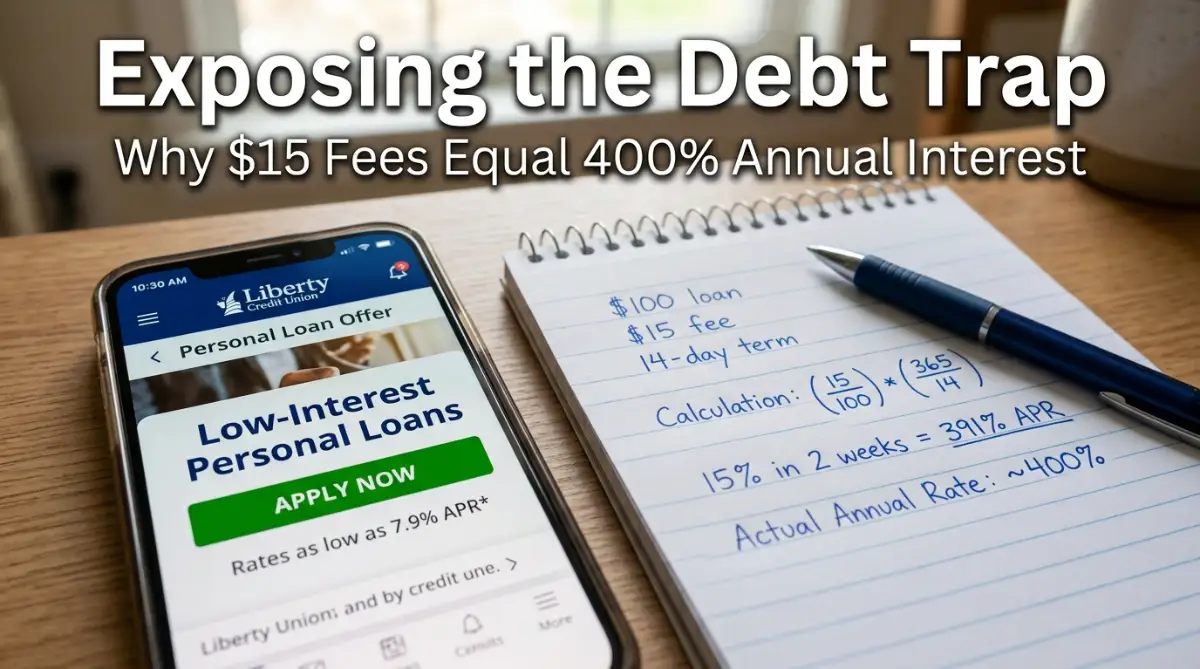
The true costs of no-credit-check loans are often disguised behind small dollar figures. For example, a payday lender might frame their fee as "just $15 per $100 borrowed."
To an urgent borrower, $15 sounds reasonable. However, when converted into an Annual Percentage Rate (APR)—the standard metric used to measure total yearly borrowing costs—a $15 fee on a two-week $100 loan equals an astonishing nearly 400% APR.
By comparison, standard credit card APRs average between 18% and 24%, while prime personal loans range from 6% to 15% APR.
Unmasking Hidden Administrative Fees and Bank Mandates
In addition to outrageous APRs, no-credit-check lenders frequently incorporate aggressive administrative terms into loan agreements. Upfront origination fees are often charged simply for generating the digital loan contract.
Furthermore, most digital no-credit-check lenders require borrowers to sign pre-authorized Automated Clearing House (ACH) bank withdrawal agreements. This allows the lender to pull funds directly from your checking account on your payday.
If your account lacks sufficient funds on that day, you face both lender late fees and steep bank overdraft penalties. If you cannot pay the full balance, lenders encourage you to pay a "rollover fee" to extend the deadline, which delays the due date without reducing your principal balance by a single dollar.
Standard Personal Loans vs. No-Credit-Check Loans
Debunking Common No-Credit-Check Loan Myths
- Myth 1: Paying back a no-credit-check loan on time will help rebuild your credit score.
- Reality: Most no-credit-check lenders do not report on-time payments to credit bureaus, meaning your credit score receives zero benefit from your effort.
- Myth 2: Rollover fees help you pay down your loan balance gradually over time.
- Reality: Rollover fees only purchase additional time; 100% of the rollover fee goes to lender profit while your original debt balance remains untouched.
- Myth 3: No-credit-check lenders cannot take legal action if you fail to repay.
- Reality: Lenders can sell your defaulted debt to aggressive collection agencies, sue you in court, and obtain court orders to garnish your wages.
My Personal Pro Tip: Whenever I face an urgent cash shortage, I never apply for a no-credit-check loan! Instead, I visit a local federal credit union to ask about a Payday Alternative Loan (PAL). Credit union PALs give you $200 to $2,000 in fast cash with interest rates capped at 28% APR by federal law, saving you hundreds of dollars compared to 400% payday loans!
If you want a detailed video breakdown on how payday loans work and how fees compound, watch this video below:
Safer, Low-Cost Alternatives to No-Credit-Check Loans
If you face an immediate cash shortage and have bad credit, you are not without options. Before committing to a high-risk no-credit-check loan, consider these significantly safer alternatives.
First, explore **Payday Alternative Loans (PALs)** offered by federal credit unions. PAL programs offer small loan amounts ($200 to $2,000) with repayment terms spanning 1 to 12 months, with interest rates capped at 28% APR by federal law.
Second, consider **Soft-Inquiry Online Personal Loans**. Many reputable fintech lenders offer soft-credit pre-qualification checks, allowing you to view actual rate quotes and approval odds without affecting your credit score.
Third, look into **Employer Earned Wage Access (EWA) Apps**. Services like EarnIn or DailyPay allow you to access money you have already earned before your official payday for a small flat fee, completely bypassing interest charges and credit checks.
Fourth, negotiate payment terms directly with your service providers. Most hospitals, utility providers, and landlords offer hardship payment plans or fee waivers that allow you to settle balances over time with zero interest.
If you are working on building a stronger credit score to qualify for prime financial products in the future, learning how to improve your credit score before applying for a mortgage provides a valuable step-by-step framework.
Similarly, taking proactive steps to protect your household against unexpected emergencies is necessary. Learning how to choose your first home insurance policy without stress safeguards your property from storm damage or fire loss.
If you are managing student debt alongside daily living expenses, organizing your obligations is critical. Reviewing federal vs private student loans: how to choose wisely helps you make informed choices about educational debt.
Students attending the best community colleges in the USA for affordable education often avoid heavy debt burdens by keeping tuition costs manageable from day one.
Finally, if you run a small business or side hustle to earn extra income, keeping overhead low protects your monthly cash flow. Utilizing easy AI website builders for small businesses allows you to launch a professional website quickly without spending thousands on developers.
 Major Pitfalls That Lead to High-Cost Debt Cycles
Failing to understand short-term loan terms can lead to severe financial strain. The most common pitfall is falling for "guaranteed approval" marketing slogans without reading the contract's fine print.
Another major mistake is signing pre-authorized ACH bank withdrawal agreements without verifying your paycheck balance. When a lender pulls funds from an empty checking account, you incur multiple bank overdraft penalties and late fees simultaneously.
Lastly, never roll over a short-term loan or take out a second payday loan to cover the first one. Loan stacking accelerates financial failure and locks you into a compounding cycle of debt that is extremely difficult to break.
Protecting Your Financial Independence Today
While no-credit-check loans offer the allure of instant cash without credit bureau scrutiny, their underlying structure relies on extreme interest rates and short repayment terms that frequently cause long-term harm.
By understanding the true costs behind short-term loan marketing, taking advantage of soft-inquiry pre-qualifications, and exploring safer credit union alternatives, you can handle unexpected financial emergencies safely.
I know how terrifying it feels when a sudden emergency expense threatens your family's monthly budget. Protecting your financial independence starts with making calm, informed choices today instead of accepting high-risk terms. I am always here to guide you toward safe, affordable solutions that protect your future!
Frequently Asked Questions About No-Credit-Check Loans
Are no-credit-check loans legal in every U.S. state?
No, several U.S. states have enacted strict interest rate caps (usually 36% APR ceilings) that effectively ban high-cost payday and car title lending. However, some online lenders operate across state borders, making it important to verify state licensing.
Can defaulting on a no-credit-check loan damage my credit score?
Yes. While lenders do not check your credit score during application, defaulting on a loan will result in your account being sent to collection agencies, which will report the negative default to major credit bureaus.
What is a Payday Alternative Loan (PAL) from a credit union?
A Payday Alternative Loan (PAL) is a lower-cost short-term loan offered by federal credit unions. PALs provide between $200 and $2,000 in cash with interest rates capped by federal law at 28% APR.
Can a payday lender garnish my wages if I fail to pay?
A lender cannot automatically garnish your wages without a court order. If you default, they must sue you in court first and win a legal judgment before wage garnishment can occur.
What is the difference between a soft credit check and a hard credit check?
A soft credit check is a background review of your credit file that does not affect your credit score. A hard credit check occurs when you formally apply for credit, registering an official inquiry that may temporarily lower your score by a few points.
Category Disclaimer
The information provided in this article is for educational and general consumer guidance purposes only and does not constitute formal financial, credit, legal, or lending advice. Loan interest rates (APRs), eligibility requirements, and repayment terms vary based on state regulations, individual credit profiles, and lender underwriting criteria. Always review Truth in Lending Act (TILA) disclosures before entering into loan agreements.