
How a Small $120 Mistake Taught Me the Hidden Power of Credit Scores
A few years ago, my close business partner and I were preparing to launch a new consulting service. I checked my checking account and felt confident, believing my steady monthly salary would easily qualify me for a $15,000 personal loan.
I walked into my local bank branch, filled out a personal loan application, and waited eagerly for approval. Two days later, my heart sank when I opened a rejection letter in my mailbox.
A forgotten $120 balance on an old retail card had drifted into late status because of an outdated mailing address. That tiny $120 mistake dropped my credit score just enough to trigger an automated denial, delaying our launch by almost a year.
That experience highlighted a essential truth in personal finance: lenders judge your future reliability based on your recorded habits, regardless of how small a past oversight might seem. When you apply for borrowing options without physical collateral, your credit score becomes your entire financial resume.
Experiencing a sudden loan rejection when you need emergency money or funding is extremely frustrating. It leaves you feeling helpless, stressed, and worried about your financial future.
Fortunately, understanding how credit scoring models evaluate your profile gives you the power to fix your score and secure fast approvals. Let's explore why credit scores carry such immense weight and how you can optimize yours.
Navigating personal finance effectively requires a clear understanding of borrowing costs and credit risk management strategies. Whether you want to consolidate high-interest debts, finance home repairs, or cover emergency care, borrowing capital is a common milestone.
In the banking sector, borrowing options are divided into two main categories: secured loans and unsecured loans. Secured debt requires borrowers to pledge physical collateral, such as real estate, vehicles, or savings accounts, which lenders can seize upon default.
Unsecured loans require no physical collateral whatsoever, placing the entirety of the financial risk on the lending institution. Because unsecured credit products lack a physical safety net, banks cannot repossess an asset to recover lost capital.
Consequently, financial institutions rely heavily on credit risk evaluation tools to assess an applicant's reliability before disbursing funds. The central pillar of this evaluation is your credit score.
A credit score condenses years of financial decision-making into a concise numerical rating that signals your financial discipline. Understanding why your credit score holds such incredible weight in unsecured lending decisions is the key to securing approval on favorable terms.
Understanding Unsecured Loans and Credit Score Tiers
An unsecured personal loan is an extension of credit made without requiring collateral from the borrower. Common examples include personal installment loans, revolving credit cards, student loans, and debt consolidation lines.
Because there are no physical assets securing the debt, lenders bear the entire burden of potential default. If a borrower stops making payments, the financial institution must rely on internal collections or legal proceedings to recover funds.
A credit score is a three-digit metric, usually ranging between 300 and 850, generated by credit scoring models. It provides lenders with a standardized snapshot of your creditworthiness and default probability.
Standard Credit Score Approval Tiers
Lenders organize applicants into specific credit score tiers to streamline loan approvals and assign interest rates. Knowing where your score falls helps you predict your approval odds before applying:
- 800 to 850 (Exceptional): Represents minimal default risk and unlocks the lowest interest rates and premium loan terms.
- 740 to 799 (Very Good): Indicates low risk and ensures smooth approvals for most personal credit products.
- 670 to 739 (Good): Reflects average risk and is accepted by most mainstream lenders at competitive interest rates.
- 580 to 669 (Fair): Signals elevated risk and may result in higher Annual Percentage Rates (APRs) or extra income verification requirements.
- 300 to 579 (Poor): Represents significant risk and frequently leads to loan denials unless working with specialized lenders.
The 5 Core Pillars That Determine Your Credit Score
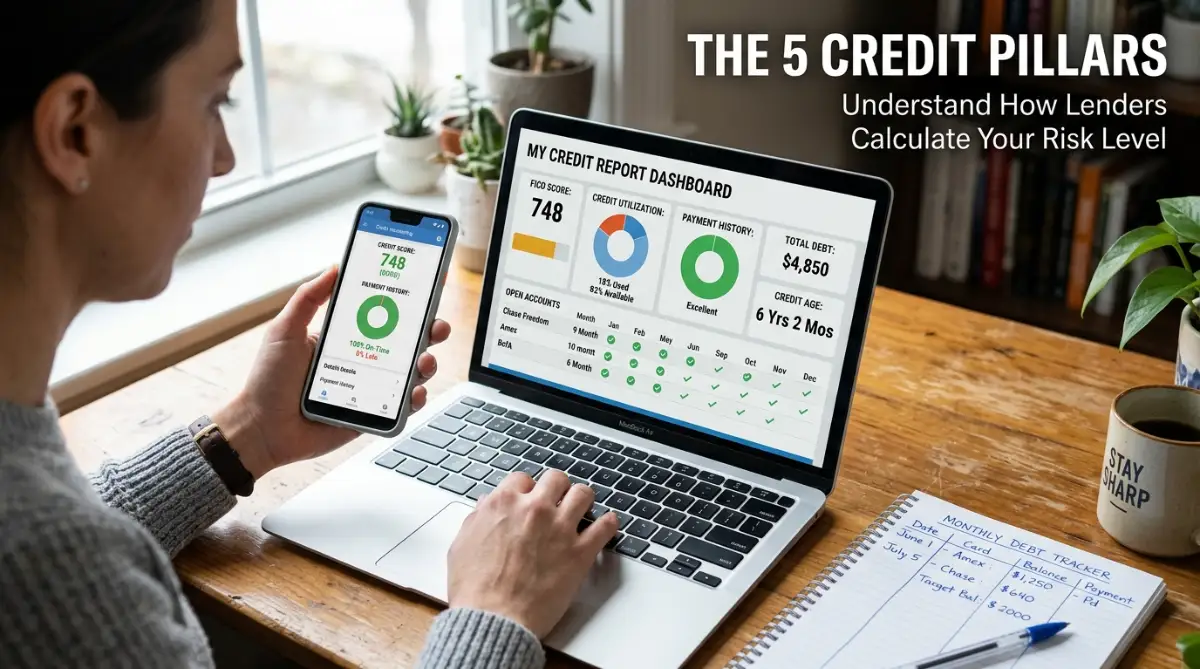
Credit scores are not generated randomly; they are calculated using five key weighting factors derived directly from your credit report. Understanding these pillars enables you to take targeted actions to build your rating:
1. Payment History (35% Weight)
Your payment history represents the single most impactful factor in score generation. Lenders prioritize verifying whether you consistently honor payment due dates without fail.
Even a single payment delayed beyond 30 days can cause a noticeable drop in your score. Repeated late payments or collection entries send severe warning signals to potential creditors.
2. Credit Utilization Ratio (30% Weight)
Credit utilization measures the proportion of your total available credit limit currently in use. For example, if your combined credit card limit is $10,000 and your balance is $3,000, your utilization sits at 30%.
Keeping your total revolving utilization below 30%—and ideally under 10%—demonstrates that you do not rely excessively on debt to cover living costs.
3. Length of Credit History (15% Weight)
A longer credit history offers lenders a broader dataset to analyze your financial habits over time. This metric evaluates the age of your oldest active credit account and the average age of all open accounts combined.
Mature credit histories prove that you have practiced sound money management skills across different market conditions.
4. Credit Mix (10% Weight)
Lenders view favorably applicants who demonstrate the ability to handle various credit structures responsibly. Maintaining a balanced mix of revolving credit cards and installment loans enhances your overall profile.
5. New Credit Applications & Inquiries (10% Weight)
Submitting an application for a new line of credit triggers a hard inquiry on your credit report. While an occasional hard pull causes only a minor temporary dip, submitting multiple applications within a short window indicates financial stress to lenders.
Debunking Common Credit Score Myths
- Myth 1: Checking your own credit report lowers your credit score.
- Reality: Checking your own credit report is a soft inquiry, which has zero impact on your credit score and is completely invisible to prospective lenders.
- Myth 2: You must carry a monthly balance on your credit cards to build good credit.
- Reality: Paying off your credit card balances in full every month builds an excellent credit history while saving you money on interest charges.
- Myth 3: Closing old, unused credit cards immediately improves your credit score.
- Reality: Closing old accounts reduces your total available credit limit and shortens your average credit history age, which can actually lower your score.
My Personal Pro Tip: Whenever I plan to apply for an unsecured personal loan, I pay down my revolving credit card balances at least five days before my official statement closing date! Most credit card issuers report your balance on your statement date rather than your payment due date. Keeping my reported utilization under 10% on statement day boosted my score by nearly 50 points in just two months!
If you want a detailed video breakdown on how credit scores determine unsecured loan approval, watch this video below:
Advanced Strategies to Elevate Your Credit Score and Secure Low Rates
Understanding how credit scoring models function enables you to use strategic timing to maximize your approval odds and qualify for prime interest rates. Small adjustments to your routine can produce significant score increases in a short period.
The first advanced strategy is managing your credit card statement closing dates. Most credit card companies report your active account balance to credit bureaus on the statement closing date, which is usually three weeks before your payment due date.
If you use your card heavily during the month for rewards and pay it off on the due date, your credit report may still show high utilization. Paying down your balance a few days before the statement date ensures a near-zero balance is reported to bureaus.
The second strategy is optimizing your Debt-to-Income (DTI) ratio alongside your credit score. Calculate your DTI by dividing your total monthly debt obligations by your gross monthly income; keeping this ratio under 35% reassures lenders that you can handle new loan payments.
If you are balancing personal or student obligations while working on your credit profile, staying organized is essential. Reviewing federal vs private student loans: how to choose wisely helps keep your long-term debt commitments structured and manageable.
Similarly, taking proactive steps to protect your physical assets provides peace of mind as your wealth grows. Learning how to choose your first home insurance policy without stress safeguards your household against unexpected property losses.
If you are planning major life goals like buying a house, getting your credit score in top shape early saves thousands of dollars. Learning how to improve your credit score before applying for a mortgage gives you a proven blueprint for credit optimization.
Students attending the best community colleges in the USA for affordable education often avoid heavy student debt burdens from the start, making it easier to maintain a healthy credit mix.
Finally, if you manage a small business or side hustle, keep your technical overhead low. Utilizing easy AI website builders for small businesses allows you to establish a professional digital presence quickly without spending thousands on web developers.
 Major Pitfalls That Cause Unexpected Loan Rejections
Even borrowers with decent credit scores can face unexpected loan rejections if they overlook subtle underwriting flags. Recognizing these common pitfalls protects your application from automated denials.
The most common mistake is submitting multiple loan applications within a very short timeframe. Each formal application triggers a hard inquiry, which signals financial desperation to automated underwriting algorithms and lowers your score.
Another major trap is serving as a co-signer on a loan for a friend or relative. When you co-sign, the entire loan balance appears on your credit report and increases your Debt-to-Income ratio, while any late payments made by the primary borrower damage your score equally.
Lastly, credit report errors caused by identity theft or outdated collection records can unfairly lower your score. Audit your credit reports annually across Equifax, Experian, and TransUnion to dispute errors before applying for new credit.
Achieving Financial Stability Through Disciplined Credit Habits
Your credit score serves as the primary benchmark of financial trust in the unsecured lending world. Because lenders operate without physical collateral, your credit history predicts your payment reliability.
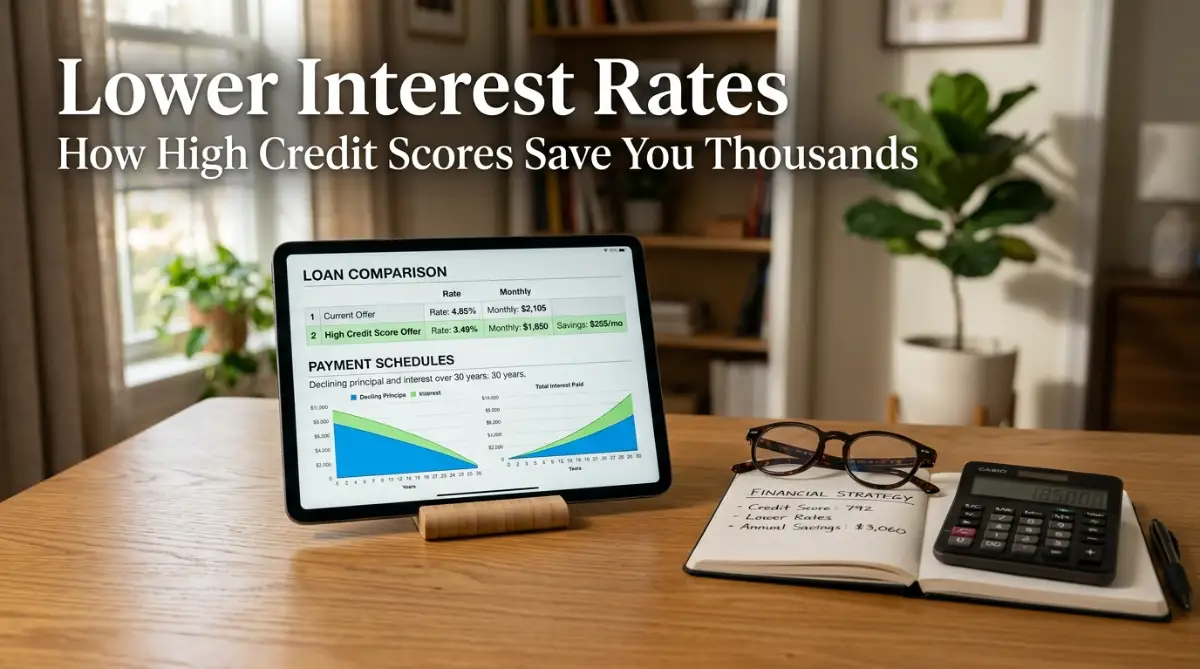
Maintaining a strong credit score unlocks access to rapid loan approvals, higher credit limits, flexible terms, and competitive interest rates that save you money over time. Every disciplined payment choice you make today builds a solid foundation for your future goals.
I know how stressful it feels when a loan rejection catches you completely off guard. Building a strong credit score takes patience and consistency, but the financial freedom it gives you makes every disciplined choice worthwhile. I am always here to help you navigate your journey toward total financial confidence!
Frequently Asked Questions About Credit Scores and Unsecured Loans
Is it possible to secure an unsecured personal loan with a credit score below 600?
While certain fair-credit lenders approve loans for scores under 600, these loans carry significantly higher interest rates and stricter fee structures. Applying with a creditworthy co-signer can greatly improve your approval odds and lower your APR.
How long does it take to rebuild a damaged credit score?
Lowering high credit utilization ratios can yield score improvements within 30 to 60 days. Recovering from severe negative marks, such as late payments or collection accounts, generally requires 12 to 24 months of consistent on-time payments.
Does checking my own credit report lower my score?
No, reviewing your own credit report is classified as a soft inquiry, which has zero impact on your credit score and is completely invisible to prospective lenders.
Why do unsecured personal loans carry higher interest rates than secured loans?
Unsecured loans carry higher interest rates because lenders assume full financial risk without physical collateral backing the loan. Higher interest rates compensate financial institutions for potential default risk across their overall portfolio.
How does credit utilization affect personal loan approval?
High credit utilization indicates that you rely heavily on revolving debt to cover living costs, which raises red flags for underwriters. Keeping your utilization under 30% proves that you have comfortable cash flow to manage new loan payments.
Category Disclaimer
The information provided in this article is for educational and informational purposes only and does not constitute formal financial, credit, legal, or investment advice. Credit scoring guidelines, interest rates, and loan approval criteria vary across financial institutions and regions. Always consult with a certified financial planner or qualified credit advisor before making major borrowing or debt management decisions.