
How to Read a Home Insurance Policy Without Getting Confused
When you purchase or renew a homeowners insurance policy, your insurance provider sends you a thick, intimidating legal packet filled with thirty to fifty pages of dense disclosures, endorsement riders, and legal contracts. For the vast majority of homeowners, opening this packet triggers an immediate feeling of confusion and boredom. Most people glance at the monthly premium amount on the front page, sign the mortgage escrow authorization, and tuck the document into a dark filing cabinet, praying they never have to read it.
However, ignoring your insurance policy binder until a severe windstorm, electrical fire, or burst plumbing pipe damages your property is one of the most expensive financial mistakes a homeowner can make. When disaster strikes, discovering that a specific clause on page twenty-setValue excludes your exact type of damage leaves you facing thousands of dollars in unexpected out-of-pocket repair bills.
Reading a homeowners insurance policy does not require a law degree or hours of tedious research. By understanding the standard architectural layout of an HO-3 policy and learning where to look for critical details, you can decode your coverage in fifteen minutes and protect your family's single largest asset with complete confidence.
I still remember holding my first 40-page home insurance policy packet at my kitchen table after closing on my house. I opened to page twelve, saw dense blocks of text defining terms like "proximate cause" and "subrogation," and felt my eyes glaze over. Feeling completely overwhelmed, I slid the binder into a drawer and forgot about it. Two years later, when a neighbor's tree branch damaged my fence, I spent forty-five panicked minutes trying to figure out if my fence was covered under 'Dwelling' or 'Other Structures.' That stressful afternoon forced me to learn how an insurance policy is actually organized—and I discovered it is far simpler than insurance companies make it look.
Why Reading Home Insurance Contracts Feels So Overwhelming
Insurance policies are notorious for being difficult to read. This confusion is created by specific structural and legal industry choices:
- Scattered Document Layouts: A complete policy isn't written in chronological order. Core policy limits sit on page one, definitions on page four, coverage rules on page eight, and critical exclusions on page twenty-five, forcing readers to jump back and forth constantly.
- Dense Insurance Legalese: Words like "peril," "sub-limits," "actual cash value," and "indemnification" are used without upfront plain-English explanations.
- Hidden Exclusion Clauses: Policy forms often grant broad coverage on page six, only to take it away on page eighteen through a dense list of policy exclusions and endorsement limits.
- Standardized Template Forms: Insurers use standardized template contracts (like ISO HO-3 forms) combined with custom state riders, creating an overlapping maze of legal additions.
The Psychological Toll of Policy Blindness
Living without understanding your insurance contract creates a quiet, persistent background noise of anxiety that erodes your peace of mind:
Storm season dread—watching severe weather alerts on television while worrying that your policy contains hidden loopholes that leave roof leaks or water damage unpaid—causes constant mental stress. Furthermore, the feeling of helplessness during adjuster meetings (not knowing your contract rights or specific coverage entitlements) leaves policyholders vulnerable.
The true value of knowing how to read your policy isn't just about saving money—it's the feeling of confidence it gives you. When an insurance adjuster visits your property after a storm, there is a world of difference between standing there nervously hoping they are fair versus holding your Declarations Page and pointing to your exact Replacement Cost Value endorsements. Knowledge strips away the fear and puts you on equal footing with corporate insurers.
Visual Insight: How to Read and Understand Your Homeowners Policy
Watch this practical expert video from licensed public adjuster Mike Keeler to learn how a homeowners policy is structured, where to find key coverage limits, and how to spot critical exclusion clauses!
The 5 Essential Sections of Every Home Insurance Policy
Every standard homeowners insurance policy is organized into five master sections. Knowing the purpose of each section makes reviewing your policy fast and effortless:
1. The Declarations Page (The "Dec Page")
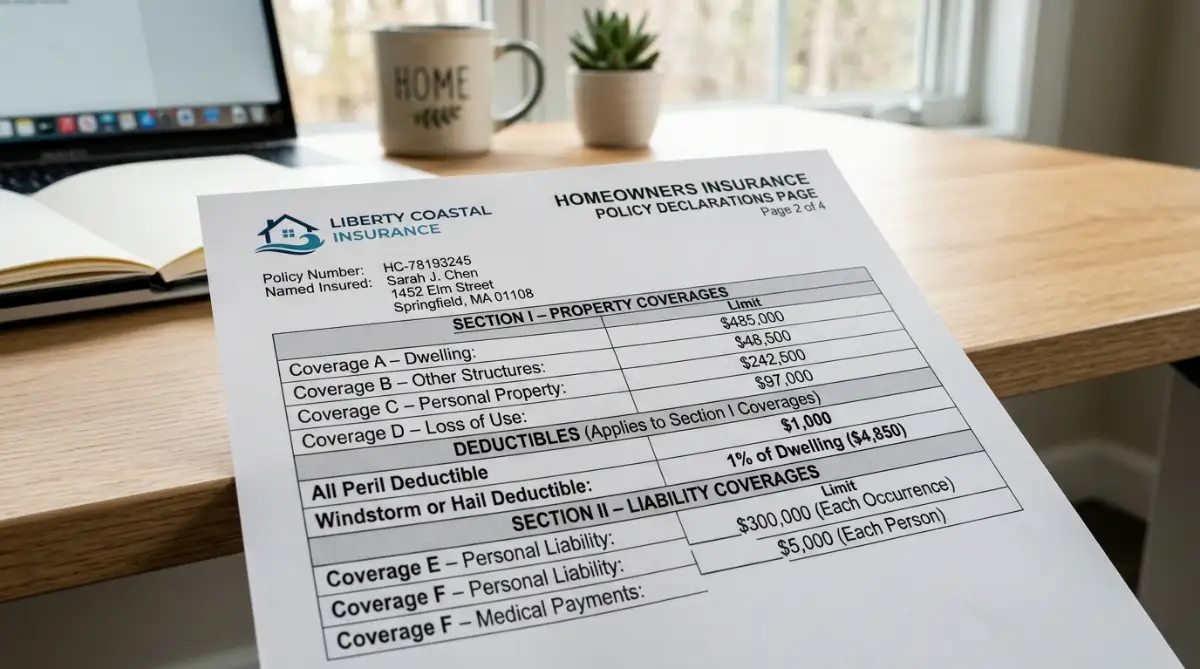
This is the one- to two-page summary sitting at the very front of your binder. It is your policy's executive summary, listing your name, property address, policy number, active dates, annual premium cost, flat deductibles, and primary coverage limits (Coverage A through Coverage E).
2. Insuring Agreement & Definitions
This section outlines the basic promises made by the insurance company. It clearly defines legal terms used throughout the contract, specifying who qualifies as an "insured" and what constitutes a "peril" or "occurrence."
3. Perils Insured Against (What Is Covered)
This section details the specific events that trigger insurance payouts. Policies operate as either Named Perils (covering strictly listed events like fire, wind, hail, or lightning) or Open Perils / All-Risk (covering all disasters EXCEPT those specifically listed in the Exclusions section).
4. Exclusions (What Is NOT Covered)
This is the most critical section for every homeowner! It lists all disasters and events that your policy will NOT cover under any circumstances—such as rising floodwaters, sewer backups, earth movements (earthquakes), neglect, wear and tear, or pest damage. For further reading on initial policy selection, check out our guide on choosing your first home insurance policy safely.
5. Conditions and Endorsements
Conditions outline your legal duties as a policyholder during a claim (e.g., filing claims promptly, mitigating further property damage, providing proof of loss). Endorsements (or riders) are custom add-ons attached to the end of the binder that add back excluded protections, such as water backup riders or scheduling expensive jewelry.
Actual Cash Value (ACV) vs. Replacement Cost Value (RCV)
When reviewing your policy's conditions, inspect how your personal belongings and dwelling repairs are valued during a loss:
Always verify on your Declarations Page that your policy includes Replacement Cost Value (RCV) endorsements for both your physical building structure and personal possessions!
A 15-Minute Blueprint to Audit Your Policy Today
You do not need to read forty pages word-for-word. Follow this 15-minute systematic audit method:
- Minute 1–5: Review the Declarations Page: Confirm dwelling limits match actual local reconstruction costs, check liability limits ($300k+ recommended), and check your flat deductible.
- Minute 6–10: Skip Straight to Section I – Exclusions: Verify whether sewer backups, surface water floods, or mold are excluded, noting which riders need to be added.
- Minute 11–15: Inspect Endorsement Attachments: Check the back of your packet to ensure custom riders (like water backup or scheduled personal property) are formally listed.
My Personal Pro Tip: When I audit my policy binders annually, I always use a digital scanner to save a PDF copy of my Declarations Page directly to my cloud storage. If you want to build better organizational systems for your personal documents or small business records, explore our guide on simple digital setup tools.

Managing Financial Health and Cash Reserve Alignment
Understanding policy deductibles and managing cash flow is essential for sound homeownership:
1. Building a Cash Cushion for Policy Deductibles: If your policy carries a $1,500 or $2,500 flat deductible, you must hold liquid cash in reserve to pay contractors during a claim. Read our complete guide on building a bulletproof emergency fund fast to maintain an emergency cash buffer that covers deductibles without touching credit cards.
2. Improving Credit Scores for Insurance Rate Reductions: Insurers calculate premiums using credit-based insurance scores in most states. Paying down credit card balances directly improves your insurance score and lowers your annual premium! Reviewing tips on how to improve your credit score effectively helps you streamline monthly debt and qualify for cheaper insurance tiers.
3. Avoiding Predatory Emergency Debt: Taking out rushed personal loans to pay property deductibles without comparing terms causes financial strain. Review standard personal loan mistakes you must avoid before borrowing, and make sure you understand what happens if you miss a personal loan payment to safeguard your credit history during emergency property repair periods.
Reclaiming Control Over Your Sanctuary
At the end of the day, your home insurance policy is a legally binding financial contract that protects your family's future. Taking fifteen minutes to pull out your Declarations Page, read the exclusions, and verify Replacement Cost Value coverage strips away the confusion and replaces anxiety with total control. You can enjoy your home, celebrate family milestones, and sleep soundly knowing your safe space is 100% protected.
I know how intimidating insurance binders look, but taking just a few minutes to master your Dec Page makes all the difference. Read your policy today and take charge of your family's financial security.
Quick Guide: Policy Reading Do's and Don'ts
Frequently Asked Questions on Reading Insurance Policies
What is the most important page in a home insurance policy?
The Declarations Page (or "Dec Page") is the most important page because it summarizes your coverage limits, deductibles, active dates, and premium costs in one place.
Where can I find what my home insurance policy excludes?
Exclusions are typically located in Section I of your policy document, detailing disasters and damages (like floods or wear and tear) that are not covered.
What are policy endorsements or riders?
Endorsements are custom add-ons attached to your policy that modify standard coverage, such as adding water backup protection or scheduling high-value jewelry.
How often should I review my home insurance policy binder?
You should review your policy summary and renewal notice annually to ensure your coverage limits keep pace with local building material and labor inflation.
Does a standard policy cover mold damage?
Standard policies generally exclude mold unless it resulted directly from a covered sudden water peril (like a burst pipe) and was reported promptly.
Disclaimer: This article is published exclusively for educational and informational purposes. It does not constitute professional insurance, legal, or financial underwriting advice. Property insurance regulations, contract forms, and policy terms vary by state and carrier. Always consult with a licensed independent insurance agent or certified financial advisor prior to making changes to your home insurance coverage.