How a Fake $150 "Activation Fee" Almost Stole Marcus's Tax Money
A few years ago, I counseled a remote freelance writer named Marcus who desperately needed funds to pay an unexpected tax bill. Marcus had a fair credit score, so he felt anxious about getting rejected by traditional local banks.
He searched online and found a lender called "FastCash Secure" that promised guaranteed approval for a $3,000 loan if he paid a $150 upfront "activation fee." I helped him research the company's registration and physical address before he sent any money.
My heart raced as we uncovered that the address belonged to an abandoned warehouse and the company was completely unlicensed. We stopped him from sending that $150 just in time, saving him from a devastating advance-fee loan scam.
In moments of financial distress, promises of instant cash with zero questions asked feel like a lifesaver. However, fake lenders actively target vulnerable borrowers using high-pressure tactics, fake websites, and upfront fee demands.
Falling for a loan scam can result in lost savings, drained bank accounts, and severe identity theft. Fortunately, learning how fraudulent operators function allows you to identify warning signs early and protect your hard-earned money.
Let's unpack the primary red flags of loan fraud, examine legitimate lending standards, and share a 5-step verification checklist.
Online lending platforms have made borrowing capital faster and more convenient than ever before. Whether you need funds to consolidate credit card debt, cover medical bills, or manage home repairs, applying online takes minutes.
However, this convenience has also given rise to sophisticated financial fraud across the Web. Fraudulent operators actively exploit borrowers facing financial distress by using false promises to steal money and bank credentials.
Loan scams are dangerous because they target consumers when they are most vulnerable. When recovering from a poor credit score or facing an emergency, borrowers are easily tempted by "guaranteed approval" claims.
Understanding how fraudulent lenders operate and learning how legitimate institutions handle fees keeps your bank account safe. Taking time to verify lender credentials prevents hasty decisions that lead to major financial losses.
Let's explore the operational patterns of fake lenders and how you can protect your personal information.
The Classic Upfront Fee Trap and Major Red Flags
Advance-fee loan fraud is the most prevalent personal loan scam operating across the internet today. Scammers contact victims online or through unsolicited text messages, offering guaranteed approvals regardless of credit history.
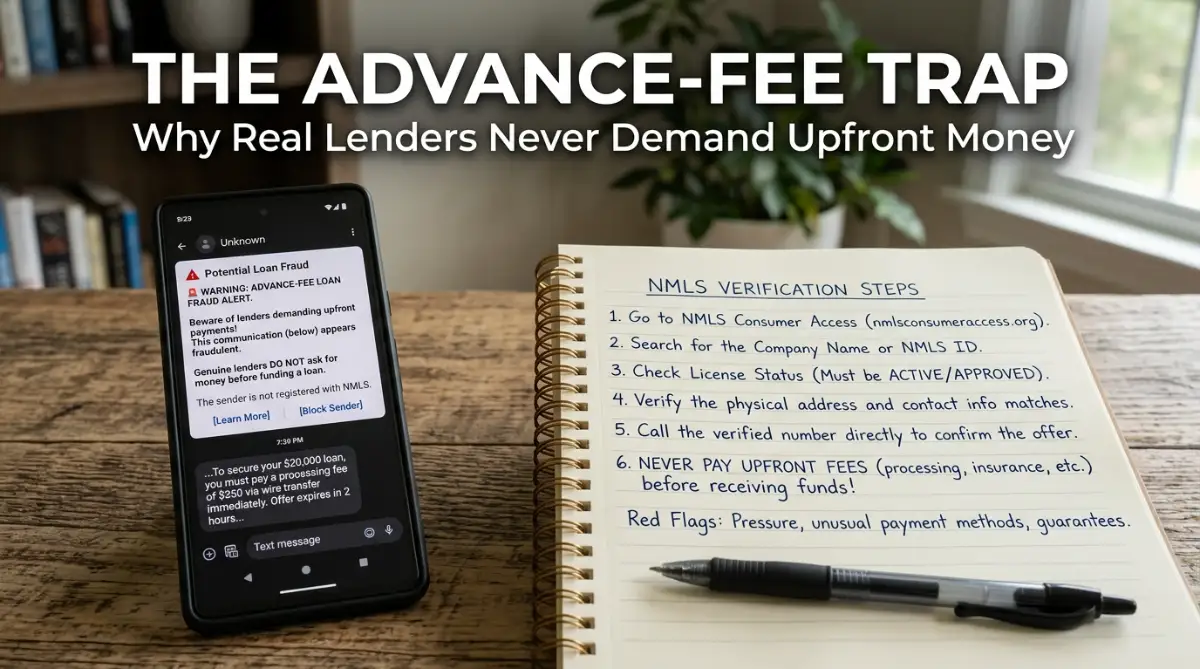
Before funds are disbursed, the scammer claims that the borrower must pay an upfront "processing fee," "insurance deposit," or "advance tax." Once the victim sends the money, the scammer disappears completely, leaving the victim without a loan and short on cash.
Real financial institutions never request upfront payments out of pocket to process or unlock a loan application. If a legitimate lender charges an origination fee, that charge is automatically deducted from your final loan deposit.
Other Major Warning Signs of Fake Lenders
In addition to advance fees, illegitimate operators exhibit distinct operational patterns that distinguish them from licensed lenders:
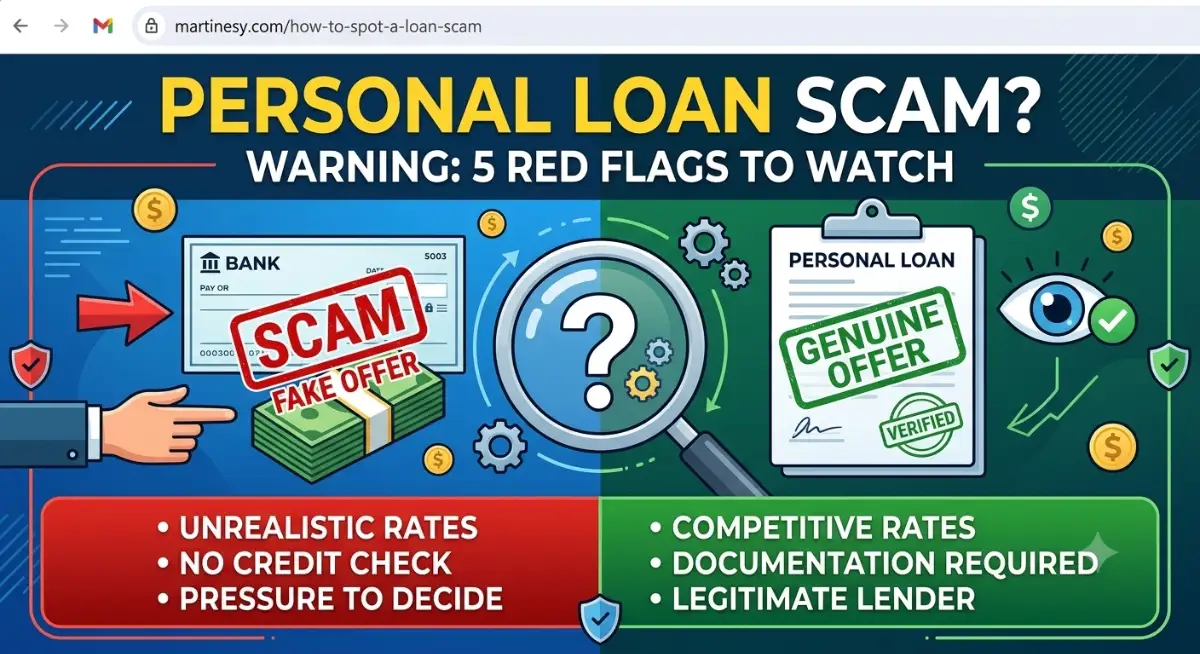
- Guaranteed Approval Without Verification: Legitimate lenders evaluate credit history, debt-to-income ratios, or employment statements. Promising 100% guaranteed approval without checking documents is a major warning sign.
- Unusual Payment Methods Demanded: Scammers demand fee payments via untraceable methods, such as prepaid debit cards, gift cards, cryptocurrency, or peer-to-peer apps. Legitimate institutions process fees through standard banking channels.
- High Pressure and Urgent Deadlines: Scammers create artificial urgency, claiming an approval offer expires within hours if you do not pay immediately. Legitimate loan quotes are valid for several days.
- Unregistered Lenders and Missing Addresses: State law requires consumer lenders to be registered with state regulators or the NMLS database. Scammers often list fake physical addresses or P.O. boxes.
Legitimate Financial Institutions vs. Fraudulent Loan Scams
Debunking Common Loan Scam Myths
- Myth 1: Legitimate online lenders sometimes require upfront gift card deposits to verify your bank.
- Reality: No real bank or licensed lender will ever ask for gift cards, wire transfers, or cryptocurrency payments under any circumstances.
- Myth 2: A professional-looking website guarantees that an online lender is real.
- Reality: Scammers easily copy logos, branding, and graphics from famous commercial banks to create deceptive imitation websites.
- Myth 3: No-credit-check loans are a safe way to rebuild a damaged credit score.
- Reality: Fake no-credit-check lenders operate outside official credit bureaus and never report your on-time payments to Experian, Equifax, or TransUnion.
My Personal Pro Tip: Never pay a single dollar upfront to unlock a personal loan! Whenever I evaluate lending platforms, I check if fees are deducted directly from the final loan payout instead of demanded as advance transfers. If a company asks for an advance fee via gift cards, wire transfers, or payment apps before depositing your money, walk away immediately!
If you want a detailed video guide on how to spot and avoid upfront loan scams, watch this video below:
Advanced Strategies to Verify Lender Licenses and Protect Your Data
Protecting your identity requires verifying a lender's credentials across official state and federal databases before submitting sensitive information. Legitimate financial institutions operate transparently under strict federal regulations.
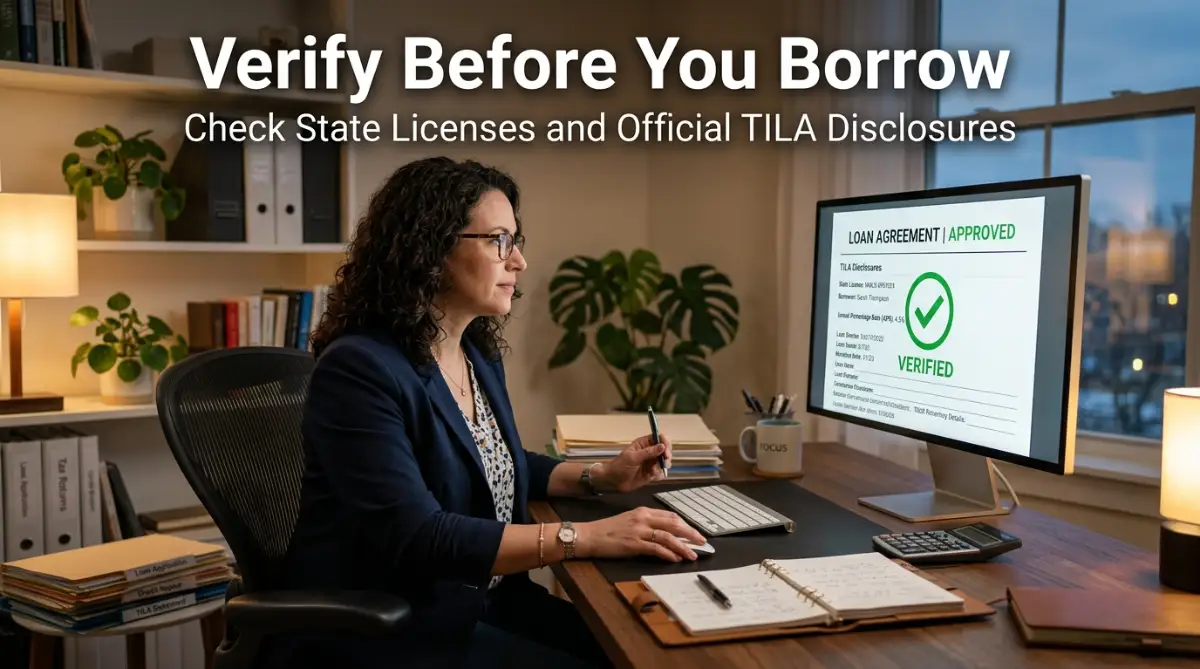
In the United States, the Truth in Lending Act (TILA) requires licensed lenders to provide a full, written disclosure statement before you sign a loan contract. This statement details the Annual Percentage Rate (APR), total finance charges, and payment schedules.
You can verify a lender's registration status by checking the Nationwide Multistate Licensing System (NMLS) Consumer Access database. If a lender is not listed or claims they do not need a license, stop communicating with them immediately.
Always inspect email addresses carefully during loan communications. Legitimate bank representatives email you from official company domain addresses, never from free webmail accounts like Gmail, Yahoo, or Outlook.
If you are working on improving your credit profile to qualify for legitimate loans, staying proactive is essential. Learning how to improve your credit score before applying for a mortgage provides a valuable step-by-step framework for credit building.
Similarly, securing your physical household assets provides long-term peace of mind. Learning how to choose your first home insurance policy without stress safeguards your living space against unexpected property damage.
If you are managing student debt alongside family expenses, organizing your commitments is necessary. Reviewing federal vs private student loans: how to choose wisely helps you make smart choices about higher education debt.
Students attending the best community colleges in the USA for affordable education often avoid heavy loan burdens by keeping their tuition costs low from day one.
Finally, if you run a small business or side hustle to earn extra income, keeping overhead low protects your monthly cash flow. Utilizing easy AI website builders for small businesses allows you to build a professional website quickly without spending thousands on developers.
 Major Pitfalls That Expose You to Identity Theft
Failing to verify lending platforms can lead to severe identity theft alongside lost funds. The most dangerous mistake is sharing your online banking login credentials, passwords, or PIN numbers with anyone.
Legitimate lenders verify bank accounts using encrypted, secure third-party services like Plaid; they will never ask you to text or email your personal banking passwords. Sharing passwords gives scammers total access to drain your savings accounts.
Another major mistake is ignoring browser security warnings when entering sensitive Social Security Numbers or financial details. Always ensure the lender's website URL begins with "https://" and displays a secure padlock icon in the address bar.
Lastly, avoid responding to unsolicited loan offers received through text messages, social media direct messages, or WhatsApp. Legitimate financial institutions do not solicit loan applications through informal messaging apps.
Protecting Your Money and Financial Future Today
Identifying and avoiding personal loan scams requires patience, vigilance, and a clear understanding of standard lending practices. Legitimate financial institutions provide written TILA disclosures, verify credit history, and never demand upfront fees.
By utilizing soft-pull pre-qualification tools, checking lender licenses through the NMLS, and refusing untraceable payment requests, you keep your identity safe. You can secure necessary emergency financing without risking your personal savings.
I know how scary it feels when unexpected bills pop up and you worry about credit approval. Protecting your hard-earned money starts with making calm, informed choices today rather than rushing into suspicious offers. I am always here to guide you toward safe, legitimate financial paths!
Frequently Asked Questions About Personal Loan Scams
What should I do if I already paid money to a fake loan company?
Immediately contact your bank or credit card company to report fraudulent transactions and freeze affected accounts. File an official fraud report with federal consumer protection agencies and notify local law enforcement.
Can a legitimate lender ask for my online banking password?
No. Legitimate lenders use secure, encrypted third-party services to verify bank account details. They will never ask you to email or text your personal banking passwords or PIN numbers directly.
How can I tell if a loan offer received via text message is real?
Cross-check the lender's name independently online. Do not call phone numbers or click links provided in unsolicited messages; visit the lender's official website directly to verify whether the offer is authentic.
Is an origination fee considered a scam?
No, origination fees are standard administrative fees charged by many legitimate lenders. However, in legitimate loans, the origination fee is automatically deducted from your final loan deposit rather than paid upfront out of pocket.
How do I verify if an online lender is legally licensed?
Search the lender's official name in the Nationwide Multistate Licensing System (NMLS) Consumer Access database or check with your state's Department of Banking and Financial Institutions.
Category Disclaimer
The information provided in this article is for educational and general consumer guidance purposes only and does not constitute formal financial, credit, legal, or lending advice. Personal loan interest rates (APRs), origination fees, and approval criteria vary based on individual creditworthiness, income verification, lender policies, and regional regulations. Always review official Truth in Lending Act (TILA) disclosures before entering into binding loan agreements.