
Hurricane & Wildfire Home Insurance: Essential Checks for US Owners
For tens of millions of homeowners across the United States, coastal windstorms and seasonal wildfires are no longer distant news headlines—they are active, severe threats that loom over household safety every single year. Whether you live along the hurricane-prone Atlantic and Gulf Coasts or near the fire-vulnerable canyons and forests of the American West, your home represents your family's primary sanctuary and largest financial asset.
However, an alarming number of US homeowners operate under a false sense of security. They pay thousands of dollars in annual premiums every year, assuming that their standard homeowners insurance policy (HO-3) will automatically rebuild their home if a Category 4 hurricane or an intense wildfire sweeps through their community. Unfortunately, thousands of families discover too late that standard policies are packed with hidden exclusion clauses, percentage-based catastrophe deductibles, and severe coverage caps that leave them facing tens of thousands of dollars in out-of-pocket losses.
With major insurance carriers pulling out of high-risk states like Florida, California, Texas, Louisiana, and Colorado, conducting an annual disaster insurance check is no longer optional—it is an essential act of financial survival. Let us explore the critical checks every US property owner must perform before disaster season strikes.
I still vividly remember packing my family into our car two years ago as wildfire smoke turned the afternoon sky dark orange. As we drove away in a line of evacuating vehicles, I kept staring at the side mirror wondering if our home would be standing when we returned. But the scariest part wasn't just the fire—it was holding my phone on the highway, trying to log into my insurance account with spotty cell service, praying that my policy limits were high enough to rebuild from scratch. That terrifying drive taught me that auditing your natural disaster insurance must happen in quiet weather, long before evacuation sirens sound, and I want to share my checklist to help you stay safe.
Why Disaster Insurance for US Homeowners Is Getting So Complex
Navigating disaster coverage in today's US housing market is vastly more challenging than it was a decade ago due to unprecedented insurance market shifts:
- The Mass Insurer Exodus: Major insurance companies have stopped writing new policies or non-renewed hundreds of thousands of existing policyholders across high-risk states, forcing families onto expensive state-backed "FAIR Plans".
- The "Named Storm" Deductible Trap: Standard flat $1,000 deductibles rarely apply during hurricanes. Insurers enforce separate 2%, 5%, or 10% catastrophe deductibles that trigger massive out-of-pocket checks.
- Smoke and Ash Damage Sub-limits: During wildfires, homes that don't burn down often suffer catastrophic interior smoke, ash, and char damage. Carriers frequently restrict smoke remediation payouts through hidden sub-limit clauses.
- Building Code Upgrade Deficits: Municipalities updated building codes after recent disasters. If your policy lacks "Law and Ordinance" coverage, you must pay out of pocket to rebuild your home to modern hurricane or fire-resistant code standards.
The Psychological Toll of Catastrophic Vulnerability
Carrying uncertainty about your home's disaster coverage creates an underlying baseline of chronic anxiety every time storm or dry season arrives:
Seasonal storm anxiety—tracking tropical depressions on radar or watching wind direction forecasts during wildfire red flag warnings—triggers sleepless nights and physical stress. Furthermore, the fear of permanent homelessness (worrying that an underinsured claim payout won't cover current contractor building material costs) leaves parents feeling helpless about their family's shelter.
The hardest part of surviving a natural disaster isn't just watching the storm or fire on the news—it's the financial limbo afterward. Sitting in a cramped hotel room with your children, wondering how you'll pay for extended temporary housing while fighting an insurance adjuster over living expenses, is emotionally draining. Securing proper Loss of Use coverage and extended replacement limits before disaster strikes is how you protect your family's dignity during a crisis.
Visual Insight: How to Keep Your Home Covered During Hurricane Season
Watch this detailed expert report from FOX Weather featuring Mark Friedlander of the Insurance Information Institute (III) to learn how hurricane deductibles work, key policy additions to check, and how to protect your finances!
Essential Check 1: Calculate Your Hurricane & Wind Deductible
In 19 coastal US states and Washington D.C., insurance regulators permit carriers to enforce separate Hurricane and Windstorm Deductibles. These deductibles are calculated as a percentage of your home's total insured dwelling limit (Coverage A), rather than a standard flat $1,000 fee:
The Trigger Warning: Percentage deductibles kick in when the National Weather Service formally issues a hurricane watch or warning for your county. If a Category 2 hurricane damages your roof, you must write a check for $25,000 before insurance funds begin paying contractors!
My Personal Pro Tip: When I checked my own property's hurricane deductible, I discovered it was set to a 5% tier. To ensure I never faced a cash crunch, I created a dedicated emergency savings sub-account matching that exact deductible value. If you need assistance structuring your personal finances or loans to build this safety buffer, check out our guide on improving your financial profile quickly.
Essential Check 2: Wildfire Defensible Space & Home Hardening
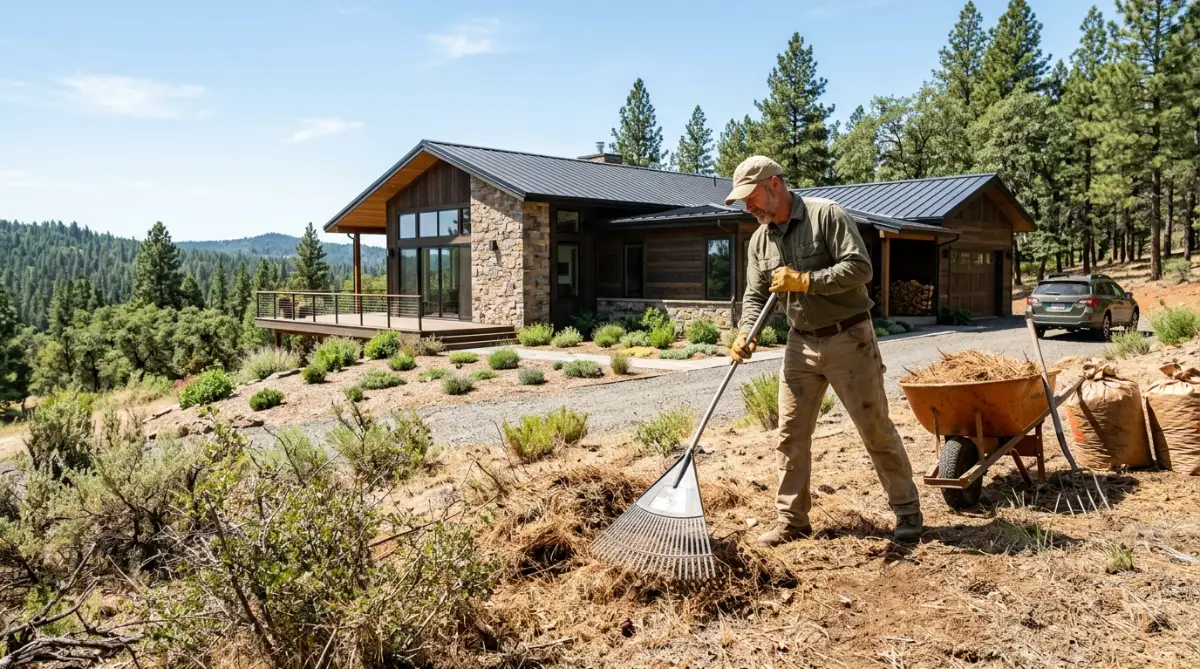
In California, Oregon, Washington, Colorado, Arizona, and Nevada, insurers heavily evaluate Defensible Space and home hardening measures before agreeing to renew policies:
- Zone 0 Clearance (0–5 feet from home): Remove all flammable mulch, wood piles, dry shrubs, and wooden fencing directly attached to your house structure.
- Zone 1 Maintenance (5–30 feet from home): Mow dry grass under 4 inches, trim tree branches within 10 feet of your chimney, and clear dry pine needles from gutters.
- Home Hardening Upgrades: Install 1/8-inch metal mesh over attic vents to block airborne embers, upgrade to dual-pane tempered glass windows, and install ember-resistant boxed eaves. Performing these upgrades unlocks discounts and prevents non-renewal notices.
Essential Check 3: The Separate Flood Insurance Mandate
This is the single most destructive misunderstanding in American homeownership: Standard homeowners policies NEVER cover rising outdoor water damage.
If a hurricane brings a 6-foot ocean storm surge into your living room, or heavy rain causes a nearby river to overflow into your home, standard insurance pays zero dollars. To protect your property against rising water, you must purchase a separate flood policy through FEMA's National Flood Insurance Program (NFIP) or a private commercial flood provider.
Crucial Rule: NFIP flood insurance policies require a 30-day waiting period before coverage becomes active. You cannot buy flood insurance when a hurricane enters the Gulf or Atlantic!
For more foundational housing tips, review our detailed guide on choosing your home protection policy.
Managing Financial Health and Emergency Repair Buffers
Navigating natural disaster recovery requires careful cash flow management to keep your family financially safe:
1. Building Cash Buffers for Percentage Deductibles: Facing a $15,000 hurricane deductible requires immediate liquid cash reserves. Read our complete guide on building a bulletproof emergency fund fast to construct an emergency cash buffer that covers catastrophe deductibles without touching credit cards.
2. Streamlining Debt Overhead Before Disaster Season: If high monthly credit card payments squeeze your budget, taking time to learn smart debt management and loan strategies allows you to reduce monthly bills and free up cash flow for property upgrades.
3. Avoiding Predatory Emergency Repair Debt: Taking out rushed personal loans to pay emergency restoration contractors without reviewing terms can trigger financial distress. Review standard personal loan mistakes you must avoid before borrowing, and make sure you understand what happens if you miss a personal loan payment to protect your credit score during rebuilding periods.

Reclaiming Control Over Your Family's Future
At the end of the day, preparing your home insurance for hurricanes and wildfires isn't about giving in to fear—it's about building an unshakeable wall around your family's sanctuary. When you audit your percentage deductibles, clear 100 feet of defensible space, and secure separate flood protection, you take total command of your property's security. You can face every weather season with confidence, knowing your home and family are fully protected.
I know how daunting disaster preparedness can feel, but taking those proactive steps today brings incredible peace of mind. Audit your coverage now and protect your family's future.
Quick Guide: Disaster Insurance Do's and Don'ts
Frequently Asked Questions on Disaster Insurance
Does standard homeowners insurance cover wildfire damage?
Yes, standard HO-3 homeowners insurance policies typically cover wildfire damage to your physical dwelling and personal property, provided the fire is not explicitly excluded by regional underwriting rules.
What is a named storm deductible?
It is a special percentage-based deductible that applies specifically to damages caused by tropical storms or hurricanes once officially named by the National Hurricane Center.
How do I know if my home is in a high-risk flood zone?
You can check your property's official flood risk map on the FEMA Flood Map Service Center website or consult with a licensed local insurance agent.
What happens if my insurance company drops or non-renews my policy?
If your insurer non-renews your policy due to wildfire or hurricane risk, you must shop immediately for alternative private coverage or enroll in your state's government-backed FAIR plan.
### Are detached structures like garages covered under hurricane policies?
Yes, standard policies usually cover other structures (Coverage B) up to 10% of your primary dwelling limit, though percentage deductibles will still apply to claims.
Disclaimer: This article is published exclusively for educational and informational purposes. It does not constitute professional insurance, legal, or financial underwriting advice. Disaster insurance regulations, FAIR plan rules, and state mandates vary significantly by region. Always consult with a licensed independent insurance agent or certified financial advisor prior to making changes to your disaster coverage.