
Listening to Your Body's Built-In Warning Signals
In my journey through managing heavy professional workloads and everyday responsibilities, I used to fall straight into the trap of rationalizing away physical warning signs. Whenever persistent fatigue, mysterious aches, or sudden headaches flared up, I would immediately convince myself it was just work stress or a lack of sleep. This stubborn habit of pushing through discomfort without seeking medical evaluation almost cost me dearly when mild symptoms turned into a serious health scare. I felt trapped in a stressful cycle where anxiety about my health clashed with my hesitation to visit a doctor. Realizing that my long-term well-being was entirely in my own hands, I knew I had to adopt a proactive approach to medical self-care. Now, I want to share those exact lessons with you so you never brush off vital red-flag symptoms.
The human body is an extraordinarily complex, self-regulating biological system equipped with built-in signaling mechanisms designed to alert us when something internally is going awry. Pain, discomfort, unexpected fatigue, and metabolic shifts are the body's primary alarm signals. Unfortunately, in our busy modern lives, many adults have developed a habit of rationalizing, minimizing, or outright ignoring these vital warning signs using excuses like "It's just work stress" or "I'll sleep it off."
Medical statistics reveal that medical procrastination—delaying necessary healthcare evaluation due to fear, busyness, or financial worry—is a primary contributor to preventable disease progression. Catching serious health conditions during their initial stages almost always results in simpler treatments, higher cure rates, and significantly lower medical bills. While not every physical symptom warrants a midnight trip to the Emergency Room, recognizing critical red-flag warning signs is essential for protecting your long-term health and saving your life.
1. Cardiovascular and Respiratory Red Flags: Listening to Your Heart and Lungs
Cardiovascular disease remains a leading health challenge globally. Because heart and lung tissues depend on continuous oxygenation, symptoms affecting these systems require immediate evaluation.
While men frequently experience classic crushing chest pain, women are significantly more likely to present with atypical heart attack warning signs. These include persistent upper back discomfort, unexplained nausea, sudden lightheadedness, and extreme fatigue. To analyze broader healthcare spending metrics and emergency medical savings, read our comprehensive analysis on federal vs private student loans.
If you notice sudden swelling, warmth, and throbbing pain in one leg—especially after a long flight or period of bed rest—seek immediate evaluation to rule out dangerous blood clots. For further reading on financial safety nets during medical emergencies, check out our guide on choosing home insurance without stress.
2. Neurological Red Flags: Identifying Stroke and Brain Hazards
Brain and nerve tissue are extraordinarily sensitive to oxygen deprivation and structural pressure. Recognizing sudden neurological changes can prevent permanent paralysis, cognitive loss, or fatal brain hemorrhages.
The F.A.S.T. stroke recognition protocol remains your best tool for spotting sudden brain attacks. Face drooping, arm weakness, and speech difficulty mean it is time to call 911 immediately. To learn about technology-driven health tracking tools that assist recovery planning, review our overview of easy AI website builders.
My Personal Pro Tip
Whenever I experience an unusually severe, sudden headache or unexplained neurological fog that does not respond to standard rest, I immediately pause all activities and monitor my blood pressure and cognitive responses. I have found that refusing to brush off sudden head pain or dizziness ensures that potential medical emergencies are addressed safely before they escalate. Never gamble with neurological health.
Watch this expert video breakdown featuring leading medical contributors discussing red-flag symptoms and early detection:
3. Gastrointestinal and Abdominal Red Flags
Digestive health reflects overall systemic function. While mild indigestion is common, specific abdominal warning signs signal acute structural emergencies or internal bleeding.
Severe localized abdominal pain, signs of internal GI bleeding like black tarry stools, and unexplained rapid weight loss are major red flags. For educational resources on funding medical certifications or healthcare training, explore our guide on best community colleges for affordable education.

4. Common Mistakes and Pitfalls in Seeking Medical Care
A frequent error people make is relying exclusively on internet symptom checkers instead of seeking professional clinical evaluations. Another common pitfall is waiting for symptoms to become unbearable before visiting a doctor, which often transforms a manageable condition into an emergency.
Additionally, concealing embarrassing symptoms from your physician out of modesty can delay critical diagnoses. Complete transparency with your care team is essential for accurate treatment.
5. Decision Framework and Final Thoughts
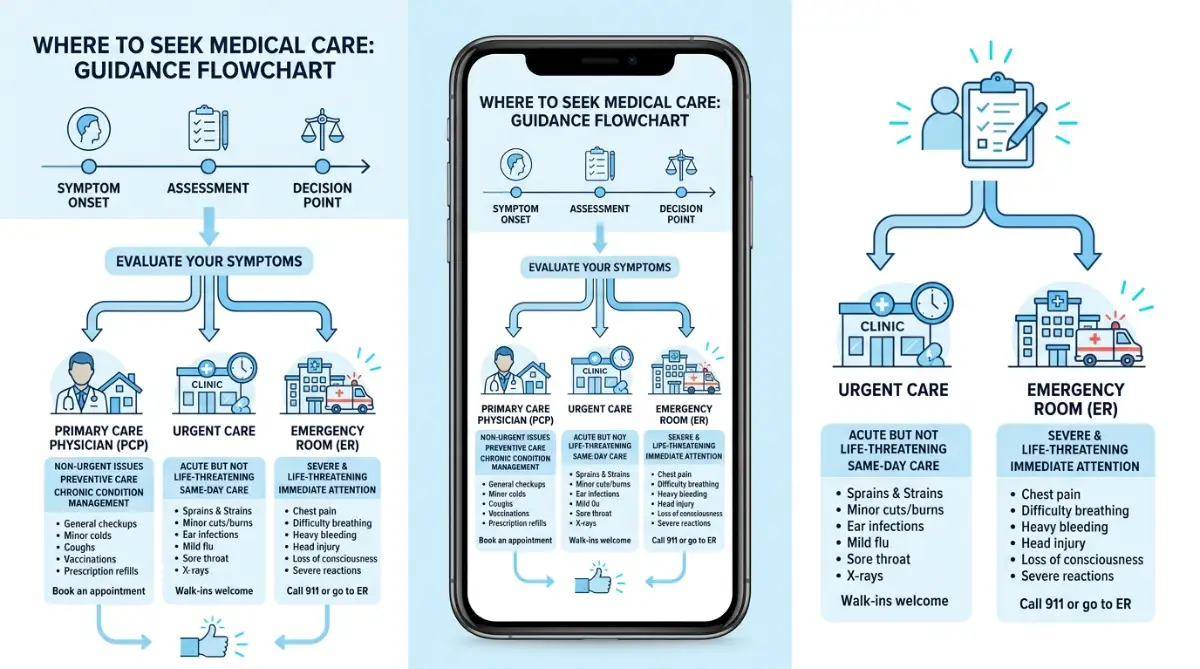
Knowing whether to visit your primary care physician, urgent care, or the emergency room ensures you receive prompt treatment while avoiding unnecessary medical costs. Routine issues belong in primary care, while acute life-threatening signs require the ER.
Reflecting on my own healthcare journey, I want to leave you with this final thought: listening to your body is an act of ultimate self-respect. Whenever you feel like something is wrong internally, remember that your health is your greatest asset, and taking swift action today secures your future.
Frequently Asked Questions
When should chest pain be treated as a medical emergency?
Any sudden pressure, tightness, or pain in the chest, jaw, or left arm—especially when accompanied by shortness of breath—requires calling 911 immediately.
What does the F.A.S.T. acronym stand for in stroke detection?
F.A.S.T. stands for Face drooping, Arm weakness, Speech difficulty, and Time to call 911.
Is sudden unexplained weight loss a red-flag symptom?
Yes, losing more than 5% to 10% of your body weight over several months without trying can indicate underlying metabolic or oncological conditions.
What is the difference between urgent care and the emergency room?
Urgent care handles non-life-threatening conditions like mild sprains or cuts, while the ER handles acute life-threatening emergencies like heart attacks or strokes.
Why should persistent swollen lymph nodes be checked?
Enlarged lymph nodes that remain firm and painless for more than two to three weeks require medical evaluation to rule out underlying disorders.
Emergency Medical Disclaimer
The information provided in this article is for educational purposes only and must not be used as a substitute for professional medical evaluation, diagnosis, or emergency treatment. If you are experiencing any life-threatening symptom, call 911 or go to the nearest hospital emergency room immediately.