Mastering Market Volatility Through Disciplined Automation
When I first entered the crypto market four years ago, I thought I could outsmart the charts. I spent late nights staring at candlestick patterns, setting alarms for 3:00 AM, and frantically buying whenever prices pumped. During one major market crash, I panicked, sold half my Bitcoin at a 35% loss, and watched in utter dismay as the market completely recovered forty-eight hours later. Feeling exhausted and defeated, I set up an automated $50 weekly DCA purchase on my exchange and walked away from the charts. Four years later, that simple $50 weekly habit outperformed every single manual trade I ever made—while restoring total peace of mind to my life.
The cryptocurrency market is world-famous for its extreme price volatility. In a single week, major digital assets like Bitcoin or Ethereum can experience wild price swings—surging 20% on positive market news or plummeting 30% during macro-economic pullbacks. For everyday retail investors, attempting to navigate these rapid price movements creates immense emotional stress, late-night chart watching, and constant fear of missing out.
The vast majority of individual traders who attempt to time the market—trying to buy at the absolute bottom and sell at the absolute peak—end up losing money. Emotional impulse buying during market highs and panic selling during sudden crashes is the single biggest cause of financial loss in digital asset investing.
This is precisely why professional wealth managers and experienced crypto investors rely on Dollar-Cost Averaging. DCA is a disciplined, time-tested investment strategy where you invest a fixed dollar amount into a specific cryptocurrency at regular, automated intervals regardless of current market prices. Let us break down what Dollar-Cost Averaging is, how the math works, and how you can use DCA to build long-term digital wealth stress-free!

How Dollar-Cost Averaging Works (The Mathematical Advantage)
Dollar-Cost Averaging operates on a simple yet profound mathematical principle: by committing a fixed dollar amount at recurring intervals, you automatically purchase more crypto tokens when prices are low, and fewer tokens when prices are high.
Over time, this systematic approach lowers your overall average purchase price per coin, smoothing out the impact of short-term market crashes without requiring you to predict price tops or bottoms.
A Real-World Mathematical Example: DCA vs. Lump-Sum
To see how DCA protects your capital during volatile market cycles, consider two investors—Alex and Maya—who each have $400 to invest in Bitcoin over a 4-month period during a market pullback:
- Month 1: Bitcoin Price = $60,000
- Month 2: Bitcoin Price = $40,000 (Market Crash)
- Month 3: Bitcoin Price = $30,000 (Market Bottom)
- Month 4: Bitcoin Price = $50,000 (Partial Recovery)
Alex (Lump-Sum Investor): Alex invests his entire $400 in Month 1 at $60,000, receiving 0.0066 BTC. By Month 4, with Bitcoin at $50,000, Alex's portfolio is worth $333, representing a net loss of $67.
Maya (DCA Investor): Maya invests $100 every month for 4 months, accumulating 0.00949 BTC with an average purchase cost of $42,150 per BTC. By Month 4, Maya's portfolio is worth $474.50—securing a net profit of $74.50 while Alex suffered a loss!
Lump-Sum Investing vs. Dollar-Cost Averaging (DCA)
My Personal Pro Tip
When I automated my DCA routine, my personal pro tip was to delete all mobile price-tracking widgets from my phone screen. By removing constant visual notifications, I stopped second-guessing my weekly purchases and let the automated system work quietly in the background.
Visual Insight: DCA The Easiest Crypto Strategy Explained
Watch this detailed, data-backed video guide to explore how Dollar-Cost Averaging reduces volatility, eliminates emotional trading traps, and helps investors build sustainable wealth!
Turning Market Crashes into Discount Opportunities
The greatest psychological shift that happens when you adopt a DCA strategy is how you react to market pullbacks. When news headlines shout about market panic and red charts flood social media, non-DCA traders experience intense fear. But as a DCA investor, you view price dips as an automatic discount—a chance for your recurring buy to stack significantly more satoshis or tokens for your long-term future. DCA transforms market fear into calm discipline.
Setting up an automated DCA strategy takes less than ten minutes. Follow these foundational steps to build a robust framework:
- Choose Proven Blue-Chip Assets: DCA works exceptionally well for foundational, high-utility digital assets with proven multi-year survival records—primarily Bitcoin and Ethereum. Avoid DCA-ing into unproven speculative altcoins that may trend to zero permanently.
- Select a Reputable Exchange: Choose a licensed exchange platform offering zero-fee or low-fee recurring buy automations, and link your primary checking account for recurring ACH debits.
- Define a Sustainable Cadence: Choose an amount that easily fits your monthly budget without causing strain (e.g., $25 every Friday or $100 every payday). Consistency matters far more than raw dollar size.
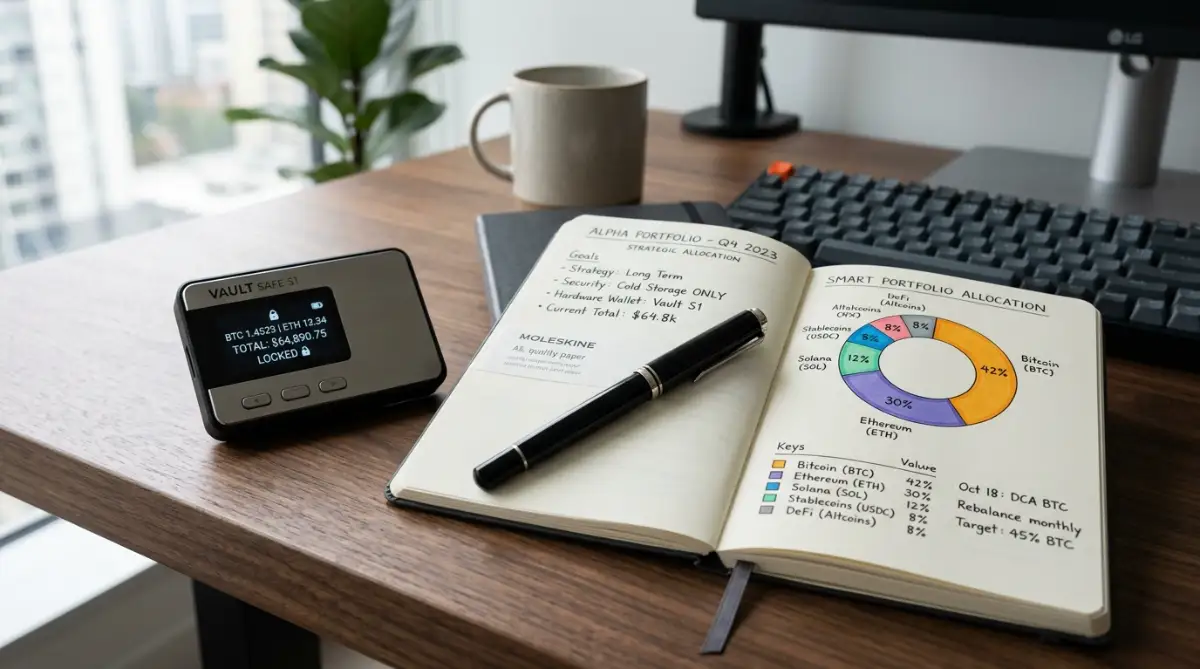
- Secure Assets via Cold Storage: Periodically sweep accumulated DCA crypto off exchange platforms and onto a self-custody hardware cold wallet to maintain full control of your private keys.
Integrating crypto DCA into your broader financial strategy also requires sound risk guardrails. Before allocating capital to digital assets, ensure your household finances are fully protected by building a reliable cash buffer. You can read our guide on federal vs private student loans to manage educational debt efficiently without disrupting your recurring investment goals.
Furthermore, maintaining a clean financial profile allows you to invest with absolute peace of mind. If you are managing credit obligations, learning how to improve your credit score helps you optimize household overhead before taking on new financial commitments. Additionally, safeguarding your primary living situation through proper planning—such as reviewing how to choose your first home insurance policy—ensures that unexpected household expenses never force you to interrupt your automated accumulation plan.
 Common Mistakes and Pitfalls to Avoid
Even with an automated strategy, investors occasionally run into predictable behavioral traps that undermine their long-term performance:
- Pausing DCA During Market Dips: Stopping your recurring purchases out of fear when prices drop defeats the entire mathematical benefit of buying assets at a discount.
- Investing Emergency Living Funds: Committing cash that is required for short-term rent or food bills into a DCA plan can force you into selling assets during inopportune market moments.
- DCA-ing into Meme Tokens: Applying a long-term accumulation strategy to highly speculative, hype-driven meme coins often results in permanent capital loss.
- Neglecting Tax Record keeping: Failing to track individual purchase prices and dates for your recurring buys makes tax season reporting unnecessarily complicated.
Maintaining financial discipline across all areas of your life ensures your crypto strategy remains sustainable. For example, if you are a student or recent graduate balancing education costs alongside personal finance goals, exploring best community colleges in the usa for affordable education can help optimize your cash flow so you can fund your investment plans without unnecessary monetary stress.
Reclaiming Emotional Freedom and Patience
At the end of the day, Dollar-Cost Averaging isn't just an investment tactic—it is a philosophy of patience, discipline, and emotional freedom. When you replace frantic day-trading with an automated recurring buy, you step off the emotional roller coaster. You gain back your time, protect your sleep, and quietly build generational wealth while focusing on what truly matters in your life.
Reflecting on my own transition from a stressed trader to a relaxed DCA investor, I cannot overstate how much lighter financial planning feels when automation handles the heavy lifting. I encourage you to set up your own steady routine, protect your private keys, and enjoy a stress-free path toward long-term digital asset ownership.
Crypto DCA Do's and Don'ts
Frequently Asked Questions
What is Dollar-Cost Averaging in cryptocurrency?
Dollar-Cost Averaging (DCA) is an investment strategy where you invest a fixed dollar amount into digital assets at regular, automated intervals regardless of short-term price fluctuations.
Why is DCA better than lump-sum investing during volatility?
DCA reduces the risk of buying an entire asset allocation at a temporary market peak by spreading purchases over time, which lowers your overall average cost per coin.
Which crypto currencies are best for a DCA strategy?
Foundational, high-utility blue-chip assets with proven multi-year track records, such as Bitcoin and Ethereum, are widely considered the best options for long-term DCA plans.
How often should I execute my DCA purchases?
Purchase frequency depends on your income cycle, with weekly or bi-weekly automated buys aligned with paydays being the most popular choices for retail investors.
Do I need a large amount of money to start DCA?
No, one of the main benefits of DCA is accessibility; many major exchange platforms allow you to start automated recurring purchases with as little as $10 to $25 per interval.
Disclaimer: This article is published exclusively for educational and informational purposes. It does not constitute formal financial, tax, or investment advice. Cryptocurrency markets carry inherent price volatility and technical risks. Always consult with a certified financial planner, tax professional, or licensed investment advisor prior to making financial decisions or purchasing digital assets.