Is Your Hard-Earned Cash Quietly Vanishing Every Month?
I remember sitting at my kitchen counter late one Sunday night, staring at my annual bank summary with complete disbelief. My salary was steady, I wasn't buying luxury sports cars, and I hadn't taken any lavish tropical vacations that year. Yet, when I looked at my ending balance, over a thousand dollars had completely vanished into thin air. I felt this sick, hollow pit in my stomach because I couldn't point to a single big purchase to explain where all my money went. I started digging through line after line of bank statements, half-expecting to find a fraudulent charge or a massive bank error. Instead, I uncovered something far more unsettling right in front of my eyes. My cash wasn't stolen in one big, dramatic heist. It was bleeding out slowly, a few dollars at a time, through tiny everyday habits I never even noticed.
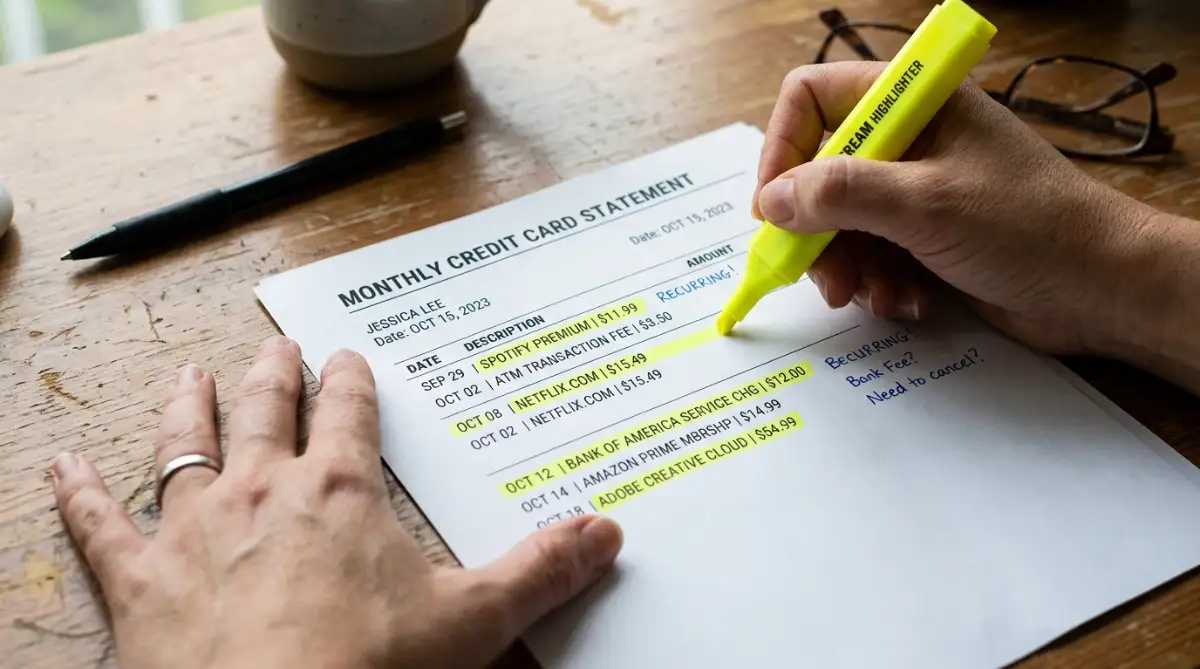
It was a random $9.99 streaming subscription I forgot to cancel six months ago. It was a $3.50 out-of-network ATM charge here and a $12 monthly maintenance fee there.Tired of feeling like your paycheck disappears before you can save a dime? Discover the hidden everyday money leaks—from forgotten subscriptions to silent bank fees—that are quietly draining your bank account, and learn simple, practical steps to plug them today
It was the sudden rush of buying something on sale that I didn't actually need in the first place.
The Reality of Silent Cash Drains
When you add those tiny drips together, they turn into a roaring river that sweeps away your hard-earned savings. If you feel like you work hard every single day but your bank balance never seems to grow, you are not alone.
Millions of people face this exact same quiet frustration every single month. You don't need a huge financial disaster to go broke; you just need a few unpatched leaks in your daily spending bucket.
The 7 Hidden Everyday Money Leaks (And How to Plug Them)
Financial drains usually fall into distinct categories that fly completely under our personal radar. When we categorize these drains, we can build targeted, realistic strategies to eliminate them forever.
Category 1: The Passive Drains (Silent Financial Leaks)
Passive drains are the absolute sneakiest leaks because they take money out of your account without requiring any active decision from you. Once set up, they run on autopilot in the background every single month.
- Forgotten Subscriptions and Free Trial Traps: Signing up for a 7-day free trial can easily turn into an ongoing $14.99 monthly charge that runs for months unnoticed. Schedule a monthly calendar reminder to review recurring charges and cancel unused services instantly.
- The High-Interest Debt Trap: Carrying a balance on credit cards and paying only the minimum keeps your principal balance stuck while interest compounds daily. Direct extra cash toward your highest-interest debt first, and consider how to improve your credit score before applying for a mortgage if you are planning major life purchases.
- Hidden Bank Fees and ATM Charges: Monthly maintenance charges and out-of-network ATM fees add zero value to your life. Switch to online banks or local credit unions offering fee-free banking with direct deposit.
Category 2: Psychological Traps (Active Shopping Mistakes)
Unlike passive drains, psychological traps happen when we actively spend money because our brains get tricked by clever marketing tactics.
- The "Sale Price" Mentality: Retailers use limited-time sales to make you feel like you are saving money. Remember that buying an unneeded item on sale means you spent cash you didn't have to spend.
- Unplanned Grocery Shopping: Walking into a grocery store hungry and without a list leads to buying impulse items that end up spoiling. Always shop with a written grocery list to avoid food waste.
Category 3: The Convenience Tax
- Paying Extra for Everyday Ease: Daily coffee runs, frequent food delivery apps, and express shipping add up to a heavy "convenience tax." Cooking simple meals at home and brewing your own coffee preserves hundreds of dollars monthly.
Category 4: The Ultimate Money Leak
- The Financial Blind Spot: Refusing to look at your numbers keeps you in the dark. Spend 10 minutes once a week reviewing transactions to instantly regain control.
Summary of Hidden Money Leaks and Quick Fixes
Myth vs. Reality: The Truth About Saving Money
- Myth: You have to earn a massive six-figure salary to build real wealth.
- Reality: High earners go broke all the time because their spending leaks scale up alongside their income. Keeping more of what you already earn is just as powerful as getting a raise.
- Myth: Cutting out small daily pleasures like a $4 coffee won't make any difference.
- Reality: It isn't just about the single coffee; it is about the compounding effect of multiple daily micro-spends that accumulate into thousands over time.
- Myth: Budgeting means restricting yourself and eliminating all fun from your life.
- Reality: Budgeting simply gives your dollars a purpose, allowing guilt-free spending on things you love while cutting mindless waste.
My Personal Pro Tip
Whenever I am tempted to buy an impulse item online or pay for an expensive convenience service, I convert the price tag into my own hourly work rate. If an item costs $100 and I make $25 an hour after taxes, I ask myself: "Is this item worth 4 full hours of my life sitting at my desk?" Viewing purchases through the lens of my actual time completely changes my perspective and instantly stops 90% of my impulse spending!
If you want a quick visual breakdown of these hidden financial traps, check out the full video explanation below:
Advanced Systems to Automate Your Financial Success
Once you have identified your personal money leaks, the next logical step is to build an automated financial system so you don't have to rely on willpower alone.
First, set up an automatic transfer on payday that moves a set percentage of your income straight into a separate savings or investment account. When you treat your savings like a non-negotiable bill, you naturally adjust your lifestyle to live on what remains.
Second, consider organizing your personal finances into dedicated sub-accounts. Having separate digital envelopes for emergency funds and bills keeps your financial goals visual.
If you are a student or balancing educational expenses, exploring options like federal vs private student loans: how to choose wisely or finding the best community colleges in the USA for affordable education can protect your budget from heavy debt burdens.
Third, apply the 1% Rule to your financial habits every single week by making tiny, incremental improvements over time rather than attempting to revamp your whole life overnight.

Major Pitfalls That Keep People Trapped in Financial Stress
One of the most dangerous traps people fall into is lifestyle creep, where spending rises at the exact same rate as income, leaving your financial safety net stagnant.
Another mistake is ignoring foundational financial protection. For example, taking time to research how to choose your first home insurance policy without stress protects your physical assets so a sudden crisis doesn't derail your progress.
Finally, many small business owners bleed money by overpaying for complex tools. If you run a side hustle, leveraging easy AI website builders for small businesses can save you thousands of dollars in management fees.
Taking Control of Your Financial Future Today
Plugging your money leaks isn't about perfection; it is simply about developing awareness so you can make deliberate, intentional choices with every dollar.
Every dollar you save by plugging a hidden leak goes toward paying off debt, building an emergency fund, or funding an experience that brings you genuine joy.
I know how overwhelming statements can feel at first, but taking control of just one leak today will give you the momentum needed to transform your entire financial life.
Frequently Asked Questions
What is the most common hidden money leak for most households?
Unused monthly subscriptions and recurring free trials are currently the most common hidden money leak because individual charges blend easily into monthly bank statements.
How often should I audit my bank account for hidden fees?
You should perform a quick 10-minute audit of your bank and credit card statements at least once a month using calendar reminders.
Can cutting out small convenience expenses really help me save $1,000 a year?
Yes, small convenience expenses like delivery markups, ATM fees, and daily coffees add up to $20-$30 a week, totaling $1,000 to $1,500 over a year.
How do I stop impulse buying when shopping online or in stores?
Enforce a 24-hour waiting rule for non-essential purchases, always shop with a written list, and avoid browsing online stores when you are bored or tired.
What should I do with the money I save after plugging these leaks?
Immediately redirect those saved funds into an automated transfer toward high-priority goals like paying off high-interest debt or building an emergency fund.
Category Disclaimer
The information provided in this article is for educational purposes only and does not constitute formal financial, legal, or investment advice. Always consult with a qualified financial professional before making major financial decisions.