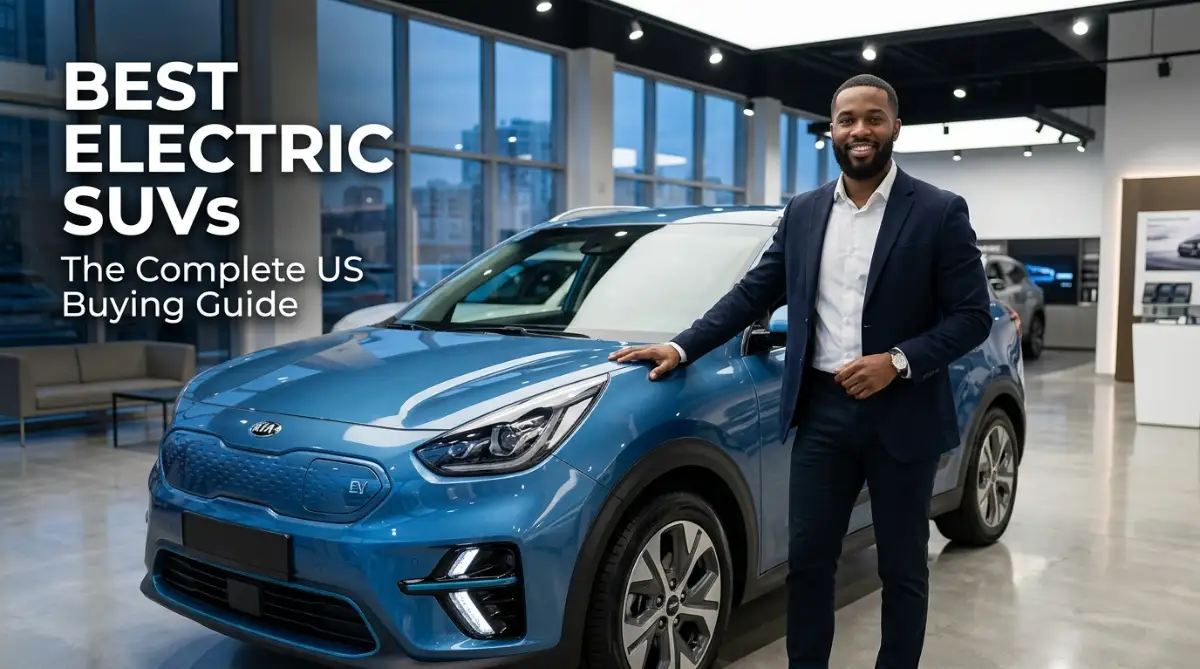
The Ultimate Guide to the Best Electric SUVs: Range, Charging Speed, and Family Utility
Are you ready to leave gas stations behind and upgrade your family's drive to a smooth, whisper-quiet electric SUV? The all-electric utility vehicle market has evolved past expensive luxury models into a vibrant ecosystem of versatile compact crossovers and spacious 3-row family haulers. In this comprehensive expert guide, we break down real-world highway driving ranges, blazing-fast 800-volt charging architectures, cargo capacities, and how to maximize your savings with up to $7,500 in federal tax credits. Discover the perfect electric SUV for your lifestyle today!
In the United States, the Sport Utility Vehicle reigns supreme as the undisputed king of the family driveway. American buyers adore SUVs for their elevated seating positions, commanding road visibility, flexible cargo capacity, all-weather All-Wheel Drive traction, and comfortable multi-passenger seating. However, as gasoline price volatility impacts household budgets and environmental consciousness grows, the traditional gas-guzzling V6 and V8 family SUV is rapidly ceding ground to a far more advanced successor: the All-Electric SUV. When I first began researching electric SUVs for my own family, I felt entirely overwhelmed by technical jargon like kilowatts, 800-volt architectures, and confusing charging port standards. Like many buyers, I worried about highway driving range anxiety and whether my local garage could support daily overnight vehicle charging. I knew I needed a straightforward, realistic breakdown of which models actually delivered on their range promises without breaking the bank. Taking time to study real-world charging speeds and operating economics completely transformed my car-shopping experience, giving me total clarity on what makes a great electric family vehicle.
The modern electric SUV segment has matured at a staggering pace. What was once a niche market dominated by expensive luxury vehicles has expanded into a vibrant commercial landscape offering compact 2-row crossovers, versatile midsize family haulers, and spacious 3-row 7-passenger utility vehicles.
Electric SUVs eliminate visits to dirty gas stations, replace engine oil changes with low-cost home charging, and deliver lightning-fast electric acceleration alongside whisper-quiet cabin insulation. Furthermore, with clean vehicle tax credits under IRS Section 30D offering up to $7,500 in point-of-sale savings, buying an electric SUV in the US has never been more financially attractive. In this ultimate expert guide, we evaluate the best electric SUVs available in North America, compare driving ranges, analyze 800V fast-charging architectures, examine real-world family practicality, and break down federal tax incentives to help you select the ideal electric crossover for your family.

1. Essential Factors to Evaluate Before Buying an Electric SUV
Choosing the perfect electric SUV requires looking beyond exterior styling and evaluating four core engineering pillars that dictate everyday ownership comfort:
- Real-World Highway Driving Range: Look for an official EPA range rating of at least 260 to 300+ miles. Remember that high highway speeds and sub-zero winter temperatures reduce EPA range by 15% to 25%. For related financing help, review our guide on managing educational loans and smart family budgeting.
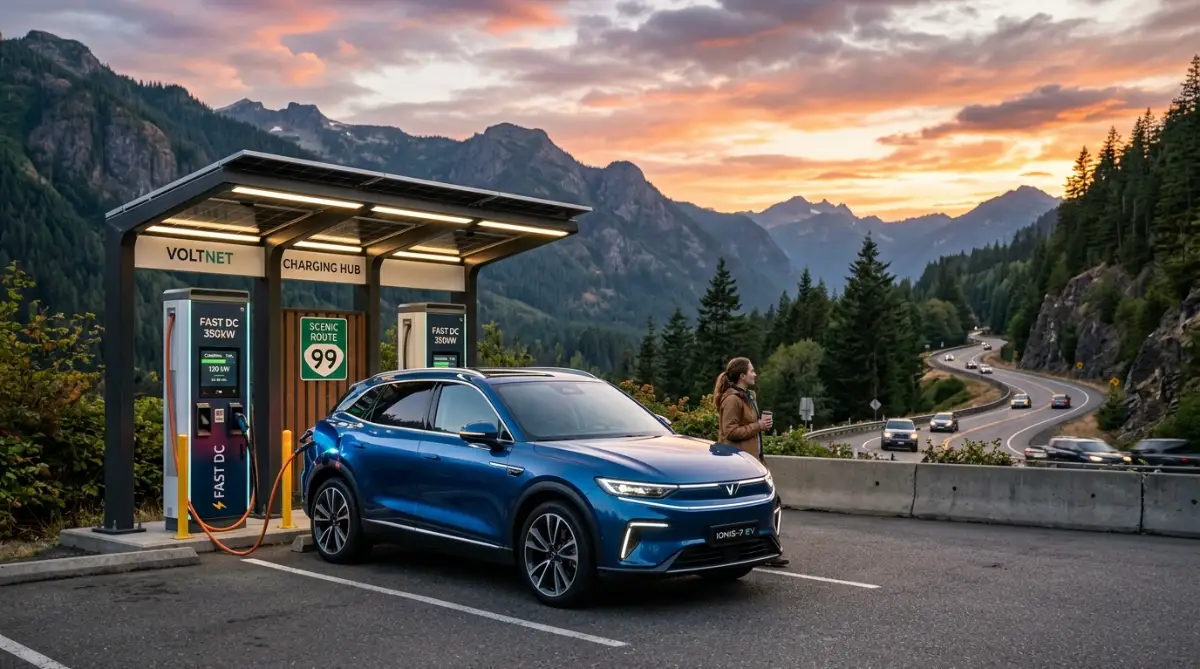
- 800V vs. 400V Fast-Charging Architecture: EVs built on 800-volt battery architectures can DC fast-charge from 10% to 80% in a blistering 18 minutes, while standard 400V platforms take 30 to 42 minutes for the same charge cycle.
- NACS Supercharger Access: Ensure your target electric SUV features access to the North American Charging Standard Tesla Supercharger network, either natively or via manufacturer-approved adapters.
- IRS Section 30D Federal Tax Credit Eligibility: Federal tax rules grant up to $7,500 in instant point-of-sale tax discounts for qualified electric SUVs with an MSRP under $80,000 assembled in North America.
2. Top Compact & Midsize Electric SUVs (2-Row Crossovers)
For small families, couples, and daily commuters, 2-row electric crossovers deliver the ultimate combination of maneuverability, interior space, and fuel-free efficiency:
My Personal Pro Tip: Whenever I test-drive an electric SUV, I always check whether the manufacturer supports Plug & Charge technology for public charging stations. In my experience, having your payment card linked directly to the car eliminates the hassle of swiping credit cards or fumbling with mobile apps every time you plug into a fast charger.
Watch this video guide for an expert video walkthrough evaluating top-ranked family electric SUVs, third-row legroom, and highway range tests:
3. Top 3-Row Electric SUVs for Large Families
For large families requiring seating for six to seven passengers, these 3-row electric giants deliver true utility without requiring gas-guzzling V8 engines:
- Kia EV9 & Hyundai Ioniq 9: Offering true adult-sized third-row legroom, 300+ miles of range, 800V fast-charging speed, and 7,800 lb towing capability at a price point starting under $56,000. You can explore how to protect your household investments by reading our guide on choosing a home insurance policy without stress, or review our suggestions on simple website building tools for small businesses if you manage a side venture.
- Rivian R1S: An electric tour-de-force featuring available quad-motor all-wheel-drive producing over 800 horsepower, air suspension with 15 inches of ground clearance, and 352 miles of range.
- Cadillac LYRIQ & Vistiq: Delivers plush air-ride comfort, available Super Cruise hands-free highway driving technology, a stunning 33-inch curved glass display, and whisper-quiet cabin insulation.
4. Total Cost of Ownership: Electric SUV vs. Gasoline Crossover
When calculating the true cost of an electric SUV, looking only at the window sticker ignores substantial long-term operating savings over 100,000 miles of driving:
- Low Energy Costs: Charging at residential home off-peak rates costs roughly $3.50 for 100 miles of driving, compared to $18.00 for a 20-MPG gasoline SUV. Learn how to protect your personal finances by reading our guide on improving your credit score before applying for financial products.
- Zero Engine Maintenance: EVs have no engine oil, oil filters, spark plugs, timing belts, fuel pumps, oxygen sensors, or transmission fluids to replace.
- Brake Pad Longevity: Regenerative braking uses electromagnetic motor resistance to slow the car, reducing physical brake wear so pads routinely last 100,000+ miles. See our guide on affordable educational options and green energy training programs.
- Point-of-Sale Federal Tax Discount: Applying the $7,500 federal tax credit directly at the dealership counter acts as an immediate down payment discount.
5. Common Pitfalls to Avoid When Buying an Electric SUV
Even well-informed shoppers can make critical errors during the electric vehicle buying process. A common mistake is buying an EV with a slower 400V architecture without realizing how much longer road trip charging stops will take compared to 800V vehicles. Another major pitfall is failing to verify home charging feasibility before purchase, assuming that public charging alone is convenient and cheap. Always ensure you can install a home Level 2 charger and check Fast-Charging network compatibility.
6. The Master 5-Point Electric SUV Buyer's Checklist
Follow this chronological checklist before signing your vehicle purchase agreement:
- Step 1: Test Rear Cargo and Car Seat Fitment: Bring strollers or child safety car seats to the dealership to test real-world cabin space.
- Step 2: Confirm Home Level 2 Charging Feasibility: Inspect your garage or driveway to ensure your electrical panel can support a dedicated 240V charger.
- Step 3: Verify Point-of-Sale Tax Credit Qualification: Confirm your personal AGI falls below IRS caps to claim the $7,500 discount.
- Step 4: Verify Narcs Charging Adapter Access: Ensure the vehicle includes or supports an approved adapter for Tesla Supercharger network access.
- Step 5: Audit Out-the-Door Dealer Pricing: Request transparent, written pricing quotes from multiple dealers to avoid mandatory dealer add-on fees.
7. Final Thoughts and Moving Forward
Selecting the best electric SUV for your lifestyle is one of the most rewarding investments you can make in modern transportation. By choosing an e-SUV that combines 300+ miles of driving range, fast-charging capability, top safety crash ratings, and federal tax savings, you elevate your family's daily driving experience while protecting your monthly budget.
In my own daily commute, driving an electric SUV completely eliminated trips to the gas station while providing a smoother, quieter ride than any gas vehicle I've owned. Take charge of your automotive future today. Evaluate your cargo and seating needs, test-drive top-rated electric SUVs, verify tax credit eligibility, and step confidently into a comfortable, fuel-free, and exciting driving journey!
8. Frequently Asked Questions
What is the average real-world driving range of modern electric SUVs?
Most modern electric SUVs offer an EPA-estimated range between 260 and 350 miles on a full charge, depending on battery pack size, wheel configuration, and driving conditions.
Can I charge my electric SUV using a standard wall outlet at home?
Yes, you can plug into a standard 120V household outlet using a Level 1 cord, but it charges very slowly. Installing a dedicated 240V Level 2 home charger is strongly recommended.
Do all electric SUVs qualify for the $7,500 federal tax credit?
No, qualification depends on North American final assembly, critical mineral sourcing, battery component manufacturing, and buyer income caps under IRS Section 30D.
How fast can an electric SUV charge at a public DC fast charger?
Charging times vary widely; 800V architecture vehicles like the Ioniq 5 can charge from 10% to 80% in 18 minutes, while 400V vehicles typically take 30 to 45 minutes.
Are electric SUVs more expensive to insure than gasoline SUVs?
Insurance premiums for electric SUVs are often slightly higher than equivalent gas models due to specialized high-voltage battery repair costs and advanced sensor technology.
9. Automotive & Financial Disclaimer
The information provided in this article is for educational, informational, and general consumer guidance only and does not constitute formal mechanical, financial, legal, or automotive purchase advice. Vehicle EPA range estimates, fast-charging speeds, cargo dimensions, MSRP pricing, and federal clean vehicle tax credit eligibility criteria are subject to change by manufacturers and government agencies over time. Buyers are strongly encouraged to conduct independent test drives, verify home electrical panel capacity, and consult official IRS portals before purchasing a vehicle.
![10 Cheapest EVs You Can Buy Right Now in the USA [Huge Savings]](https://martinesy.com/storage/uploads/blogs/1786111292_10-cheapest-evs-you-can-buy-right-now-in-the-usa-huge-savings.webp)