How to Choose the Right Home EV Charger for Your Electric Vehicle: The Ultimate US Guide
For first-time electric vehicle owners across the United States, one of the most liberating aspects of transitioning away from traditional gasoline cars is the ability to charge at home. The luxury of driving past crowded gas stations, pulling into your driveway or garage at the end of the day, plugging in your car, and waking up every single morning with a full tank of 250 to 300+ miles of electric range fundamentally transforms the daily driving experience. Over 80% of all electric vehicle charging in North America takes place overnight at home. When I first purchased my electric car, I relied entirely on the basic emergency charging cable that came with the vehicle, mistakenly believing I wouldn't need anything faster. Within a few days, I realized that slow trickle charging could not keep up with my daily work commute, leaving me stressed and hunting for public fast chargers on busy weekends. I knew I needed a reliable, high-speed solution installed right where I park every night. Taking the time to study electrical amperage requirements and Level 2 charger options completely transformed my daily driving routine, making home charging the most seamless part of my routine.
However, relying exclusively on the standard emergency charging cable included with many electric vehicles—known as a Level 1 Charger—can quickly test a driver's patience. A standard Level 1 charger plugs into a standard 120-volt household wall outlet, delivering a sluggish 3 to 5 miles of range per hour.
For daily commuters driving 50+ miles per day, Level 1 charging takes 30 to 50 hours to fully replenish a depleted battery. To unlock true home charging convenience, installing a dedicated 240-volt Level 2 Home EV Charging Station is essential. Level 2 chargers deliver 25 to 45+ miles of range per hour, fully replenishing a high-voltage EV battery in just 4 to 8 hours overnight. In this ultimate buyer's guide, we break down how to choose the right home EV charger, evaluating amperage needs, hardwired versus plug-in installations, connector standards, smart Wi-Fi scheduling features, home electrical panel capacity, and federal tax credits.
Power Up at Home: The Ultimate Guide to Choosing and Installing the Right Level 2 EV Charger
Are you tired of slow trickle charging or hunting down public charging stations for your electric vehicle? Unlocking true EV ownership freedom starts with installing a dedicated 240-volt Level 2 home charging station, transforming your garage into your own private gas station. In this comprehensive buyer's guide, we break down everything you need to know about charging speeds, hardwired versus plug-in models, smart Wi-Fi scheduling features, electrical panel capacity, and federal tax credits. Discover how to pick the ideal charger and power up your electric drive overnight, every night!
1. Level 1 vs. Level 2 Home EV Charging Speeds & Amperage
Understanding home EV charging requires examining the relationship between voltage, continuous amperage, and real-world charging speed measured in kilowatts:
My Personal Pro Tip: Whenever I look at home charger installations, I always recommend hardwiring your unit rather than using a plug-in NEMA 14-50 outlet if you plan to charge at maximum 48-amp speeds. In my experience, hardwiring eliminates the risk of outlet thermal degradation and saves you money on expensive required GFCI breakers mandated for outdoor or garage outlets.
Watch this video guide for an expert video review evaluating top-rated Level 2 home EV chargers, comparing charging speeds, app usability, and cable durability:
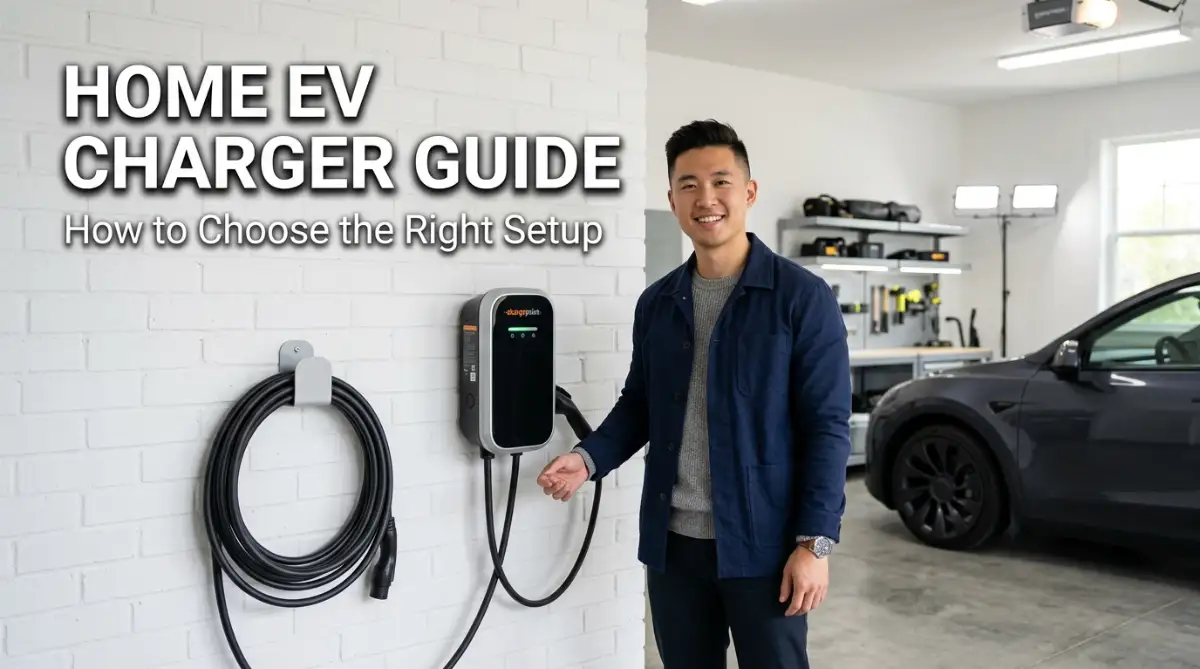
2. Hardwired Installation vs. Plug-In (NEMA 14-50) EV Chargers
When selecting your Level 2 wall charger, you must choose between a plug-in model utilizing a heavy-duty outlet or a hardwired model connected directly into your electrical panel:
- Plug-In Chargers (NEMA 14-50 Outlets): Plugs into a 240V 4-prong heavy-duty receptacle. Offers mobility allowing you to unplug the charger unit easily if you relocate to a new home. For financing your home improvements, review our guide on improving your credit score before applying for financial products.
- Hardwired Chargers (Direct Panel Connection): The electrical supply cable runs directly inside the charger enclosure. Hardwiring supports maximum charging speeds up to 48 amps, eliminates thermal stress on outlet prongs, resists harsh weather, and provides superior long-term safety.
3. Connector Standards & Future-Proofing: J1772 vs. Narcs
The North American EV charging ecosystem is currently transitioning toward a single unified connector standard:
- The Narcs Connector Dominance: The North American Charging Standard—originally developed by Tesla—has been officially adopted by almost all major global automakers for their North American vehicles.
- The J1772 Legacy Standard: Legacy non-Tesla EVs manufactured prior to 2025 utilize the round J1772 connector. If you own a J1772 vehicle, you can buy a native J1772 charger or use a certified adapter with an NACS charger. You can also protect your home and vehicle investments by reading our guide on choosing a home insurance policy without stress, or check out our suggestions on simple website building tools for small businesses if you manage a remote side venture.
4. Smart Chargers vs. Dumb Chargers & Electrical Panel Upgrades
Deciding between a feature-rich smart charger and a rugged dumb charger depends on your home electric utility rate structure:
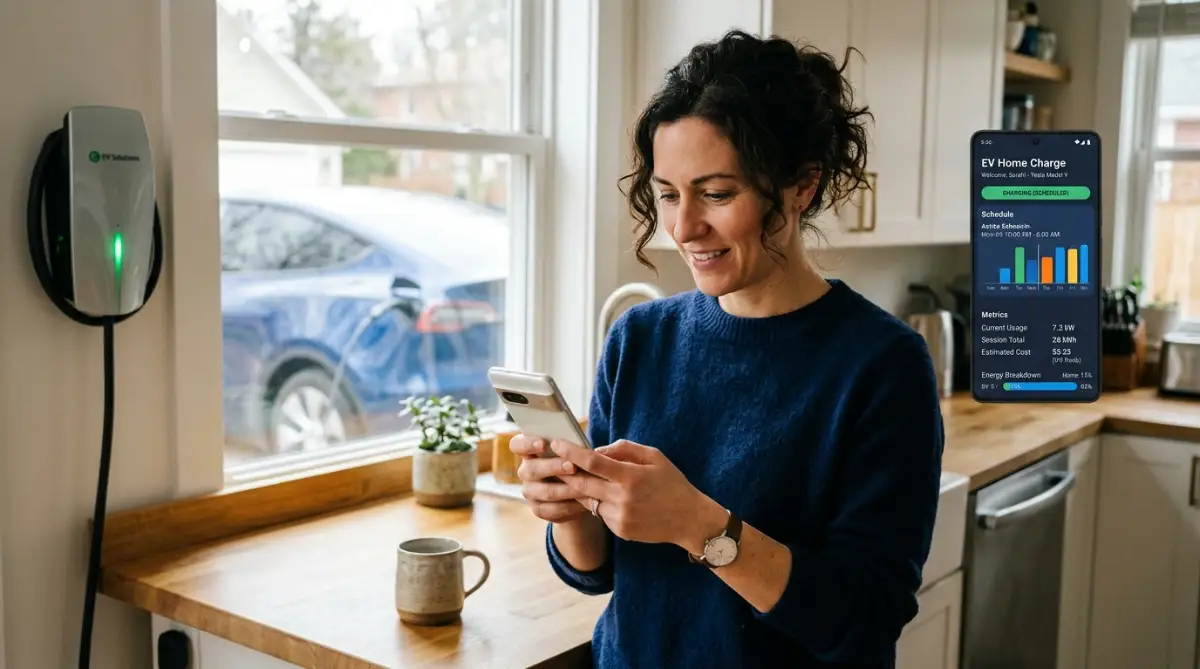
- Smart Wi-Fi Chargers: Connect to your home Wi-Fi network, allowing you to schedule charging during off-peak utility hours when electricity is significantly cheaper, track monthly energy costs, and control charging via smartphone apps.
- Dumb Plug-and-Charge Units: Heavy-duty enclosures with zero Wi-Fi connectivity that charge at full speed immediately upon plugging in, ideal for locations with poor Wi-Fi reception.
- Navigating Electrical Panel Capacity: If your home features an older 100-amp panel, adding a 50-amp dedicated EV circuit may risk overloading your main breaker. Using an automated energy management system or smart load management prevents expensive main panel upgrades. For educational resources on green energy programs, see our guide on affordable educational options and professional training.
5. Common Pitfalls to Avoid When Installing a Home EV Charger
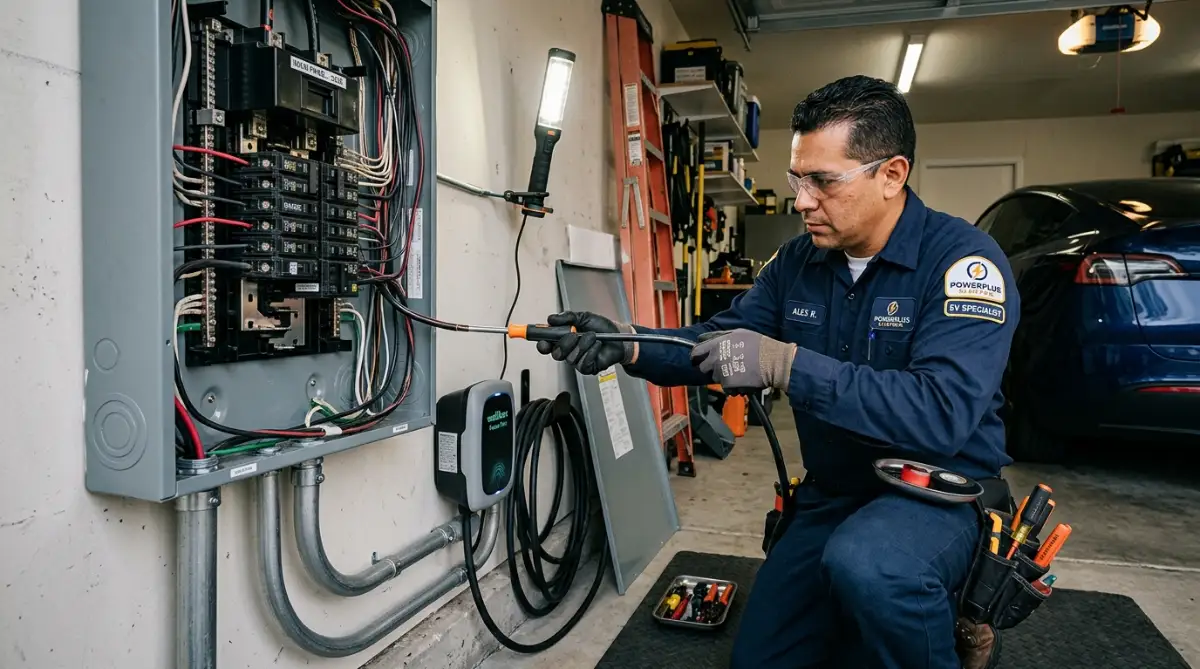
Even well-prepared homeowners can run into issues during electrical installation if they ignore local building codes. A common mistake is hiring an unlicensed handyman rather than a licensed master electrician, which can violate National Electrical Code standards and void your home insurance policy. Another pitfall is failing to check whether your local electric utility offers special discounted EV Time-of-Use rates that require a smart Wi-Fi enabled charger to qualify. Always pull municipal permits and check utility rebate requirements before starting work.
6. The 6-Step Master Home EV Charger Installation Checklist
Follow this chronological checklist to install your home EV charger safely:
- Step 1: Calculate Daily Commute Range Needs: Determine if your driving requires 32-amp or 48-amp charging speeds.
- Step 2: Inspect Home Main Electrical Panel Capacity: Verify whether your electrical panel has physical breaker space and spare capacity.
- Step 3: Choose Installation Style: Select hardwired installation for maximum 48A speed or NEMA 14-50 plug-in for mobility.
- Step 4: Select Smart Wi-Fi Features: Choose a smart charger if your utility offers Time-of-Use electricity discounts.
- Step 5: Hire a Licensed Master Electrician: Ensure your installer pulls official local municipal electrical permits.
- Step 6: Claim Federal Tax Credits (IRS Section 30C): Claim the federal 30C tax credit covering 30% of equipment and installation costs up to $1,000.
7. Final Thoughts and Moving Forward
Selecting and installing the right Level 2 home EV charger is one of the single best investments you can make as an electric vehicle owner. By choosing an optimal amperage, selecting hardwired or plug-in connections based on your home layout, leveraging smart off-peak charging schedules, and claiming tax incentives, you elevate EV ownership to maximum convenience.
In my own garage, installing a dedicated Level 2 smart charger turned daily electric vehicle refueling into a completely effortless, set-it-and-forget-it experience. Take charge of your home energy today. Audit your electrical panel, select a certified Level 2 charger, hire a professional electrician, and step confidently into a seamless, affordable, and fully charged electric driving future!
8. Frequently Asked Questions
Can I plug a Level 2 EV charger into a standard kitchen outlet?
No, standard household outlets provide only 120V (Level 1). Level 2 chargers require a dedicated 240V heavy-duty circuit, similar to an electric clothes dryer or oven outlet.
Is a hardwired EV charger safer than a plug-in model?
Yes, hardwiring eliminates potential physical wear, tear, and thermal stress on outlet prongs, making it safer for high-amperage continuous charging in outdoor or garage environments.
How much does it cost to install a Level 2 home EV charger?
Equipment typically costs $400 to $700, while professional electrician installation ranges from $300 to $1,500 depending on your home's wiring distance from the electrical panel.
Do I need a smart EV charger if my car has a charging timer built-in?
While many cars have built-in schedules, a smart EV charger offers superior energy tracking, detailed cost breakdowns, and easier integration with complex utility rate plans.
Can I claim a tax credit for installing a home EV charger?
Yes, under IRS Section 30C, eligible homeowners living in low-income or census-tract rural areas can claim a federal tax credit covering 30% of equipment and installation costs up to $1,000.
9. Electrical & Financial Disclaimer
The information provided in this article is for educational, informational, and general consumer guidance only and does not constitute formal electrical, engineering, or legal advice. High-voltage 240V electrical installations pose severe risks of electrical shock, fire, and property damage if performed incorrectly. Homeowners are strongly advised to hire a qualified, licensed master electrician to conduct load calculations, pull municipal permits, and complete installations in strict compliance with the National Electrical Code and local building regulations.
![10 Cheapest EVs You Can Buy Right Now in the USA [Huge Savings]](https://martinesy.com/storage/uploads/blogs/1786111292_10-cheapest-evs-you-can-buy-right-now-in-the-usa-huge-savings.webp)