How Power Outages Almost Ruined My Summer
I remember staring at my dark ceiling during a massive summer heatwave a few years ago. My family was sweating heavily, and all the expensive groceries in our refrigerator were actively spoiling. The intense summer heat was unbearable, and my young kids were totally miserable trying to sleep in the dark.
The worst part was that my expensive rooftop solar panels were sitting up there completely useless. I felt incredibly frustrated that I had spent thousands of dollars on renewable energy but still had absolutely no power during a grid emergency.
I assumed my panels would automatically keep my house running, but I was completely wrong about how grid-tied solar actually works. That awful, sleepless weekend pushed me to find a real way to keep my house running no matter what happened to the city power lines.
It is a terrible feeling knowing you generate your own electricity during the day but lose access to it the second the sun sets. You are effectively forced to buy back your own power from the utility company at incredibly high evening rates.
Without a way to properly store what you capture, you are still completely dependent on the aging public utility system. This strict dependency leaves your entire family highly vulnerable to sudden weather events and unpredictable rolling blackouts.
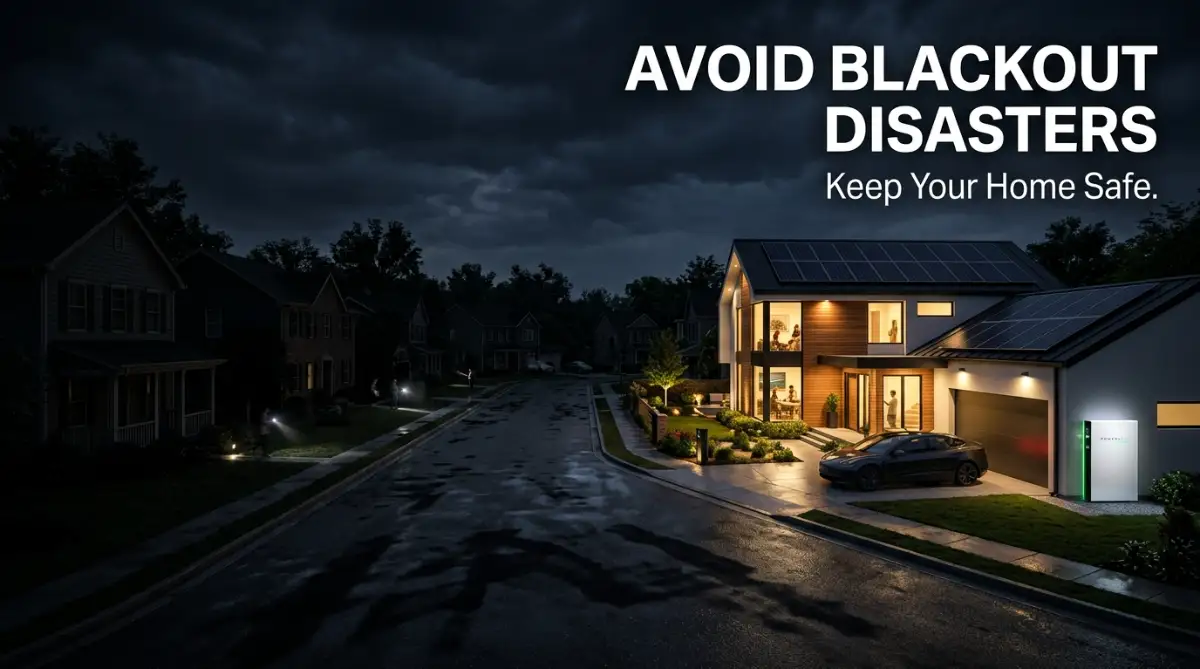
Adding a solar battery completely changed my home energy use and gave me total peace of mind overnight. I no longer panic when the neighborhood goes dark because my house automatically switches to backup power in seconds.
Let me show you exactly how this simple home upgrade can secure your family and protect your finances. You deserve an energy system that actually works for you when you need it the absolute most.
A Beginner's Guide to Mastering Home Battery Storage
Choosing to upgrade your solar system with a battery requires a solid, easy-to-understand strategy. You cannot simply buy the largest battery available and expect it to magically solve all your power problems overnight.
You need to find a storage solution that perfectly matches your specific daily energy consumption habits. A good home battery acts as a massive digital sponge, soaking up free daytime sun and releasing it exactly when electricity is most expensive.
If you are serious about securing your home this year, you need a highly methodical approach to energy planning. Let us break down the exact steps you need to take to build a profitable, blackout-proof solar setup.
Step 1: Understand Load Shifting and Peak Rates
The biggest financial benefit of a solar battery is a concept called "load shifting." Utility companies typically charge their highest rates during the evening when everyone gets home from work and turns on their appliances.
A smart battery completely protects you from these unfair pricing spikes automatically. Your solar panels charge your battery all day long while electricity prices are relatively cheap and the sun is shining brightly.
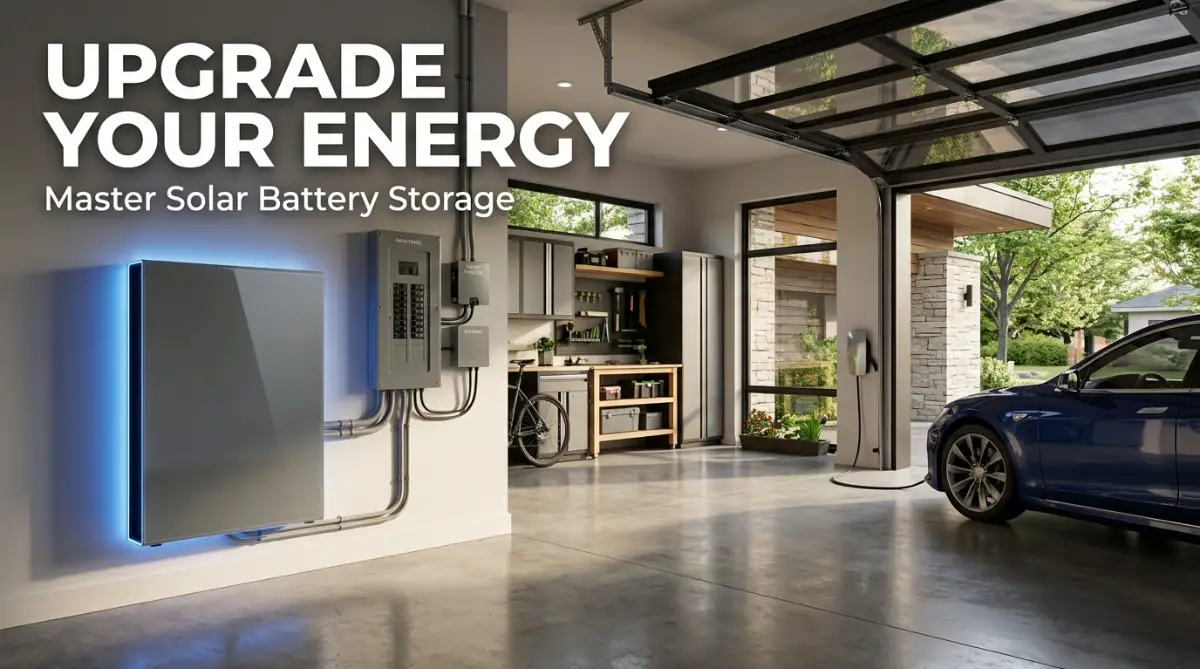
When the expensive evening rates kick in, your home automatically stops pulling power from the city grid. Instead, it seamlessly shifts to using the stored free power sitting safely inside your garage battery.
This automated shifting process saves homeowners hundreds of dollars a year without requiring them to change their daily lifestyle. If you want to dive deeper into these savings, understanding how to save big on utility bills with solar battery storage is the best next step.
Step 2: Identify Your Critical Backup Loads
During a complete grid failure, trying to power your entire house with a single battery is a massive mistake. If you try to run your central air conditioning, electric oven, and pool pump simultaneously, your battery will die in under an hour.
You must actively identify your "critical loads" before you ever install your storage system. These are the essential appliances you absolutely need to survive a multi-day power outage comfortably and safely.
Your critical load list should include your refrigerator, Wi-Fi router, a few lights, and essential medical equipment. You wire these specific items into a dedicated sub-panel that your battery powers directly during neighborhood emergencies.
By limiting your energy usage to these basic necessities, a single battery can keep your home running for days instead of mere hours. Finding the best residential solar panel options for U.S. homes on a budget ensures your panels can recharge this smaller load quickly.
Step 3: Size Your Battery System Correctly
Buying too much battery storage is an expensive waste of money, while buying too little leaves you constantly frustrated. You need to carefully calculate your average nightly energy consumption to find the perfect middle ground.
Check your past electric bills to see exactly how many kilowatt-hours (kWh) you consume after the sun goes down. Most standard modern homes use anywhere from ten to fifteen kWh of electricity during the overnight hours.
If your nightly usage is extremely high, you might need to install two interconnected batteries to cover your lifestyle safely. Getting the sizing right is a major part of the smart guide to choosing the best home solar battery storage for your unique situation.
Do not let aggressive salespeople talk you into a massive 30 kWh system if your family only uses 8 kWh a night. Focus strictly on covering your realistic daily needs to ensure a fast return on your financial investment.
Step 4: Master Your Monitoring Application
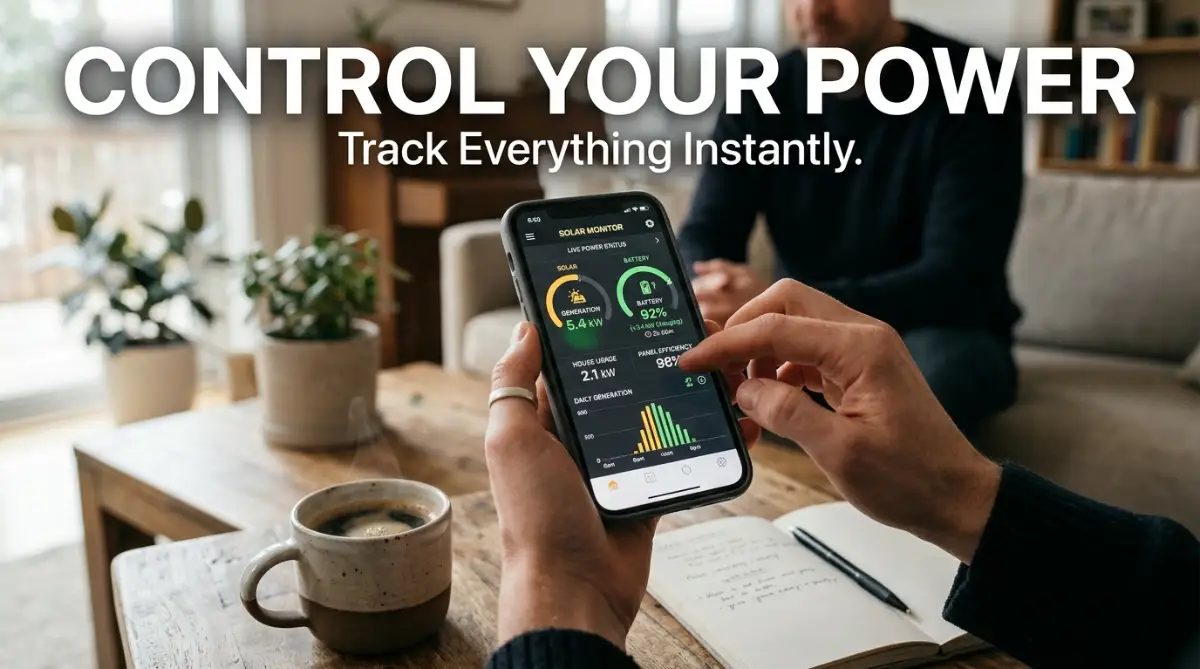
Every modern solar battery comes with a highly detailed smartphone application that tracks your energy usage in real time. Ignoring this application is one of the biggest mistakes new solar owners consistently make.
You need to actively monitor this app to see exactly which home appliances are draining your stored power the fastest. You might discover that leaving your old desktop computer running all night drains ten percent of your total battery capacity.
Once you identify these hidden energy hogs, you can immediately change your daily habits to make your battery last significantly longer. Setting up automated notifications inside the app will alert you instantly if your battery drops below a safe reserve level.
Solar Setup Comparison Overview
Understanding the difference between a standard solar setup and a battery-backed system is highly important for your overall budget. Here is a clear breakdown of how these two distinct choices actually perform in the real world.
Myth vs Reality: Home Solar Batteries
- Myth: Solar batteries are highly dangerous and frequently catch fire inside residential garages.
- Reality: Modern Lithium Iron Phosphate (LiFePO4) batteries are incredibly stable, completely non-toxic, and feature highly advanced thermal cooling safety systems.
- Myth: You will never have to pay a utility bill ever again if you buy a home battery.
- Reality: Most homes still require a mandatory basic grid connection fee, but your actual energy usage charges will drop down to nearly zero.
- Myth: Batteries only last three years before they completely die and need expensive replacing.
- Reality: Premium tier solar batteries come with strict ten-year warranties, and most easily last over fifteen years with proper daily charging management.
My Personal Pro Tip:
I always set my battery app to maintain a strict twenty percent "backup reserve" limit during normal sunny days. This means my system will never drain completely empty to power my home during the normal evening hours. If a surprise midnight storm knocks out the city power lines, I know my family still has that saved twenty percent to keep our refrigerator perfectly cold!
Watch the Installation Process in Action
Sometimes reading about home battery setups is not enough to truly grasp how they seamlessly connect to your main electrical panel. Seeing a live installation walkthrough can instantly clarify how this amazing technology operates safely.
Watch this comprehensive video guide below to see exactly how these powerful battery systems work:
Long-Term Strategies for Maximum Energy Independence
Purchasing expensive storage equipment is only the first ten percent of the battle for true energy independence. If you just mount the battery on the wall and completely ignore the software settings, you will leave massive amounts of money on the table.
To ensure long-term success, you must implement highly structured charging protocols and advanced home automation strategies. Let me share some technical operational secrets that helped my family maximize our solar investment completely.
First, you must establish absolute strict rules regarding how your battery interacts with bad weather forecasts. Modern smart batteries actually monitor the national weather service to look for incoming severe storms automatically.
If the software detects a high probability of a hurricane or blizzard, it triggers a feature called "Storm Watch." This feature completely stops sending your stored power to the home appliances and begins charging the battery up to a full one hundred percent.
This automated safety measure ensures you have the absolute maximum amount of backup power ready when the neighborhood grid finally collapses. Learning how to make your home more energy independent with solar tech is crucial for surviving these modern extreme weather events safely.
Next, you need to use smart electrical panels to exert total control over your home's power flow. Traditional breaker boxes are incredibly dumb; they simply send power blindly to any switch you physically flip.
Upgrading to a smart electrical panel allows you to turn specific circuits on or off directly from your mobile phone. During a blackout, you can instantly cut power to your teenagers' bedroom televisions to ensure the battery only runs the kitchen appliances.
Leading renewable experts state that smart panels extend battery life by up to forty percent during extended emergencies. This extreme level of micro-management drastically increases your overall survival time during unpredictable power outages.
Another massive strategy is leveraging virtual power plant (VPP) programs offered by your local utility provider. Many forward-thinking power companies will actually pay you cash to borrow some of your stored battery energy.
During extreme heat waves when the city grid is struggling to meet demand, the utility company will pull a few kilowatts from your garage battery. They compensate you handsomely for this energy, effectively turning your home into a tiny, highly profitable power plant.
Enrolling in these programs can cut the return-on-investment time of your expensive battery purchase entirely in half. Investing in these systems is one of the top solar upgrades that boost your home value significantly if you ever decide to sell your house.
You must also focus deeply on taking full advantage of government tax incentives before they expire completely. The federal government offers massive financial credits that cover a huge percentage of both your solar panels and your battery storage equipment.
Finally, always perform a strict manual review of your battery's physical environment during the changing seasons. Batteries are highly sensitive to extreme temperatures, and placing them in direct, blistering afternoon sunlight will degrade their internal chemistry rapidly.
Costly Solar Battery Mistakes I Deeply Regret
I have made plenty of embarrassing and incredibly expensive mistakes while trying to organize my home's renewable energy system. Some of these errors cost me thousands of dollars in lost power and caused severe frustration during local blackouts.
My absolute biggest blunder was falling victim to the "Partial Backup" trap during my initial installation planning. I decided to save money by only backing up my kitchen refrigerator and one single living room light circuit.
When the first major winter storm hit, my house was freezing cold because I forgot to wire my gas furnace blower to the battery sub-panel. I had plenty of stored energy sitting securely in the garage, but my family was shivering because I made a terrible, cheap wiring decision.
I learned the hard way that you must always back up your essential heating and cooling systems, even if it costs slightly more upfront. Trying to cut corners on critical infrastructure always leads to massive regrets during an actual emergency.
Another terrible mistake I made was completely ignoring the battery chemistry type when I bought my first cheap off-grid unit. I purchased a heavy, outdated lead-acid battery bank because it looked highly affordable on paper.
However, I did not realize that discharging a lead-acid battery past fifty percent permanently damages its internal capacity. I accidentally drained it completely empty during a cloudy week, completely destroying a two-thousand-dollar piece of equipment.
You must always invest in modern Lithium Iron Phosphate (LFP) batteries for serious home backup scenarios. They are incredibly resilient, highly safe, and allow you to drain them down to zero without destroying their lifespan.
I also deeply regret refusing to upgrade my main electrical panel before adding my heavy solar system. I tried to squeeze the new solar breakers into an overcrowded, thirty-year-old electrical box to save a few hundred dollars.
The old panel could not handle the new energy load safely, causing frequent, highly annoying tripped breakers every time the sun came out. Upgrading your home's main electrical brain is an absolute necessity before adding advanced digital energy equipment.
Industry leaders consistently warn that ignoring basic electrical safety codes is the fastest way to cause a severe house fire. Treating your home's wiring carefully is the absolute key to scaling your energy setup safely without looking foolish.
Wrapping Up My Energy Journey
Transforming your home from a vulnerable, grid-dependent house into a highly synchronized energy fortress takes real dedication. You do not need to have a perfect, flawless off-grid setup on day one of your solar journey.
Start by simply understanding your daily energy loads to ensure you know exactly what size battery you actually need. Once you experience the sheer relief of having your lights stay on during a blackout, you will eagerly embrace the rest of the system.
I genuinely hope my past failures and current strategies help you design a daily energy workflow that brings you total peace of mind. I can confidently say that taking the time to master my solar battery completely saved my family from stress and protected my monthly budget!
Frequently Asked Questions
Can a solar battery power my house when the power goes out?
Yes, providing backup power during grid failures is one of the primary functions of modern solar batteries. However, they only power the specific circuits that you choose to connect to your dedicated backup sub-panel. You cannot run power-hungry appliances like central air conditioning for very long without draining the battery rapidly.
How long do home solar batteries generally last?
Most premium lithium-based solar batteries come with a strict ten-year performance warranty from the manufacturer. With proper daily management and a temperature-controlled environment, they can easily last fifteen years before noticing major capacity drops. Their lifespan depends heavily on how deeply you discharge them every single day.
Do I have to buy a battery if I get solar panels?
No, you do not technically need a battery to operate a standard grid-tied solar panel system. Your panels will simply push excess power back into the city grid in exchange for utility credits. However, without a battery, your solar panels will shut off completely during a neighborhood power outage for safety reasons.
Will a solar battery save me money on my electric bill?
Yes, especially if your utility company uses strict Time-of-Use (TOU) billing rates that charge more during the evening. The battery allows you to use your free, stored solar energy during these expensive peak hours. This process, known as load shifting, drastically lowers your monthly payment to the utility company.
Can I install a solar battery system entirely by myself?
Unless you are a highly experienced, licensed electrician, you should absolutely never attempt a DIY battery installation. Working with high-voltage direct current (DC) wiring is incredibly dangerous and highly illegal without proper city permits. Hiring a certified professional ensures your home remains safe and your equipment warranty stays valid.
Category Disclaimer:
The information provided in this article is for educational and general informational purposes only. It does not constitute formal electrical engineering or financial tax advice. Equipment capabilities, local utility rates, and federal tax codes are subject to rapid change. Always verify current building codes and consult with a licensed solar contractor before upgrading your home energy strategy.